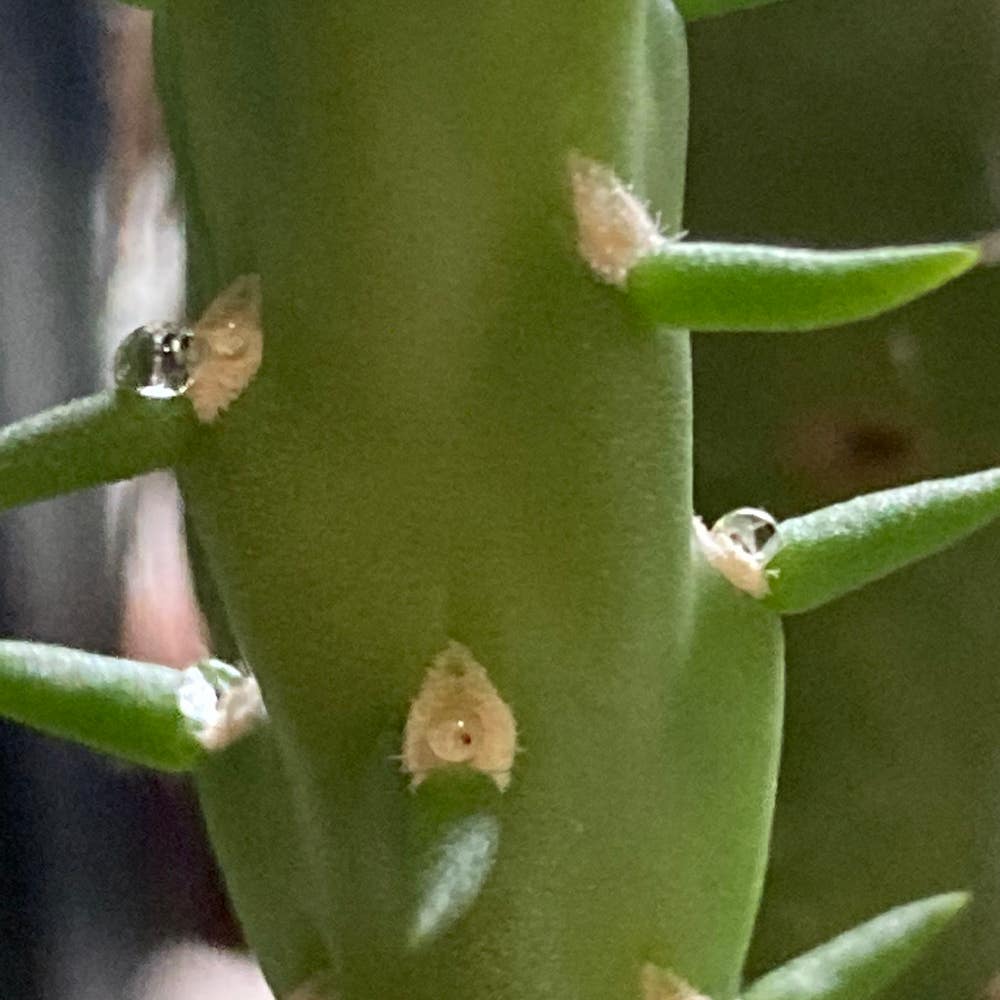
🌵 Why Is My Mini Cholla Dropping Leaves?
Cylindropuntia 'Mini Cholla'
By the Greg Editorial Team
Mar 12, 2024•4 min read
This article was created with the help of AI so we can cover more plants for you. May contain errors. See one? Report it here.
Solve your Mini Cholla's leaf drop mystery 🌵 and ensure its vibrant health with these targeted care tips!
- Water wisely: underwatering causes drooping, overwatering leads to mushy leaves.
- 🌡️ Maintain 70-75°F: ideal temperature range for healthy Mini Cholla.
- 🌵 Well-draining soil and minimal fertilizer keep nutrients balanced and pests at bay.
When Watering Goes Wrong: Thirsty or Drowned Roots?
🚰 Signs of Watering Issues in Mini Cholla
Underwatering turns your Mini Cholla into a survivalist, leaves drooping like a weary traveler. The soil's dryness is a telltale sign, a silent plea for water. Conversely, overwatering leads to a sogginess fest. Leaves may turn mushy or translucent, a clear distress call from your plant.
🌱 Fine-Tuning Your Watering Technique
To hit the watering sweet spot, start with a consistent schedule. Test the soil's moisture with your finger or a soil meter; it should feel like a wrung-out sponge. When watering, do so thoroughly but allow the excess to drain. This ensures the roots quench their thirst without drowning in excess. Remember, Mini Cholla's roots need to breathe, not swim.
Feeling the Heat: Temperature and Mini Cholla Leaf Health
🌡️ Recognizing Temperature-Induced Stress
Mini Cholla cacti are not fans of the extreme. Wilting leaves or a color change to yellow or brown can signal your plant is throwing a temperature tantrum. These succulents prefer stability, so if your Mini Cholla is looking more like a wilted flower than a spiky desert dweller, it's time to assess the thermal situation.
🌵 Keeping Your Mini Cholla Comfy
The ideal temperature range for Mini Cholla is a daytime sweet spot of 70 to 75°F and slightly cooler nights at 60 to 65°F. To avoid the cold shoulder or a heatstroke, keep your cactus away from drafts and direct heat sources. Consider a thermometer or even a digital sensor to keep track of those degrees. If you're dealing with a heat wave, find some shade; during a cold snap, a warm spot or a heating mat can be a game-changer. Remember, consistency is key—your Mini Cholla's health depends on it.
Section
The Ground Beneath: Soil and Nutrients for Mini Cholla
🌱 Diagnosing Soil and Nutrient Issues
Soil isn't just dirt—it's the Mini Cholla's dinner plate. If your plant's leaves are dropping, it might be dining on subpar soil. Nutrient deficiencies often manifest as leaf discoloration or a general look of despair in your plant. A soil test is like a health check-up; it'll tell you what's missing at the root of the problem.
🌵 Tailoring Soil and Fertilization
For a happy Mini Cholla, think well-draining soil with a side of grit—perlite, pumice, or coarse sand will do the trick. Fertilize sparingly; these cacti are light eaters. Use a balanced, low-nitrogen fertilizer to avoid overfeeding and potential root burn. Remember, always water before you fertilize. It's like wetting a sponge to make it absorbent.
Battling the Bugs and Blights
🐞 Spotting Pests and Diseases in Mini Cholla
Mini Cholla, like its desert-dwelling cousins, can fall victim to pests and diseases. Vigilance is key. Mealybugs might set up camp in the nooks of your cactus, appearing as cottony white masses. Spider mites leave behind fine webbing and yellow speckling, a telltale sign of their presence. Don't overlook the scale insects; these tiny shield-shaped bugs masquerade as part of the plant itself. Fungal foes like powdery mildew manifest as a ghostly white dusting on leaves.
🛡️ Defending Your Mini Cholla
To defend your Mini Cholla, start with a clean environment. Remove debris and isolate new plants to prevent the spread of pests. For mealybugs and scale, dabbing with isopropyl alcohol on a cotton swab can be an effective spot treatment. Introduce natural predators like ladybugs for a more eco-friendly solution. If spider mites are your nemesis, a strong water spray can dislodge them, followed by a neem oil or insecticidal soap spray. For fungal issues, improve air circulation, avoid wetting the leaves, and consider a systemic fungicide if necessary. Regular inspections are your best defense—catching problems early can save your Mini Cholla from a world of hurt.
⚠️ Safety First
This content is for general information and may contain errors, omissions, or outdated details. It is not medical, veterinary advice, or an endorsement of therapeutic claims.
Always consult a qualified healthcare professional before using any plant as food, medicine, or supplement.
Never eat any plant (or feed one to pets) without confirming its identity with at least two trusted sources.
If you suspect poisoning, call Poison Control (800) 222-1222, the Pet Poison Helpline (800) 213-6680, or your local emergency service immediately.
Spotted an error? Please report it here.
Keep your Mini Cholla thriving with Greg's tailored care reminders 🌵, covering everything from watering to temperature tips, ensuring you catch any distress signals early.