🌵 Why Are My Mini Cholla Leaves Curling?
Cylindropuntia 'Mini Cholla'
By the Greg Editorial Team
Mar 12, 2024•5 min read
This article was created with the help of AI so we can cover more plants for you. May contain errors. See one? Report it here.
Uncover the secret to unwinding your Mini Cholla's leaves for a thriving, happy cactus. 🌵✨
- Curling leaves signal distress, often due to improper watering or extreme temperatures.
- Stable climate and light are crucial to prevent Mini Cholla leaves from curling.
- Consistent care routine helps avoid curling and maintain Mini Cholla health.
Spotting the Curl: Identifying Leaf Curling in Mini Cholla
🌀 Visual Cues: What Does Leaf Curling Look Like on a Mini Cholla?
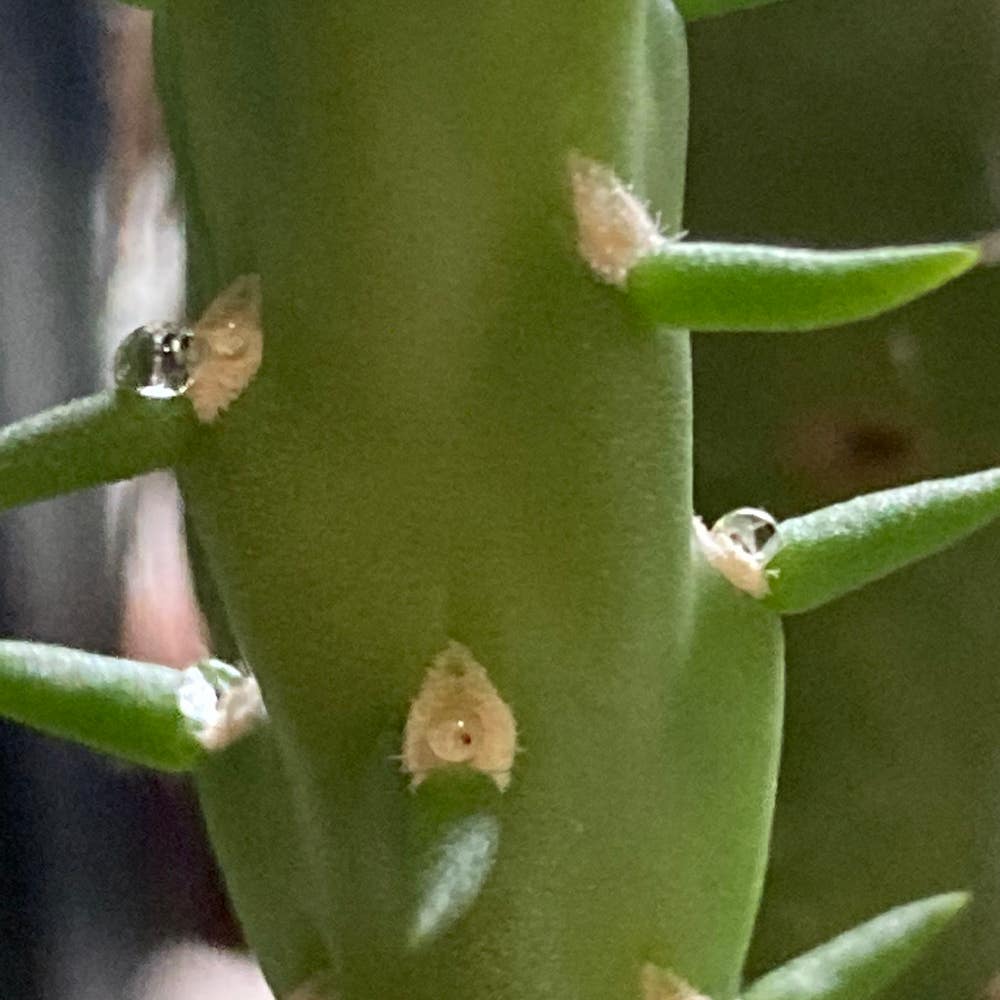
Curling leaves on a Mini Cholla are hard to miss—they twist and contort in ways that are unnatural for this spiky succulent. Instead of the plant's typical robust and upright stance, you might notice the leaves bending inward or outward, forming a shape that's more reminiscent of a crumpled piece of paper than a desert dweller.
Beyond the Curl: Other Symptoms That Might Accompany the Curling Leaves
Discoloration often joins the curling party, turning a healthy green into a sickly yellow or brown. Be on the lookout for leaves that seem less lively, or spikes that have lost their spunk. If you spot tiny yellow dots or unusual growth patterns, pests might be gatecrashing your cactus's good vibes. These symptoms are your Mini Cholla's way of sending an SOS—so it's time to take action.
The Usual Suspects: Common Causes of Leaf Curling
🏜️ Thirsty Roots: The Perils of Underwatering
Dry soil is a distress signal from your Mini Cholla. Leaves curling inwards, a plant's plea for water, indicate drought stress. Check the soil's moisture with your finger or a moisture meter; it should feel slightly damp, not bone-dry.
🚰 Drowning in Excess: Overwatering Woes
Overwatering symptoms include leaves that are soft and curled down, as if in defeat. The soil should never feel swampy. Root rot may develop if the soil doesn't dry out properly between waterings, leading to persistently curled leaves.
🌞 Feeling the Heat: Temperature and Its Tangles
Extreme temperatures can cause Mini Cholla leaves to curl as a protective response. Heat stress makes leaves curl upwards, while cold stress can cause them to curl downwards. Keep temperatures stable to prevent these reactions.
⛅️ Light Levels: Finding the Sweet Spot
Too much light and your Mini Cholla's leaves will curl away, seeking respite. Insufficient light will have them reaching and curling towards the light source. Aim for bright, indirect light and rotate your plant for even exposure.
Unraveling the Curls: Solutions to Straighten Things Out
💧 Fine-Tuning Watering Techniques
Watering your Mini Cholla is like hitting the bullseye—it requires precision. Too much or too little can lead to curling leaves. To get it just right, use the touch test: when the top inch of soil feels dry, it's time to water. Consider the soak and dry method for thorough hydration without overdoing it.
🌵 Creating a Cozy Climate
Your Mini Cholla doesn't appreciate temperature tantrums. Stability is key. Aim for a consistent temperature range that mimics its natural desert habitat. To manage humidity, set up a humidifier or use a pebble tray to create a microclimate that's just right. Remember, too dry or too humid, and your Mini Cholla will let you know with those curly leaves.
☀️ Let There Be (The Right Amount of) Light
Light is a game of balance. Too much, and your Mini Cholla gets scorched; too little, and it starts to reach and curl. Position your plant in bright, indirect light. If natural light is lacking, consider artificial lighting solutions, but avoid turning your Mini Cholla into a light glutton.
Keeping It Straight: Preventative Measures for Happy Leaves
🌱 Consistency: The Backbone of Plant Health
Consistency in care is the cornerstone of preventing leaf curling in Mini Cholla. Establish a routine that's as unwavering as your daily cup of joe. This means watering when the soil feels just dry, not when you remember to do it.
🔍 Reading the Signs: Plant Whispering 101
Become a Mini Cholla whisperer by observing its subtle cues. Discoloration or spotting? Your plant's trying to tell you something. It's like catching a typo before hitting send—an early warning system for plant distress.
🍂 Seasonal Adjustments: Staying Agile
Seasons change, and so should your care strategy. Adjust your watering and lighting to match the whims of Mother Nature. It's about being as adaptable as your Mini Cholla is resilient.
🩺 Regular Check-Ups: The Plant Health Barometer
Schedule regular plant check-ups. It's not helicopter parenting—it's proactive plant care. Look for early signs of stress and act swiftly, like a plant paramedic on a mission.
✂️ Pruning: More Than Just a Haircut
Get snipping! Pruning isn't just for looks; it's about health and balance. Remove dead or damaged sections to encourage robust, centered growth. It's like redirecting energy from the weak to the strong.
🌍 Environmental Stability: Your Plant's Comfort Zone
Keep your Mini Cholla's environment as stable as an old sitcom's plotline. That means steady temperatures, consistent lighting, and a predictable watering schedule. It's about crafting a comfort zone where leaf curl is a thing of the past.
👀 Vigilance: The Plant Care Mantra
Stay vigilant. Regular inspections for pests, diseases, and environmental stress are non-negotiable. It's like reading a mood ring—changes in your plant's leaves can signal an SOS.
🛠️ The Right Tools: Precision in Care
Invest in the right tools. A long-spout watering can or a drip system can be the difference between a happy plant and a waterlogged, curled-leaf disaster. It's about giving your Mini Cholla the VIP treatment it deserves.
⚠️ Safety First
This content is for general information and may contain errors, omissions, or outdated details. It is not medical, veterinary advice, or an endorsement of therapeutic claims.
Always consult a qualified healthcare professional before using any plant as food, medicine, or supplement.
Never eat any plant (or feed one to pets) without confirming its identity with at least two trusted sources.
If you suspect poisoning, call Poison Control (800) 222-1222, the Pet Poison Helpline (800) 213-6680, or your local emergency service immediately.
Spotted an error? Please report it here.
Prevent your Mini Cholla's leaves from curling by monitoring 🌵 with Greg, ensuring your prickly friend gets just the right amount of water, light, and warmth.