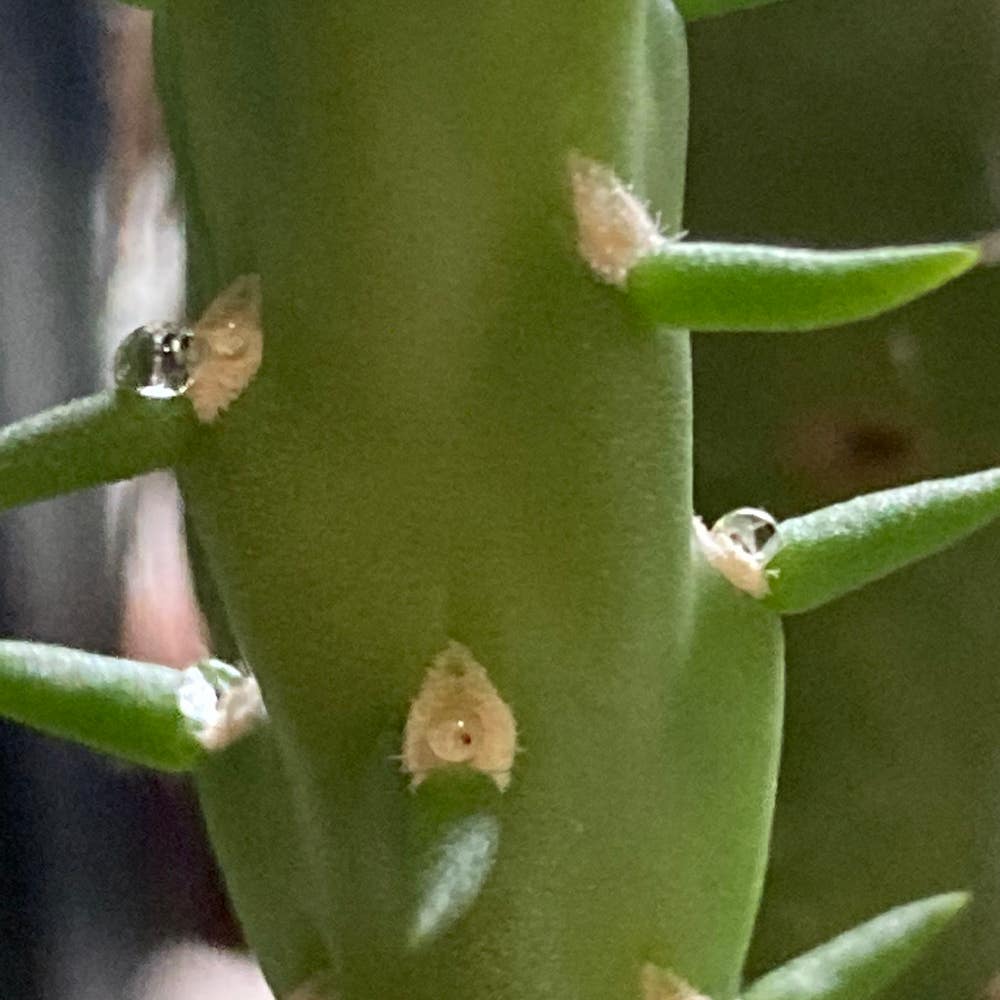
Why Are There Brown Spots on My Mini Cholla?
Cylindropuntia 'Mini Cholla'
By the Greg Editorial Team
Mar 12, 2024•3 min read
This article was created with the help of AI so we can cover more plants for you. May contain errors. See one? Report it here.
Banish brown spots 🍂 on your Mini Cholla with our expert care and prevention guide!
- 🌵 Overwatering and sunburn cause brown spots; adjust water and light exposure.
- Pests and diseases can mark Mini Cholla; inspect and treat promptly.
- Prevent spots with proper watering, gradual light exposure, and regular check-ups.
Spotting the Trouble: Identifying Brown Spots on Mini Cholla
🌊 Overwatering Woes
Soggy soil is a no-go for Mini Cholla, leading to the dreaded brown spot blues. If your cactus has soft, mushy spots, it's likely crying out from too much water.
Waterlogged roots give themselves away with a distinct look and feel. If the base of your Mini Cholla feels more like a swamp than a desert, you've overstepped the watering mark.
🌞 Too Much Sun, Too Little Fun
Mini Cholla can get a sunburn, just like us, and it's not pretty. Look for crispy, bleached spots on the areas most exposed to the sun.
Recognizing light-induced spots is key; they often show up as dry, discolored patches. If your cactus is sporting these, it's time to rethink its sunbathing habits.
🐜 Unwanted Guests: Pests and Diseases
Pests and diseases are the party crashers of the plant world, leaving behind brown spots as evidence. Common culprits include spider mites and fungal infections.
Identifying these marks can be tricky, but look for tiny black dots or spots with yellow halos. These are the red flags signaling it's time to take action against these tiny troublemakers.
Immediate Relief: Treating Brown Spots on Mini Cholla
💧 Drying Out: Adjusting Your Watering Technique
Overwatering is the silent killer of Mini Chollas. It's not just about giving less water, but about timing. Ensure the soil's top layer is dry to the touch before you even think about watering again. Use a long-spouted watering can to avoid the leaves; they hate getting wet.
🌞 Shifting Shades: Managing Light Exposure
Your Mini Cholla loves the sun, but not to the point of a sunburn. If it's starting to look like it's had too much beach time, it's shade o'clock. Find
Long-Term Care: Preventing Future Brown Spots
💧 Water Wisdom: Keeping the Roots Happy and Healthy
Watering isn't a guessing game. Roots thrive on a schedule—water only when the soil is dry to the touch. Think of it as a plant's plea for a drink. Overwatering invites brown spots to the party, and nobody wants that.
🌱 The Role of Well-Draining Soil
Well-draining soil is non-negotiable. It's like a good mattress for your Mini Cholla—supportive yet breathable. Ensure your pot has drainage holes; it's the difference between a plant spa and a swamp.
☀️ Light Lessons: Protecting from the Scorch
Sunburn isn't just a human hassle; Mini Chollas can get crispy too. Gradually introduce your cactus to more light to build its tolerance. It's like sunscreen for plants, minus the greasy feel.
🌅 Gradual Light Exposure Changes
Shifting shades can save your Mini Cholla from a light-induced meltdown. Move it slowly to brighter spots, avoiding the midday sun's harsh glare. It's the plant equivalent of acclimating to a hot bath.
🕵️ Routine Recon: Keeping an Eye Out for Early Signs
Inspections should be as regular as your morning coffee. Early detection of brown spots can mean the difference between a quick fix and a full-blown plant funeral.
🐜 Proactive Pest Control
Pests are sneaky little critters. Keep an eye out for unwanted guests and show them the door with spot treatments. It's like being a bouncer at the club of Plant Health—no entry for troublemakers.
⚠️ Safety First
This content is for general information and may contain errors, omissions, or outdated details. It is not medical, veterinary advice, or an endorsement of therapeutic claims.
Always consult a qualified healthcare professional before using any plant as food, medicine, or supplement.
Never eat any plant (or feed one to pets) without confirming its identity with at least two trusted sources.
If you suspect poisoning, call Poison Control (800) 222-1222, the Pet Poison Helpline (800) 213-6680, or your local emergency service immediately.
Spotted an error? Please report it here.
Banish brown spots from your Mini Cholla with Greg's tailored reminders 🌵, ensuring perfect watering and sun exposure for a thriving cactus.