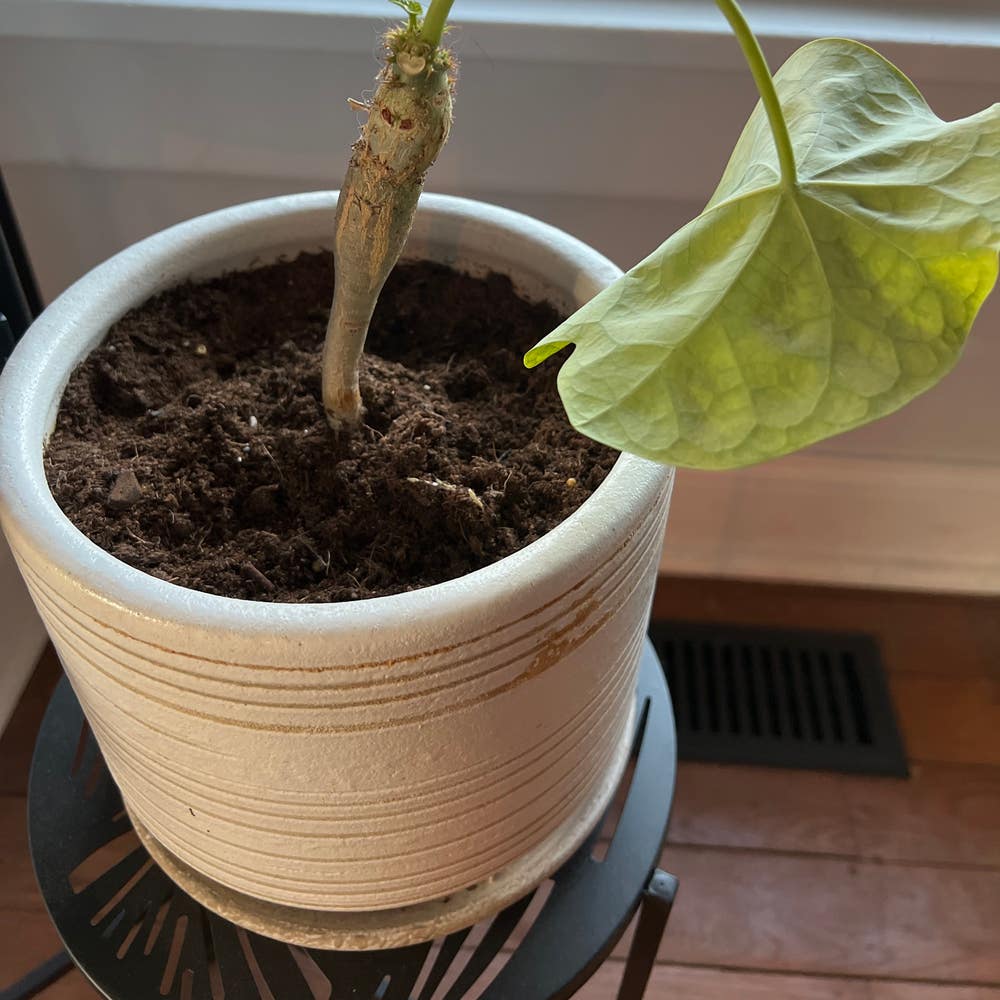
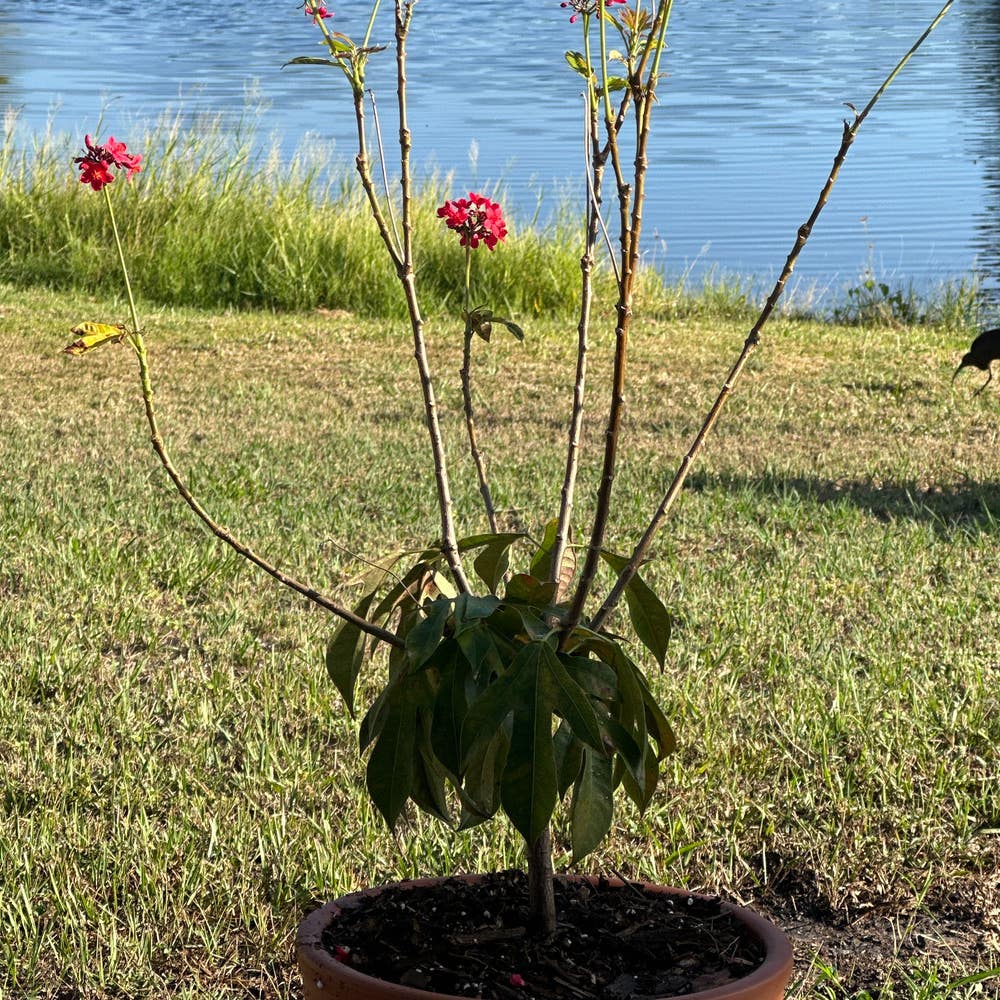
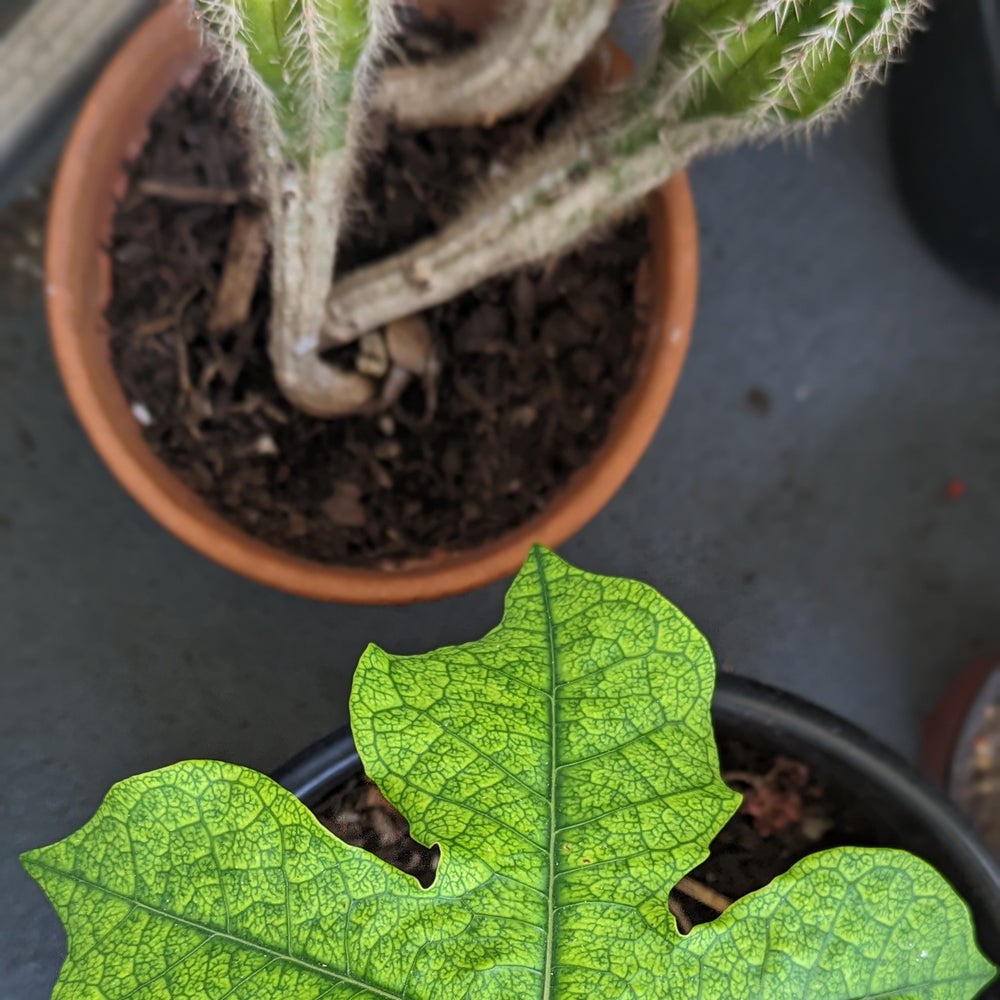
🍂 Ultimate Guide to Fixing Leaves Falling Over on Jatropha
Jatropha spp.
By the Greg Editorial Team
Oct 22, 2024•5 min read
This article was created with the help of AI so we can cover more plants for you. May contain errors. See one? Report it here.
Unlock thriving Jatropha care 🌱 with essential tips to tackle common issues and seasonal changes effortlessly!
- 💧 Overwatering and underwatering cause leaf drop; monitor soil moisture closely.
- 🌞 Jatropha needs 6-8 hours of sunlight daily to thrive and prevent leaf issues.
- 🌱 Nutrient deficiencies like nitrogen and potassium can lead to yellowing leaves; fertilize accordingly.
Diagnosing the Problem
🚰 Signs of Overwatering
Overwatering is a common issue for Jatropha plants, and it often manifests through several telltale signs.
- Yellowing leaves indicate potential root issues, often signaling that the roots are struggling to absorb nutrients.
- If you notice wilting despite wet soil, this could be a sign of root rot, where roots are damaged and unable to function properly.
- A foul smell from the soil suggests anaerobic conditions, which can lead to further root decline.
💧 Signs of Underwatering
Conversely, underwatering can also lead to distress in your Jatropha.
- Leaf curling is a clear indicator, with leaves turning crispy and dry as they lose moisture.
- If you experience sudden leaf drop, it’s a sign that the plant is in distress and needs immediate attention.
- Soil dryness, characterized by a cracked or hard surface, shows that your plant isn’t getting enough water.
🥦 Identifying Nutrient Deficiencies
Nutrient deficiencies can also cause leaves to fall over on your Jatropha.
- A nitrogen deficiency typically results in yellowing of older leaves, as the plant reallocates nutrients.
- Potassium deficiency manifests as leaf tip burn and browning, which can be alarming to see.
- Lastly, magnesium deficiency leads to interveinal chlorosis, where the area between the veins turns yellow while the veins themselves remain green.
Understanding these signs is crucial for maintaining a healthy Jatropha. By diagnosing the problem early, you can take the necessary steps to restore your plant's vitality. Next, let’s explore preventive measures to keep your Jatropha thriving.
Preventive Measures
Optimal Watering Practices 🌊
Watering your Jatropha correctly is crucial for its health. Allow the soil to dry out between waterings to prevent root rot.
To ensure you're watering properly, regularly check the soil moisture. Adjust your watering frequency during dry seasons, as your plant may need more hydration when the heat is on.
Soil Requirements for Healthy Growth 🌱
The right soil can make all the difference for your Jatropha. Aim for well-draining sandy or loamy soil to promote healthy root development.
Maintaining a slightly acidic to neutral pH level (between 6.0 and 7.0) is essential. Consider adding compost to enhance nutrient retention and improve soil structure.
Best Light Conditions ☀️
Jatropha thrives in full sun, requiring 6 to 8 hours of sunlight daily. Insufficient light can lead to etiolation, causing the plant to stretch and drop leaves.
If your plant isn't getting enough light, consider moving pots or pruning surrounding foliage to improve access. Proper light conditions are key to a vibrant, healthy Jatropha.
These preventive measures set the stage for a thriving plant. Next, let’s explore effective treatment solutions for common issues.
Treatment Solutions
🌧️ How to Treat Overwatered Jatropha
Assess Soil Moisture: Start by checking the soil moisture. Use a moisture meter or simply stick your finger into the soil to gauge its dampness.
Adjust Watering Schedule: If the soil feels overly wet, it's time to cut back. Reduce both the frequency and the amount of water you give your Jatropha.
Improve Drainage: If issues persist, consider repotting your plant. Choose a well-draining soil mix to help prevent future waterlogging.
💧 How to Treat Underwatered Jatropha
Rehydrate Gradually: When your Jatropha shows signs of underwatering, water it thoroughly. However, avoid soaking it all at once to prevent shock.
Monitor Soil Moisture: Keep a close eye on the soil moisture levels. Regular checks will help you avoid repeating the same mistake.
Adjust Watering Routine: Establish a consistent watering schedule. This will help your plant thrive and prevent future issues.
🐞 Pest Control Methods
Natural Remedies: Consider using neem oil or insecticidal soap to manage pests. These options are effective and less harmful to your plant.
Physical Removal: For larger pests like aphids, hand-picking can be surprisingly effective. It’s a simple way to keep your plant healthy.
Monitoring and Prevention: Regular inspections are key. Catching pests early can save your Jatropha from significant damage.
By addressing overwatering, underwatering, and pest issues, you can ensure your Jatropha remains healthy and vibrant. Next, let’s explore how to adjust care during different seasons for optimal growth.
Seasonal Care
🌦️ Adjusting Care During Different Seasons
Caring for your Jatropha requires seasonal adjustments to keep it thriving.
Summer Care
In summer, increase watering to keep the soil consistently moist. Regularly check for pests, as warmer weather can invite unwanted visitors.
Winter Care
During winter, reduce watering significantly. Protect your plant from frost by moving it indoors or covering it if it's outside.
Spring Care
Spring is the time for rejuvenation. Fertilize your Jatropha and consider repotting if it has outgrown its current container.
🍂 Preparing for Seasonal Changes
Transitioning your Jatropha through the seasons is crucial for its health.
Transitioning Indoors
If you bring your plant indoors, acclimatize it gradually to lower light levels. This helps prevent shock and keeps it healthy.
Mulching
Apply mulch around the base to insulate the roots during colder months. This simple step can make a big difference in root health.
Pruning
Before seasonal changes, prune away any dead or damaged leaves. This not only improves appearance but also encourages new growth.
With these seasonal care tips, your Jatropha will flourish year-round. Next, let’s explore treatment solutions for common issues that may arise.
⚠️ Safety First
This content is for general information and may contain errors, omissions, or outdated details. It is not medical, veterinary advice, or an endorsement of therapeutic claims.
Always consult a qualified healthcare professional before using any plant as food, medicine, or supplement.
Never eat any plant (or feed one to pets) without confirming its identity with at least two trusted sources.
If you suspect poisoning, call Poison Control (800) 222-1222, the Pet Poison Helpline (800) 213-6680, or your local emergency service immediately.
Spotted an error? Please report it here.
Keep your Jatropha thriving and lush 🌱 by recognizing its needs and using Greg's tailored watering reminders to give it the perfect care it deserves!