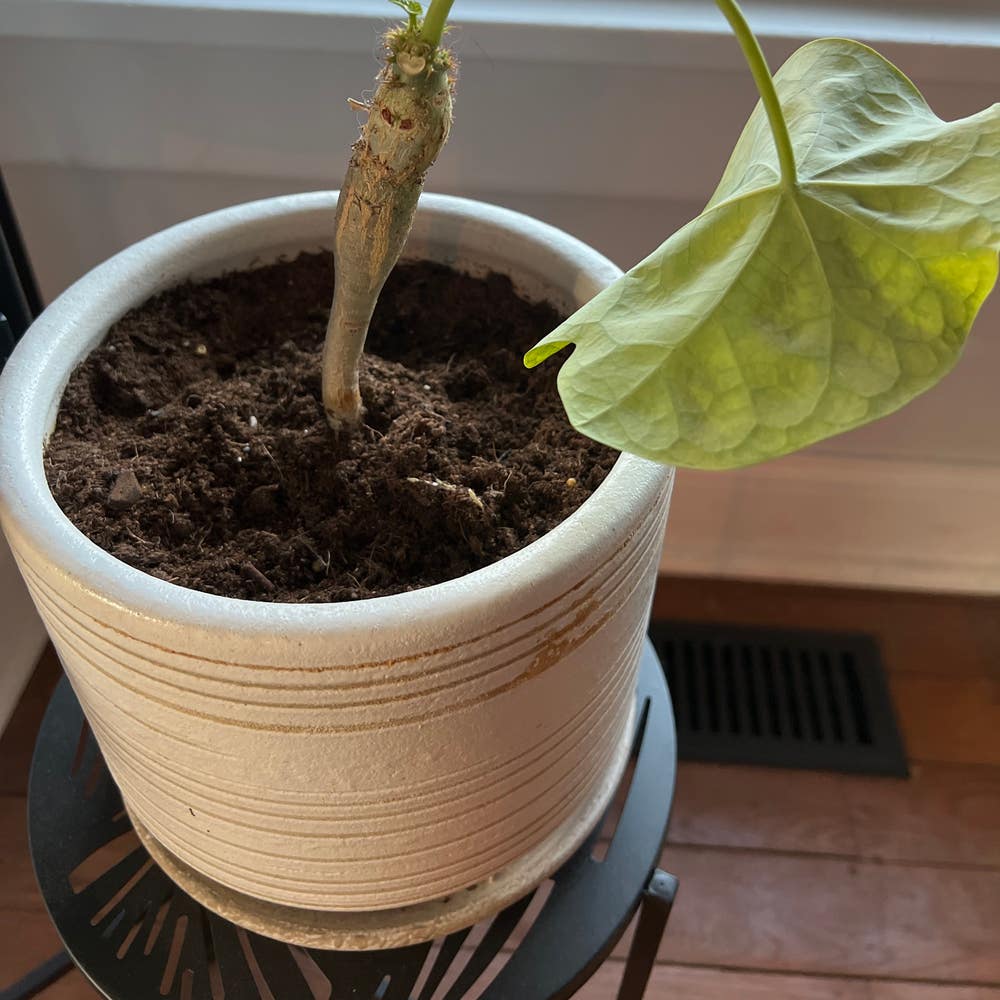
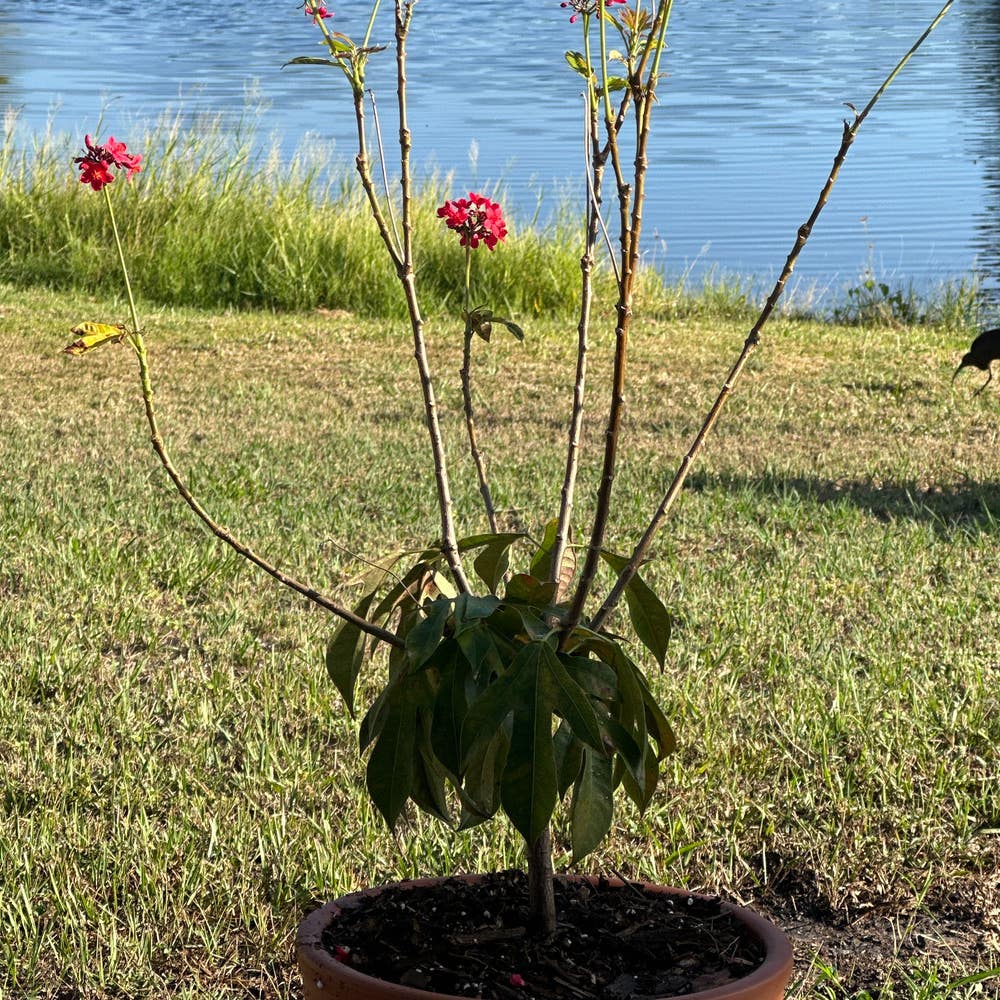
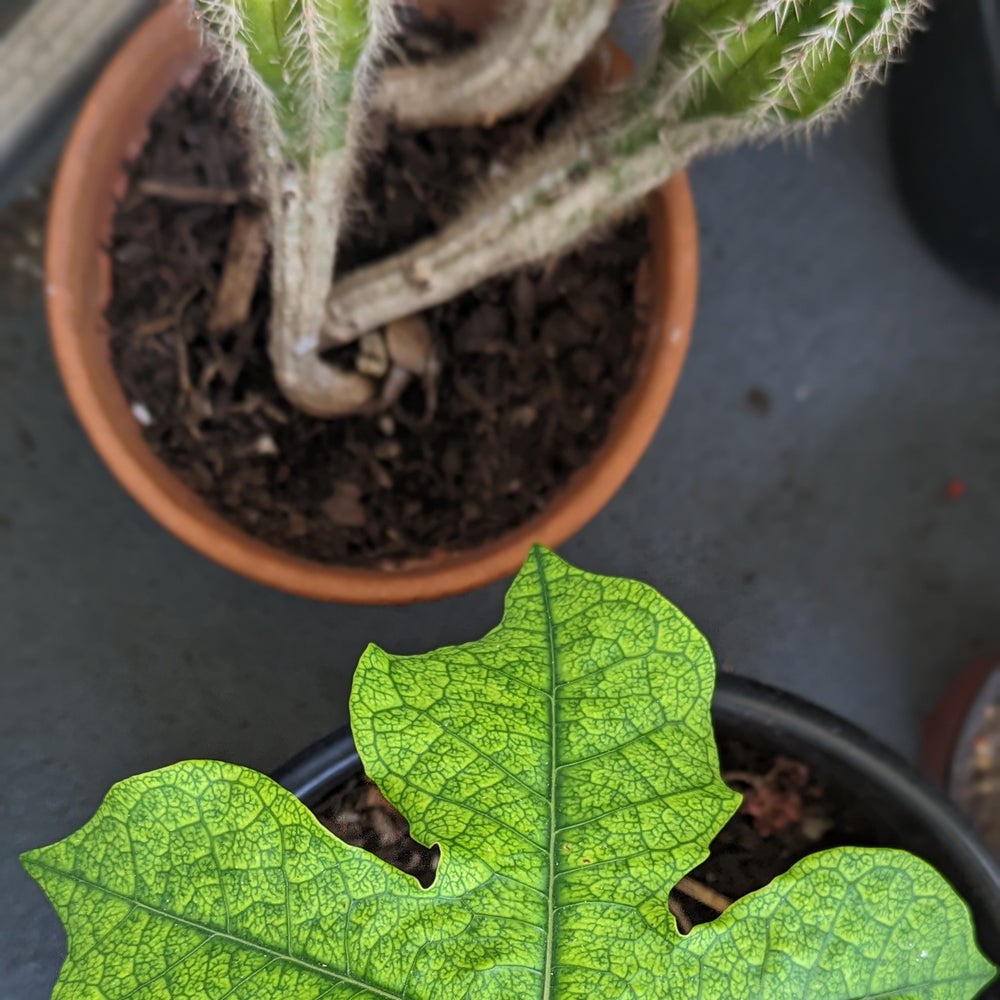
💧 How to Fix Droopy Leaves on Your Jatropha
Jatropha spp.
By the Greg Editorial Team
Oct 22, 2024•4 min read
This article was created with the help of AI so we can cover more plants for you. May contain errors. See one? Report it here.
Transform your droopy Jatropha into a thriving beauty 🌱 with these essential care tips for vibrant leaves!
- 💧 Droopy leaves can signal both overwatering and underwatering; check soil moisture regularly.
- 🌱 Well-draining soil and consistent watering are crucial for Jatropha health.
- 🐛 Early pest detection prevents damage; inspect undersides of leaves frequently.
Diagnosing the Problem
Signs of Overwatering vs. Underwatering 🌊
Understanding the signs of overwatering and underwatering is crucial for your Jatropha's health.
Overwatering indicators include yellowing leaves and mushy roots upon inspection. If you notice these symptoms, it’s time to reassess your watering habits.
On the other hand, underwatering indicators manifest as crispy leaf edges and soil pulling away from the pot. These signs suggest your plant is thirsty and needs immediate attention.
Identifying Pest Infestations 🐛
Pests can wreak havoc on your Jatropha, so it's essential to identify them early.
Common pests include aphids, which leave a sticky residue on leaves, and spider mites, known for fine webbing and stippled leaves.
To check for these pests, inspect the undersides of leaves and stems. This simple technique can save your plant from significant damage.
Assessing Soil Quality and Drainage 🏞️
Soil quality and drainage are vital for a thriving Jatropha.
Ensure you use well-draining soil to prevent root rot. A quick drainage test involves pouring water into the pot and observing if it flows freely.
If you see water pooling on the surface, your drainage is poor. This could lead to serious issues for your plant, so take action promptly.
With these diagnostic steps, you can pinpoint the problem affecting your Jatropha's droopy leaves. Next, let’s explore effective solutions to revive your plant.
Solutions for Droopy Leaves
🌊 Adjusting Watering Practices
Establishing a consistent watering schedule is crucial for your Jatropha's health. Water when the top inch of soil feels dry, and ensure you water until it drains from the bottom.
Using moisture meters can help you gauge soil moisture accurately. This simple tool makes it easy to avoid both overwatering and underwatering.
🌱 Improving Soil Conditions
Soil quality plays a significant role in your plant's vitality. Consider adding perlite or sand to improve drainage and aeration.
If your Jatropha's roots are struggling, repotting might be necessary. This is especially true if you notice root crowding or poor growth.
🐛 Treating Pests and Diseases
Pest infestations can lead to droopy leaves, so it's essential to act quickly. Use neem oil to tackle aphids effectively, while insecticidal soap works wonders against spider mites.
After treatment, keep an eye on your plant for signs of recovery. Monitoring progress will help you ensure your Jatropha is back to its vibrant self.
By addressing watering practices, soil conditions, and pest issues, you can revive your droopy Jatropha. Next, let’s explore some preventative measures to keep your plant thriving.
Preventative Measures
🌱 Best Practices for Jatropha Care
To keep your Jatropha thriving, regularly check soil moisture levels. This simple habit can prevent both overwatering and underwatering, ensuring your plant stays healthy.
Additionally, maintain proper light exposure by providing 6-8 hours of direct sunlight daily. Jatropha loves the sun, and adequate light is crucial for vibrant leaves.
📅 Seasonal Care Tips to Prevent Droop
During dry seasons, adjust your watering frequency. The hotter months may require more frequent watering to keep the soil consistently moist.
In colder months, protect your Jatropha from frost. A little extra care during winter can make a significant difference in its overall health.
🌤️ Monitoring Environmental Conditions
Using hygrometers to track humidity levels is essential. Jatropha prefers a balanced environment, and monitoring humidity can help you make necessary adjustments.
Finally, adjust indoor conditions to mimic its natural habitat. This attention to detail can lead to a flourishing plant that showcases its stunning leaves.
By implementing these preventative measures, you can enjoy a healthy, droop-free Jatropha. Next, let’s explore some common myths and misconceptions surrounding Jatropha care.
Myths and Misconceptions
💧 Common Myths About Jatropha Droop
One prevalent myth is that all droopy leaves indicate overwatering. While overwatering is a common issue, it's crucial to recognize that underwatering can also lead to droopiness.
Understanding this distinction can save your Jatropha from unnecessary stress. Always check the soil moisture before jumping to conclusions.
🔍 Clarifying Misconceptions About Jatropha Care
Another misconception is that Jatropha doesn't require much attention. In reality, regular monitoring is essential for maintaining healthy leaves and overall plant vigor.
Your Jatropha thrives on care and observation. A little attention goes a long way in ensuring its lush growth and vibrant health.
With these insights, you're better equipped to nurture your plant effectively. Next, let's explore some preventative measures to keep your Jatropha thriving.
⚠️ Safety First
This content is for general information and may contain errors, omissions, or outdated details. It is not medical, veterinary advice, or an endorsement of therapeutic claims.
Always consult a qualified healthcare professional before using any plant as food, medicine, or supplement.
Never eat any plant (or feed one to pets) without confirming its identity with at least two trusted sources.
If you suspect poisoning, call Poison Control (800) 222-1222, the Pet Poison Helpline (800) 213-6680, or your local emergency service immediately.
Spotted an error? Please report it here.
Ensure your Jatropha thrives by mastering watering and pest management, and let Greg's personalized reminders 🌿 guide you to vibrant growth and health!