Diagnosing Japanese Cobra Lily Root Rot
Arisaema ringens
By the Greg Editorial Team
Jun 11, 2024•4 min read
This article was created with the help of AI so we can cover more plants for you. May contain errors. See one? Report it here.
Act fast 🏃♂️ to rescue your Japanese Cobra Lily from root rot by spotting early symptoms and taking immediate action! 🌿
- Yellow leaves and wilting signal early root rot in Japanese Cobra Lilies.
- Mushy, foul-smelling roots confirm advanced root rot; act quickly.
- Prevent recurrence with proper watering, drainage, and repotting practices.
Spotting the Red Flags: Symptoms of Root Rot
🚩 Yellowing Leaves and Wilting: The First Signs to Look Out For
When your Japanese Cobra Lily starts to sport yellow leaves and a wilted posture, it's not trying to make a fashion statement. These are the plant's version of distress signals, hinting that all is not well beneath the soil.
🍄 Mushy Roots and Foul Odor: Confirming the Presence of Root Rot
Dig a little deeper, and you might encounter roots that feel like they've been through a blender—mushy and lacking integrity. If the soil smells like it's hosting a microbe party, that's your confirmation: root rot has gatecrashed your plant's system.
🕰 Progression of Symptoms: Understanding the Urgency
Don't wait for a full-blown plant meltdown. If you notice any of these symptoms, it's time to act with urgency. Root rot is like a ticking time bomb for your plant's health, and the clock is ticking loudly.
Unearthing the Problem: How to Diagnose Root Rot
🌱 Root Examination: What Healthy vs. Affected Roots Look Like
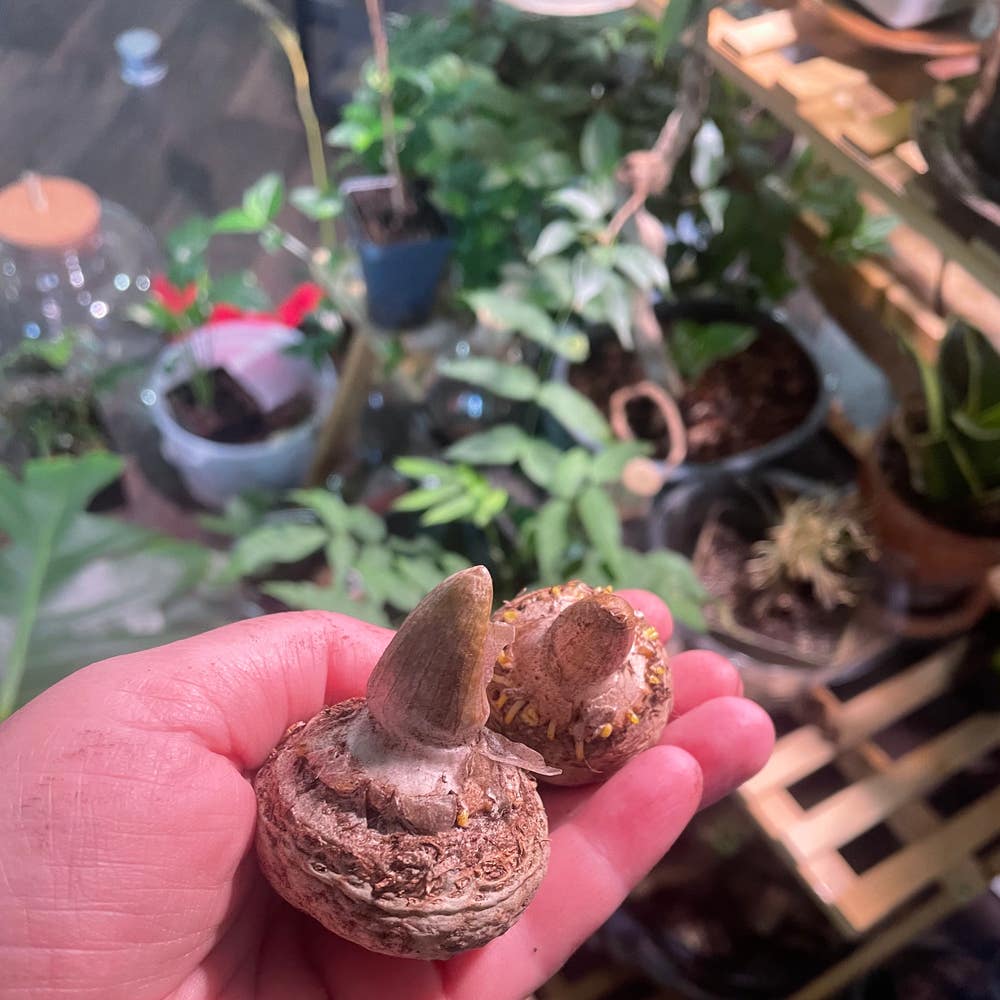
Healthy roots are the lifeline of your Japanese Cobra Lily, firm and sporting a pristine white or light tan color. Affected roots, however, will feel like you've just scooped up a handful of overcooked noodles—squishy, dark, and downright sad. If they also come with a side of foul odor, you've hit the root rot jackpot.
🌧️ Soil Assessment: Identifying Poor Drainage and Waterlogging Issues
When it comes to soil, think of it as the plant's bedroom. It should be comfortable and just moist enough—like a sponge that's been given a good squeeze. If it feels more like you've just pulled it out of a swamp, you've got drainage issues. Water should be able to leave the party when it's over, not linger and cause trouble. If your plant's roots are swimming rather than sipping, it's time to rethink your watering habits and possibly give your plant a new home with better drainage.
Taking Action: Immediate Treatment Steps
🌱 Removing Diseased Roots
Gently remove your Japanese Cobra Lily from its pot and clear away excess soil for a good look at the roots. Using sterilized shears, cut off any roots that are brown and mushy. It's a precision task—think of it as plant surgery where every snip counts.
💧 Soil and Water Management
After the root removal, let the roots air out; they need a breather, not a bath. Adjust your watering habits—overwatering is the enemy. Check the soil's moisture before giving your plant a drink, and use room-temperature water to avoid shocking the roots.
🌿 Repotting Essentials
Choose a clean pot with adequate drainage holes to prevent future waterlogging. When repotting, handle the roots with care, as if they were delicate treasures. Use a well-draining soil mix, and place the plant at its original depth. Water sparingly at first—think of it as rationing, not drenching.
Battling the Invisible Enemy: Fungal Treatment and Prevention
🌿 Fungicides vs. Natural Remedies
Fungicides pack a punch against root rot, but they're not to be used recklessly. They can be toxic to the environment and may lead to resistant fungal strains. Natural remedies, on the other hand, are gentler and can be part of a holistic plant care routine. Think of fungicides as the nuclear option—effective, but with potential fallout. Natural options are the covert ops—less dramatic but still significant in the long game.
💧 Watering Wisely
Overwatering is the fast track to root rot city. Watering wisely means letting the soil dry out between drinks. It's like giving your plant a breather between marathons. Establish a routine that's more about the plant's needs and less about the calendar. Your plant doesn't know it's Tuesday and frankly, it doesn't care.
🌱 Pot and Soil Best Practices
Drainage is your best friend in the fight against root rot. Make sure your pots have holes that could make a colander jealous. And the soil? It should be as well-draining as a freshly unclogged sink. Aeration is key, so get soil that lets roots breathe easier than a yogi in meditation. Remember, healthy roots are the foundation of a thriving plant—treat them like royalty.
⚠️ Safety First
This content is for general information and may contain errors, omissions, or outdated details. It is not medical, veterinary advice, or an endorsement of therapeutic claims.
Always consult a qualified healthcare professional before using any plant as food, medicine, or supplement.
Never eat any plant (or feed one to pets) without confirming its identity with at least two trusted sources.
If you suspect poisoning, call Poison Control (800) 222-1222, the Pet Poison Helpline (800) 213-6680, or your local emergency service immediately.
Spotted an error? Please report it here.
Act swiftly against Japanese Cobra Lily root rot by using Greg to detect early symptoms 🌡 and tailor your watering schedule for robust, rot-free roots!