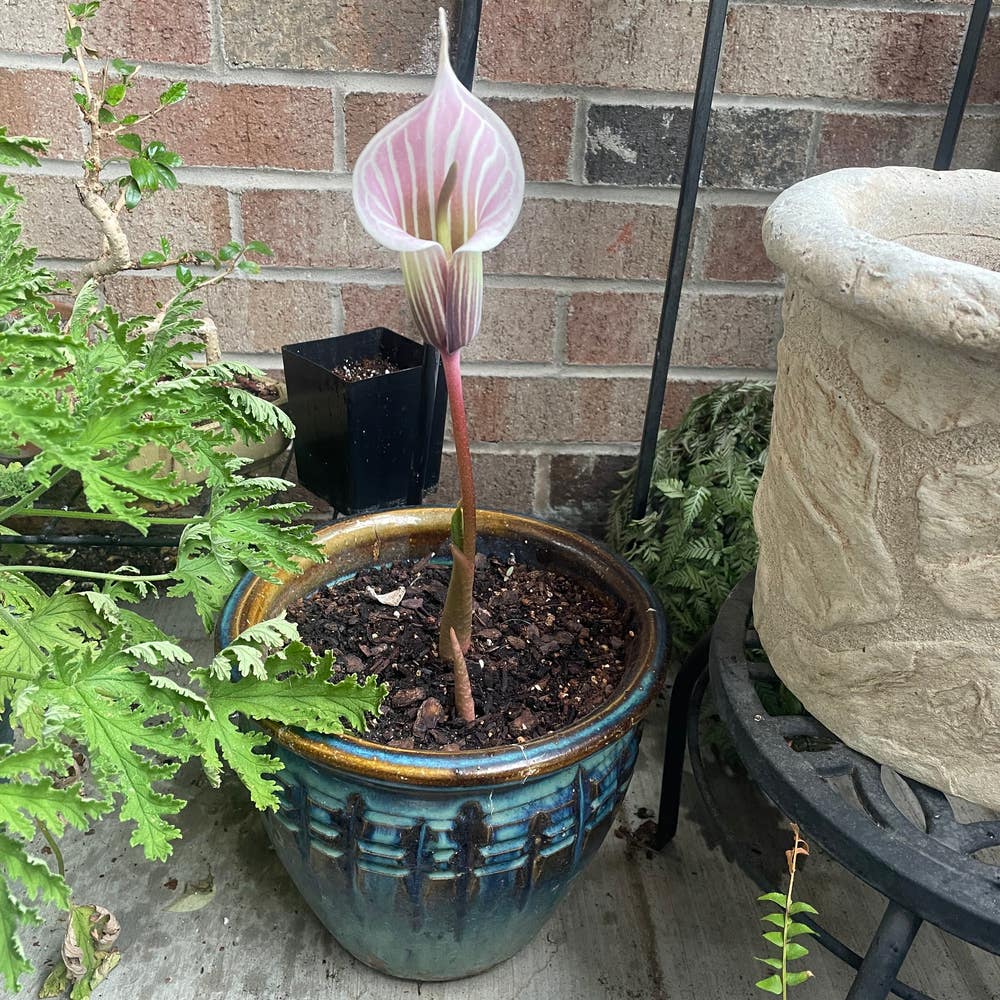
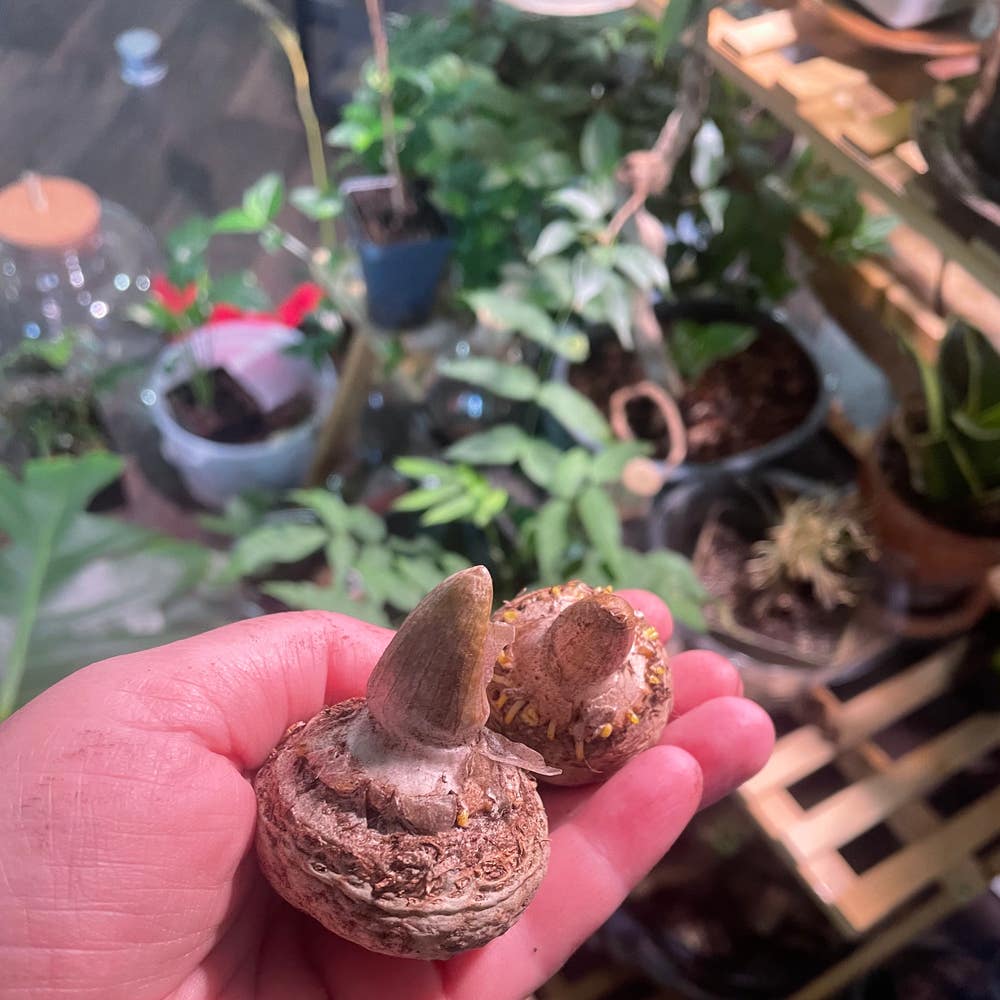
💧 What Is The Best Way To Water a Japanese Cobra Lily?
Arisaema ringens
By the Greg Editorial Team
Jun 11, 2024•4 min read
This article was created with the help of AI so we can cover more plants for you. May contain errors. See one? Report it here.
Nurture your Japanese Cobra Lily to perfection with tailored watering techniques that ensure vibrancy and health. 🌿✨
- Dry soil and yellow leaves signal it's time to water your Cobra Lily.
- Seasons and growth stages dictate watering frequency—more in summer, less in winter.
- Use quality water; avoid salts to prevent mineral buildup and root issues.
When to Water Your Japanese Cobra Lily
💧 Signs Your Plant is Thirsty
Dry soil isn't just an inconvenience for your Japanese Cobra Lily; it's a distress signal. If the leaves start looking more like autumn foliage than lush greenery, it's time to grab the watering can. Yellow leaves and crispy edges are your plant's way of saying, "Hey, I could use a drink!"
🌸 Reading the Seasons
Your watering schedule should be as flexible as a gymnast, changing with the seasons. In the summer, your plant's thirst will spike with the temperature. Come winter, it's more about maintenance sips than full-on gulps. Think of it as seasonal cocktail hour for your plant—sometimes it's happy hour, and sometimes it's just a nightcap.
🌱 Growth Stage Considerations
Like a teenager with a never-ending appetite, a young Japanese Cobra Lily needs more water to fuel its growth. But once it's settled and mature, it's more about quality than quantity. Keep the soil moist but not waterlogged; think of it as the plant equivalent of a balanced diet.
How to Water Your Japanese Cobra Lily
💧 Best Practices for Watering
To maintain even soil moisture without overwatering, water your Japanese Cobra Lily when the top half of the soil feels dry. Use your finger or a soil moisture meter to gauge dryness. For potted plants, water until it drains from the bottom; for garden plants, water deeply to moisten the soil thoroughly.
🛠 Tools of the Trade
Drip systems and self-watering containers can help regulate moisture levels, but don't forget to check the soil manually. Watering cans allow for precision, while hoses are suitable for outdoor plants. Choose tools that match the size and needs of your plant.
🌱 The Delicate Balance
Avoid waterlogging by ensuring pots have drainage holes and using well-draining soil. Reduce watering in winter to prevent root damage. If you overwater, let the soil dry out more between sessions and consider repotting with fresh, well-draining soil to prevent root rot.
Soil and Moisture: The Dynamic Duo
💧 Choosing the Right Soil Mix
Selecting the right soil mix for your Japanese Cobra Lily is like picking a tailored suit—it needs to fit just right. Moisture retention and drainage are your top priorities. A blend of peat, perlite, and sand can hit the sweet spot, keeping roots hydrated without drowning them. Remember, too much organic matter can turn your soil into a soggy mess, so balance is key.
🌱 Checking Soil Moisture
Knowing when to water is all about getting hands-on. Feel the soil—if it clings together slightly but isn't wet, it's time to water. If it's soggy, hold off and let it breathe. A moisture meter can be a nifty gadget for those who love a tech assist. Aim for moist, not marshy; think of it as your plant's comfort zone.
The Water Itself Matters
💧 Quality Over Quantity
Watering your Japanese Cobra Lily isn't just about frequency; the quality of water is crucial. Poor water quality can lead to a host of problems, from stunted growth to leaf discoloration.
🚱 Dealing with Hard Water and Additives
Hard water and chemicals like chlorine can wreak havoc on your plant's health. Over time, minerals can build up in the soil, potentially leading to nutrient lockout where your plant can't absorb what it needs.
🚰 Tap Water Troubles
If your tap water is more mineral cocktail than hydration haven, consider using rainwater or filtered water. These alternatives are gentler and can prevent the accumulation of harmful substances in the soil.
🧂 The Sodium Snafu
Beware of water softened with salt-based softeners. The sodium in softened water can accumulate in the soil, creating a toxic environment for your Japanese Cobra Lily's roots.
☠️ Chemical Conundrum
Chlorine and fluoride found in tap water can be harmful to sensitive plants. Letting tap water sit out overnight allows some chemicals to evaporate. For the best results, use water at room temperature to avoid shocking your plant's roots.
📊 The PPM Parameter
Keep an eye on the PPM (parts per million) of your water. This measures the mineral content, and high levels can indicate that your water might be too hard for your Japanese Cobra Lily.
🌊 Proactive Measures
Regularly flush the soil with distilled or rainwater to prevent mineral buildup. This simple step can help maintain a healthy balance in the soil, ensuring your plant thrives.
⚠️ Safety First
This content is for general information and may contain errors, omissions, or outdated details. It is not medical, veterinary advice, or an endorsement of therapeutic claims.
Always consult a qualified healthcare professional before using any plant as food, medicine, or supplement.
Never eat any plant (or feed one to pets) without confirming its identity with at least two trusted sources.
If you suspect poisoning, call Poison Control (800) 222-1222, the Pet Poison Helpline (800) 213-6680, or your local emergency service immediately.
Spotted an error? Please report it here.
Nurture your Japanese Cobra Lily to perfection by relying on Greg's tailored watering reminders 💧, ensuring your plant gets just the right amount of moisture, no matter the season.