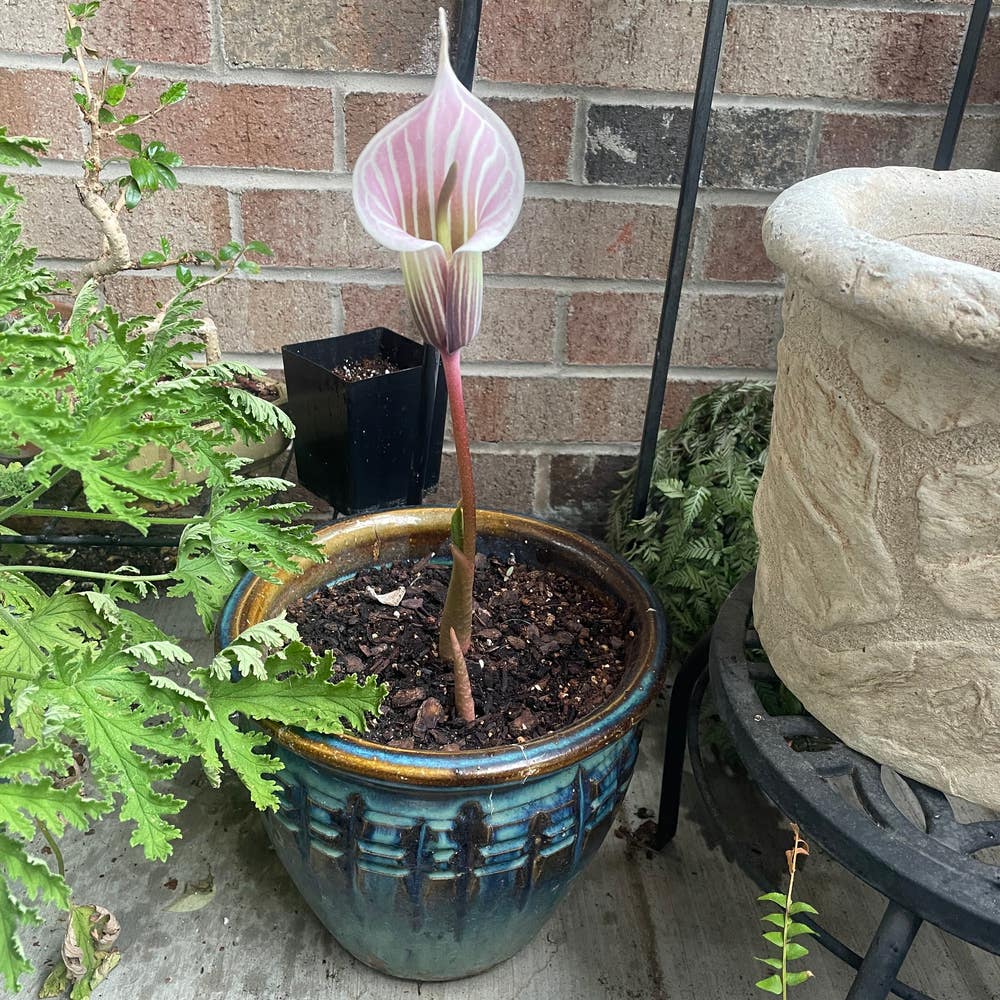
Why Are My Japanese Cobra Lily Leaves Dropping?
Arisaema ringens
By the Greg Editorial Team
Jun 10, 2024•5 min read
This article was created with the help of AI so we can cover more plants for you. May contain errors. See one? Report it here.
Solve the leaf-drop mystery 🍂 of your Japanese Cobra Lily and revive its captivating charm with our expert guide.
- Environmental stress and improper watering lead to leaf drop.
- Healthy roots and soil pH are crucial for Cobra Lily vitality.
- Prevent pests and diseases with regular inspection and cleanliness.
Spotting the Trouble Signs
🚨 Visual Symptoms of Distress
Discoloration and wilting are your plant's version of a distress signal. If it's not just the older leaves that are affected, you've got a systemic issue on your hands.
🔍 Recognizing patterns
A pattern of trouble across the plant suggests a deeper problem than a solitary sad leaf. Consistency in these signs can't be ignored; it's your cue to dig deeper.
🌱 Root Health Check
To investigate root health, think of yourself as a plant surgeon: be gentle but thorough. Healthy roots are firm and white, while unhealthy ones are mushy and brown.
🚩 What healthy vs. unhealthy roots look like
Healthy roots are the lifelines of your plant, so spotting ones that look like leftovers is a red flag. If they're waving a white flag of surrender, it's time for action.
Unraveling the Causes of Leaf Drop
💡 Environmental Stressors
Light and temperature are the yin and yang of plant life. Too much sun and your Japanese Cobra Lily might as well be baking in an oven. Too little, and it's like living in a cave—neither is conducive to a happy plant. Humidity is another Goldilocks scenario; get it just right, and your leaves stay put. Too dry, and they'll drop like flies. Too moist, and you're inviting a fungal rave.
🚰 Water Woes
Watering is less of a science and more of an art. Overwater, and you're drowning the roots; underwater, and you're parching them. It's a delicate dance, and your Cobra Lily doesn't want to tango with extremes. Water quality can't be ignored either. Tap water laden with chemicals is like serving fast food—it might not kill you, but it's not doing you any favors.
🍽️ Soil and Substrate Secrets
The right soil mix is the Cobra Lily's bedrock. Without well-draining soil, you're setting the stage for root rot, and that's a horror show you don't want a ticket to. pH levels are the silent influencers in this drama. Too acidic or too alkaline, and your plant's nutrient uptake is compromised, like trying to eat with your hands tied. Keep it neutral, and watch your plant thrive.
Turning Things Around: Remedies and Prevention
💡 Fine-Tuning the Environment
Light and temperature are pivotal for your Japanese Cobra Lily's comeback. Strike the right balance: too much sun scorches, too little stunts. Aim for bright, indirect light. Keep temperatures consistent—think of your plant's comfort, not just your thermostat setting.
For humidity, think tropical, not desert. Use a humidifier or a pebble tray to up the moisture. But don't forget airflow; it's the unsung hero preventing fungal parties.
🚰 Watering Wisdom
Craft a watering schedule that's less willy-nilly, more precision. Let the soil's top layer dry before the next watering rendezvous. It's a delicate dance between hydrated and soggy—your plant's roots need to breathe, not swim.
Water quality can't be an afterthought. If your tap water is more chemical cocktail than pristine spring, consider filtering. Your Cobra Lily's roots are gourmets, not garbage disposals.
🍽️ Soil Solutions
When your plant's home feels more like quicksand than a comfy bed, it's time to repot. Choose a mix that's well-draining and rich in organic matter—think compost, not clay.
pH levels can be stealthy saboteurs. Too acidic or alkaline, and your plant's nutrient uptake goes haywire. Aim for neutral, and if you need to adjust, do it with the finesse of a pH ninja. No dramatic soil amendments, just gentle nudges.
Keeping Pests and Diseases at Bay
🐜 Common Culprits in Leaf Drop
Pests and diseases are like uninvited guests at a garden party. They sneak in and wreak havoc on your Japanese Cobra Lily. Aphids, spider mites, and whiteflies turn leaves into their personal buffets, leaving behind a sticky mess. Fungal diseases, on the other hand, are the silent assassins with their spotted patterns of destruction.
To catch these party crashers, inspect your plant regularly. Look beneath the leaves and near the buds for any signs of distress. If you spot invaders, it's time for action. A swift swipe of neem oil or insecticidal soap can send them packing. Remember, cleanliness is next to pestlessness, so keep those leaves pristine.
🛡️ Proactive Protection
Preventative measures are like your plant's personal security system. Maintain good air circulation and keep the foliage dry to discourage those fungal freeloaders. When it comes to pruning, think of it as your plant's personal trainer—trimming off the excess to keep it in top shape.
If you're late to the party and pests have already moved in, don't panic. Isolate the affected plant to contain the outbreak. Remove any fallen leaves and clear debris to disrupt the pest life cycle. For diseases, sometimes a fungicide is necessary, but use it as a last resort and follow the label like it's the law.
In the end, staying vigilant and acting quickly are your best defenses. Keep your eyes peeled and your tools clean, and you'll keep those leaves where they belong—on your plant, not the ground.
⚠️ Safety First
This content is for general information and may contain errors, omissions, or outdated details. It is not medical, veterinary advice, or an endorsement of therapeutic claims.
Always consult a qualified healthcare professional before using any plant as food, medicine, or supplement.
Never eat any plant (or feed one to pets) without confirming its identity with at least two trusted sources.
If you suspect poisoning, call Poison Control (800) 222-1222, the Pet Poison Helpline (800) 213-6680, or your local emergency service immediately.
Spotted an error? Please report it here.
Prevent your Japanese Cobra Lily from shedding another leaf by tackling plant distress 🍂 with Greg's tailored care schedule and real-time community support.