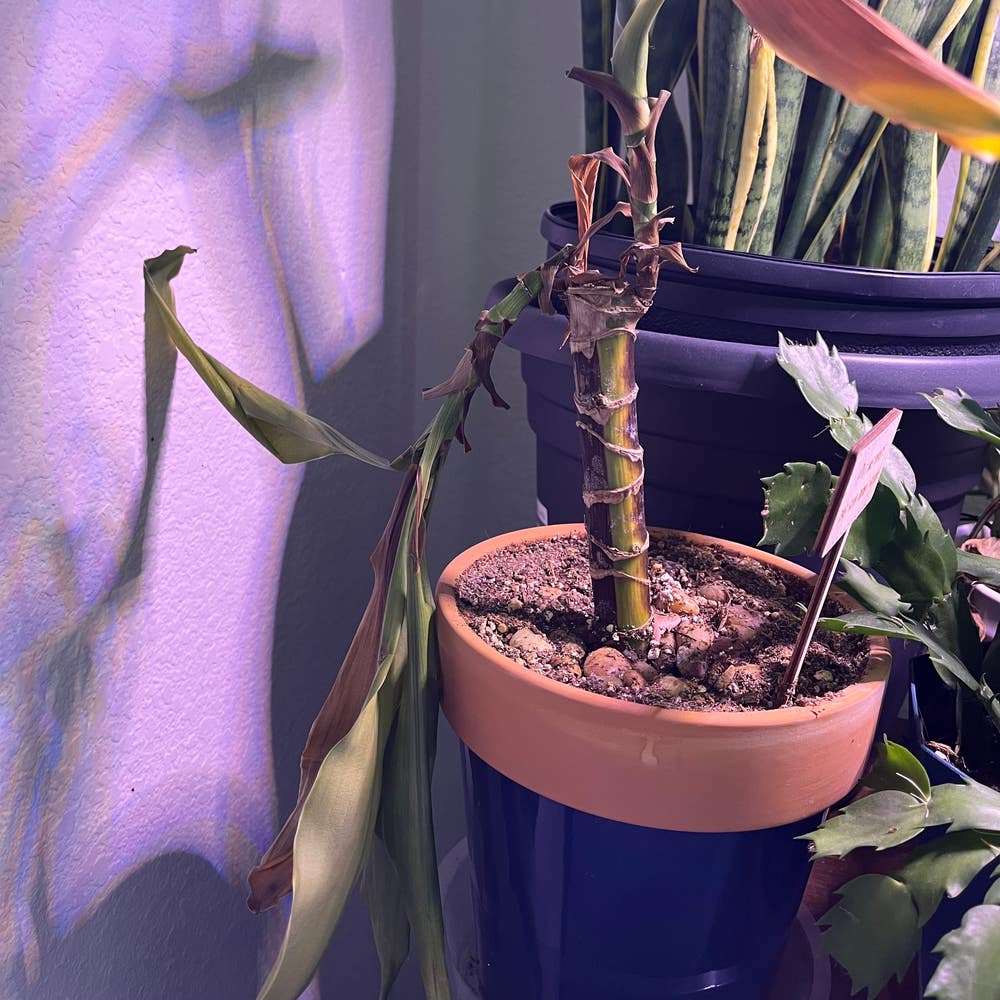
How to Know When to Repot a Dracaena 'Sted Sol Cane'?
Dracaena fragrans 'Sted Sol Cane'
By the Greg Editorial Team
Jun 18, 2024•4 min read
This article was created with the help of AI so we can cover more plants for you. May contain errors. See one? Report it here.
- Roots circling or peeking out? Time to repot your Dracaena.
- 🌱 Spring repotting aligns with Dracaena's natural growth cycle.
- Choose the right pot size—1-2 inches larger for healthy growth.
Spotting the Tell-Tale Signs for Repotting
🌱 Root Revelations
Roots are the Dracaena's lifeline, and when they start to circle the pot or peek out of drainage holes, it's a clear signal for more space. This root-bound state means your plant's growth could be stunted; it's not just being quirky, it's suffocating.
🌿 Above the Soil
Growth that's slowed to a crawl or leaves that droop like they've given up on life are visual cues screaming for a repot. A top-heavy Dracaena teetering in its pot is more than an aesthetic issue; it's a distress signal.
💧 Water Woes
If water zips through the soil like it's on a slip 'n slide, barely moistening it, or if leaves turn yellow and swollen, your Dracaena's pot might as well be a swimming pool with poor drainage. These are not just watering mishaps; they're red flags for a repotting emergency.

The Repotting Rundown
⏰ Timing is Everything
Spring is the prime time for repotting your Dracaena 'Sted Sol Cane'. This season aligns with the plant's natural growth cycle, giving it a chance to establish in its new pot before the slower winter months. Avoid repotting in winter to prevent stressing the plant during its rest period.
Out with the Old
Before repotting, water your Dracaena to ease the transition. Gently coax the plant out of its pot; if it resists, use a knife to separate the soil from the pot's edges. Be mindful not to damage the roots in the process.
Root TLC
Inspect the root ball for dead or rotting roots and trim these away with sterile pruners. If the roots are tightly wound, untangle them to encourage outward growth. This step is crucial for preventing future root-bound issues and promoting a healthy root system in the new pot.

Choosing the Perfect Pot
🏺 Material Matters
Terracotta, ceramic, and plastic are the main contenders for housing your Dracaena 'Sted Sol Cane'. Terracotta is praised for its breathability, which helps prevent overwatering by wicking away excess moisture. However, it's fragile and heavy, making it less ideal if you like to shuffle your plants around. Ceramic pots are stylish and functional, but they often come with a higher price tag and may lack drainage holes. Plastic pots are the budget-friendly, lightweight option, but they can lead to water retention issues if you're not careful with your watering schedule.
Size and Space
The right size pot is crucial for the health and growth of your Dracaena. A pot that's too small can lead to a root-bound plant, while one that's too large may hold excess moisture and cause root rot. Aim for a pot that's about 1-2 inches larger in diameter than the current one. This provides enough room for growth without drowning the roots. Remember, your Dracaena 'Sted Sol Cane' will thank you for the extra space with lush, green growth.

The Ideal Soil Situation
🌱 Mixing it Right
Crafting the perfect potting mix for Dracaena 'Sted Sol Cane' is like being a chef; you need the right ingredients for a stellar dish. Start with a well-draining potting soil—the foundation of your plant's health. Add organic matter like coco coir or peat moss to retain moisture without waterlogging. Toss in a handful of perlite or vermiculite for that airy touch, ensuring roots can breathe and water can escape. No moisture-retaining crystals here; they're a no-go, as they could drown your Dracaena in excess water.
🚰 Drainage Dos and Don'ts
Proper drainage is non-negotiable. Your Dracaena's roots despise soggy conditions more than cats hate water. Ensure your pot has adequate drainage holes; no one likes a bath that never ends. Mix in perlite or pumice with your potting soil to create a well-aerated environment, allowing your plant to sip water at its leisure without the risk of root rot. Remember, a happy Dracaena is one that's not swimming in its pot.
⚠️ Safety First
This content is for general information and may contain errors, omissions, or outdated details. It is not medical, veterinary advice, or an endorsement of therapeutic claims.
Always consult a qualified healthcare professional before using any plant as food, medicine, or supplement.
Never eat any plant (or feed one to pets) without confirming its identity with at least two trusted sources.
If you suspect poisoning, call Poison Control (800) 222-1222, the Pet Poison Helpline (800) 213-6680, or your local emergency service immediately.
Spotted an error? Please report it here.
Revitalize your Dracaena 'Sted Sol Cane' 🌿 with Greg's tailored reminders to repot at the ideal time, ensuring a thriving plant year-round!