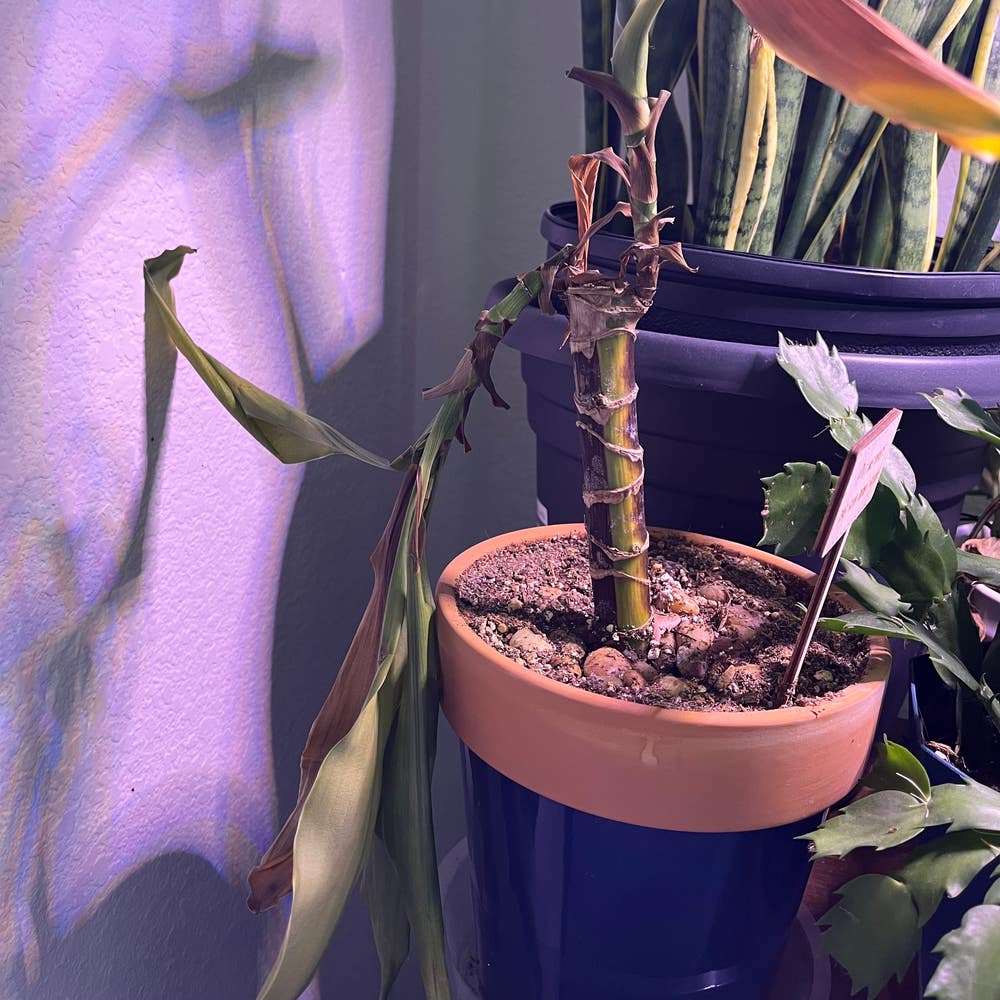
💧 Dracaena 'Sted Sol Cane' Root Rot Solutions
Dracaena fragrans 'Sted Sol Cane'
By the Greg Editorial Team
Jun 18, 2024•4 min read
This article was created with the help of AI so we can cover more plants for you. May contain errors. See one? Report it here.
- Brown/black and mushy roots signal dracaena root rot.
- Prune and repot to save your plant; adjust water and light afterward.
- Drainage holes and well-draining soil prevent future root rot.
Spotting the Red Flags: Identifying Root Rot in Your Dracaena
👀 Visual Symptoms: What Does Root Rot Look Like?
Brown or black roots signal trouble. Healthy dracaena roots should be white or light brown, not dark and spongy. If your plant's roots look like they've been through a goth phase, it's time to worry.
👃 Sniff Test: The Odor of Unhealthy Roots
A foul smell is as subtle as a smoke alarm. It's the olfactory equivalent of an SOS; if your dracaena's roots smell like they're decomposing, they probably are.
✋ Touch and Tell: Assessing Root Texture for Health
Mushy roots are a no-go. They should be firm and robust, not feeling like they've melted in your hands. If the roots of your dracaena feel like overcooked noodles, it's a red flag.

First Aid for Root Rot: Immediate Actions to Save Your Dracaena
🌱 Snip the Damage: Pruning Rotten Roots
When root rot strikes, think of it as a plant's cry for help. Act fast. Gently remove your Dracaena from its pot and give the roots a thorough inspection. Healthy roots boast a firm texture and a light color, while rotten ones are mushy and dark. Use sterilized shears to cut away the compromised roots. It's like excising the bad to save the good.
🌿 Fresh Start: Repotting in Healthy Soil
Once the damage is cut away, it's time for a fresh start. Choose a clean pot with ample drainage holes – this isn't a negotiation. Mix in a well-draining soil blend, think perlite or sand, to give your Dracaena the airy bed it dreams of. Repot with care, ensuring the remaining healthy roots have space to breathe and grow.
💧 Aftercare: Watering and Light Adjustments Post-Treatment
Post-op care is crucial. Water sparingly, only when the topsoil feels like a wrung-out sponge. Your Dracaena isn't a fan of soggy feet. Provide bright, indirect light and keep it away from drafts. Hold off on the fertilizer; let the roots recover without the extra stress. Watch your Dracaena bounce back with a little TLC and a watchful eye.

Water Wisely: Preventing Root Rot Through Proper Irrigation
🌊 Finding the Balance: How Much Water Does Your Dracaena Need?
To keep your Dracaena 'Sted Sol Cane' from the brink of root rot, watering balance is non-negotiable. Check the top inch of soil; if it's dry, it's time to water. If it's damp, give it a break. Your plant's water needs will fluctuate with the seasons—more thirsty in the summer, less so in the winter.
🚱 The Perils of Overwatering: Signs You're Drowning Your Plant
Overwatering is like throwing your Dracaena an unwanted pool party. Yellow leaves, wilting despite wet soil, and a general look of despair are SOS signals. If the pot feels heavier than your last breakup, you've probably overdone it. Drain any excess water from the saucer to avoid soggy disasters.

Home Sweet Home: Choosing the Right Pot and Soil
🚰 Drainage is Key: Selecting Pots that Promote Root Health
When it comes to pots, drainage holes are non-negotiable. They're the escape hatch for excess water, protecting your Dracaena 'Sted Sol Cane' from the perils of root rot.
Opt for materials that breathe, like terra cotta, which helps soil dry out more efficiently than plastic.
Remember, size matters. A pot that's too large can hold excess moisture, while one too small can cramp your plant's style, literally. Aim for a pot slightly larger than the root ball.
💧 Soil Matters: Best Soil Mixes to Prevent Root Rot
The best soil mix is like a bespoke suit; it fits your plant's needs perfectly. For Dracaena 'Sted Sol Cane', well-draining soil is the ticket to root health.
Incorporate ingredients like perlite, pumice, or coarse sand to ensure quick drainage and prevent water from overstaying its welcome.
Organic matter is your soil's best friend. It keeps the mix light and airy, allowing roots to breathe and preventing them from feeling like they're packed in a subway at rush hour.
Don't be fooled by packaging. Read labels carefully and look for terms like "well-draining" and "lightweight" to ensure you're getting what your plant needs.
Crafting your own mix? A simple recipe is one part peat, one part perlite, and one part pine bark. This trio is like the holy trinity for preventing root rot.
Always check for adequate drainage in your pots. If you're not into DIY, go for a pre-mixed option that guarantees optimal drainage and saves you the guesswork.
⚠️ Safety First
This content is for general information and may contain errors, omissions, or outdated details. It is not medical, veterinary advice, or an endorsement of therapeutic claims.
Always consult a qualified healthcare professional before using any plant as food, medicine, or supplement.
Never eat any plant (or feed one to pets) without confirming its identity with at least two trusted sources.
If you suspect poisoning, call Poison Control (800) 222-1222, the Pet Poison Helpline (800) 213-6680, or your local emergency service immediately.
Spotted an error? Please report it here.
Banish root rot 🚫 in your dracaena 'sted sol cane' with Greg's tailored watering reminders, ensuring your plant thrives in just the right conditions.