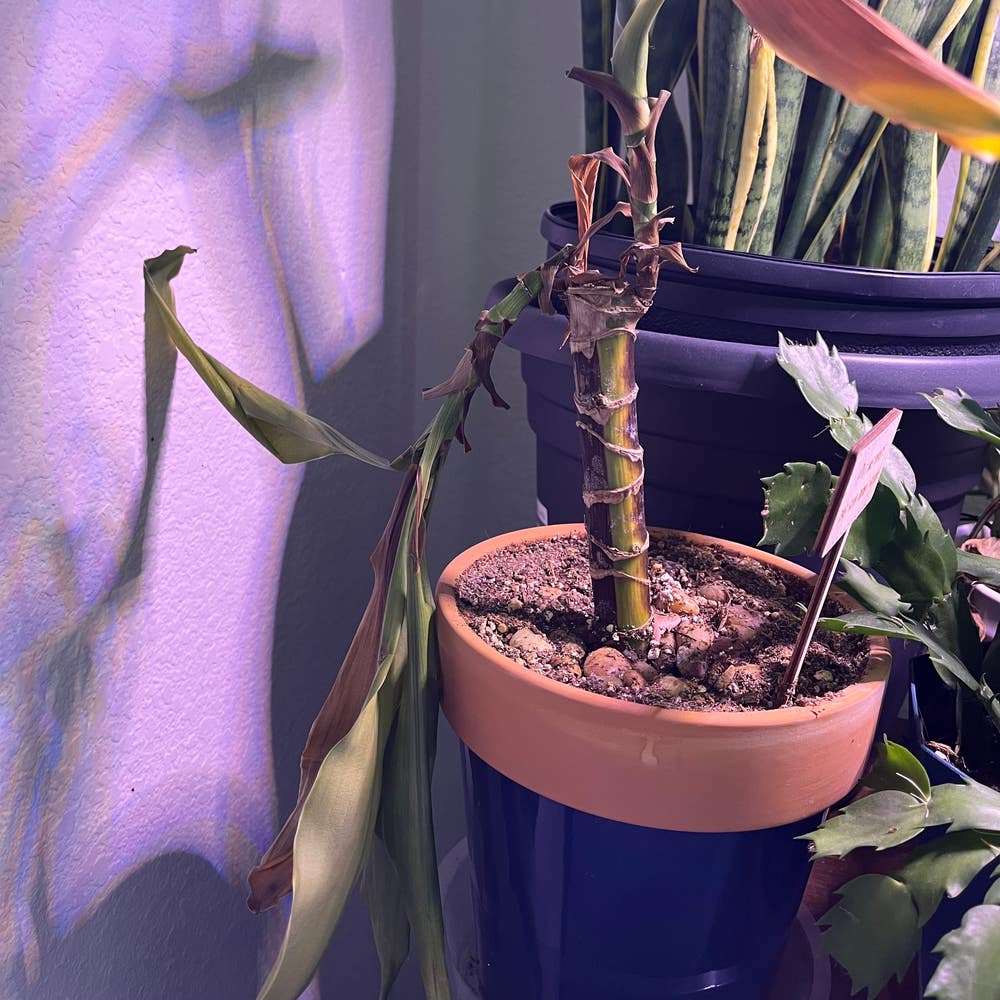
How Can You Tell If A Dracaena 'Sted Sol Cane' Is Dying?
Dracaena fragrans 'Sted Sol Cane'
By the Greg Editorial Team
Jun 18, 2024•6 min read
This article was created with the help of AI so we can cover more plants for you. May contain errors. See one? Report it here.
- Wilting and discoloration signal watering and light issues in Dracaena.
- Temperature consistency and pest control are vital for plant health.
- Prevent root rot with well-draining soil and proper moisture monitoring.
Spotting Trouble: Key Symptoms of Distress in Dracaena 'Sted Sol Cane'
🚰 Inconsistent Watering Woes
🚦 Spotting the Signs
Wilting, yellowing, or browning leaves are distress flares from your Dracaena 'Sted Sol Cane'. They're telling you that your watering schedule is more unpredictable than a plot twist in a soap opera.
The Balancing Act
Finding the right watering rhythm is like tuning a guitar; it has to be just right. Too much or too little, and your plant hits a sour note.
🌞 Light and Shadow: The Impact of Irregular Light
🎨 Reading the Leaves
Faded colors and stunted growth are your Dracaena's way of saying the light situation is as off-balance as a cat on a unicycle.
Seeking the Sweet Spot
The ideal light conditions for Dracaena are like a cozy reading nook: bright enough to read but shaded enough to avoid glare.
🌡️ Temperature Tantrums
🌡️ Detecting Discomfort
Leaf drop and slowed growth are your plant's non-verbal cues for "I'm not comfortable." It's like wearing a winter coat on a summer day.
Keeping it Cozy
The ideal temperature range for Dracaena is as steady as a reliable friend. Avoid the drama of temperature swings that can turn your plant's leaves into a dropping mess.

Watering Woes: Over and Under-Watering
💧 Too Much of a Good Thing: Over-Watering
Soggy signals: Yellowing leaves and mushy stems
When your Dracaena 'Sted Sol Cane' starts to look more like a wet sponge than a vibrant plant, over-watering is often the culprit. Yellow leaves that fall with a gentle touch and stems that have the consistency of overcooked pasta are screaming for you to ease up on the H2O.
Drying out: Steps to rescue an over-watered Dracaena
To save your waterlogged green buddy, first, stop watering and let the soil dry out. Check if the pot has proper drainage and consider a soil switch-up to something that won't hold onto moisture like a grudge. If the roots are throwing a rot party, it's time to trim the damage and repot.
🏜️ High and Dry: Under-Watering
Thirsty clues: Wilting and browning leaves
A Dracaena pleading for water is a sad sight. Leaves droop like they've given up on life, and tips brown as if scorched by an invisible desert sun. This is the plant's way of saying, "I'm parched over here!"
Quenching the thirst: Properly hydrating your Dracaena
To rehydrate without drowning, introduce a consistent watering routine. Check the soil's moisture with your finger—if it's dry a couple of inches down, it's time for a drink. But remember, your Dracaena's thirst is not a bottomless pit; moderation is key.

Uninvited Guests: Pests and Diseases
🐛 Pests: The Tiny Terrors
Spotting the invaders is crucial to maintaining your Dracaena 'Sted Sol Cane'. Common pests include spider mites, which leave fine webs and speckled leaves, and mealybugs, notorious for their waxy, cotton-like deposits. Aphids might leave a sticky residue, while fungus gnats prefer to dance around moist soil.
Fight back by regularly inspecting your plant, especially the undersides of leaves. If pests are spotted, insecticidal soap or neem oil can be your first line of defense. For persistent problems, introducing natural predators like ladybugs can help maintain the balance without resorting to harsher chemicals.
🍄 Fungal Foes and Mold
Fungal issues often announce themselves with musty odors and unsightly spots on your plant. Mold can appear as a fuzzy or dusty residue, a clear sign that your Dracaena's environment might be too humid or lacking proper airflow.
Clearing the air involves improving ventilation around your plant and reducing moisture levels. If a fungal infection is confirmed, fungicides can act as the cleanup crew. Remember to keep your gardening tools sterilized to prevent spreading any unwelcome spores to other plants.

Root of the Problem: Root Rot
🍄 Decoding Root Rot
Recognizing root rot symptoms is like playing plant detective. Look for wilting, yellowing leaves, and a mushy stem base. If the soil smells like a forgotten gym locker, that's a red flag. Healthy roots should be firm and white, not brown and slimy.
Treating root rot starts with surgical precision. Remove the plant from its pot and shake off excess soil. Grab sterilized scissors and cut away the rotten roots. Think of it as pruning away the plant's bad habits.
🛠 Road to Recovery
To prevent future root rot, ensure your Dracaena's soil is well-draining. Overwatering is a no-go; it's like giving your plant a bath with no way to get out of the tub. Monitor moisture levels like a hawk and adjust your watering schedule accordingly.
Consider a soil test to outsmart any lurking fungi. If you're not sure, consult a local plant guru or diagnostic lab. They've got the know-how to spot trouble before it turns your Dracaena into a botanical zombie.
Lastly, repotting may be necessary. Choose a pot with proper drainage and fresh, pathogen-free soil. It's like moving your plant to a new home with better air quality—no moldy basements here. Keep a close eye on your plant's recovery, and with a bit of luck and a lot of care, you'll see it bounce back.
Revival Roadmap: Bringing Your Dracaena Back to Life
🌱 Step-by-Step Recovery
🕵️ Assessing the Damage
When your Dracaena 'Sted Sol Cane' looks more like a prop from a horror film than a vibrant houseplant, it's pruning time. Check for wilting, yellow, or brown leaves. These are your plant's cry for help. If the roots are coiling like a snake in a small pot, it's repotting o'clock.
🌿 Healing Hands
Got a Dracaena that's seen better days? Trim those sad leaves and stems. If it's rootbound, give it a new home with fresh soil and a pot with drainage fit for a king. Remember, spring and summer are the best times to repot, so your plant can recover with the sun on its back.
🛡️ Prevention is Key
🩺 Maintaining Health
Want to avoid plant ICU? Water your Dracaena when the soil feels like a wrung-out sponge—moist but not soggy. Find that light sweet spot where it's bright but not baking like a cookie in an oven. Keep the temperature steady; Dracaena's don't appreciate weather that's more unpredictable than your last Tinder date.
📈 Monitoring Milestones
Keep an eagle eye on your green buddy. New growth? That's a high-five moment. Leaves still dropping like flies? Time to play plant detective. Adjust your care, and remember, patience is a virtue, especially in the plant world. Your Dracaena's comeback might just be the next great underdog story.
⚠️ Safety First
This content is for general information and may contain errors, omissions, or outdated details. It is not medical, veterinary advice, or an endorsement of therapeutic claims.
Always consult a qualified healthcare professional before using any plant as food, medicine, or supplement.
Never eat any plant (or feed one to pets) without confirming its identity with at least two trusted sources.
If you suspect poisoning, call Poison Control (800) 222-1222, the Pet Poison Helpline (800) 213-6680, or your local emergency service immediately.
Spotted an error? Please report it here.
Bring your Dracaena 'Sted Sol Cane' back to vibrant life by spotting 🕵️♂️ early distress signals and letting Greg tailor a rescue watering and care plan just for you.