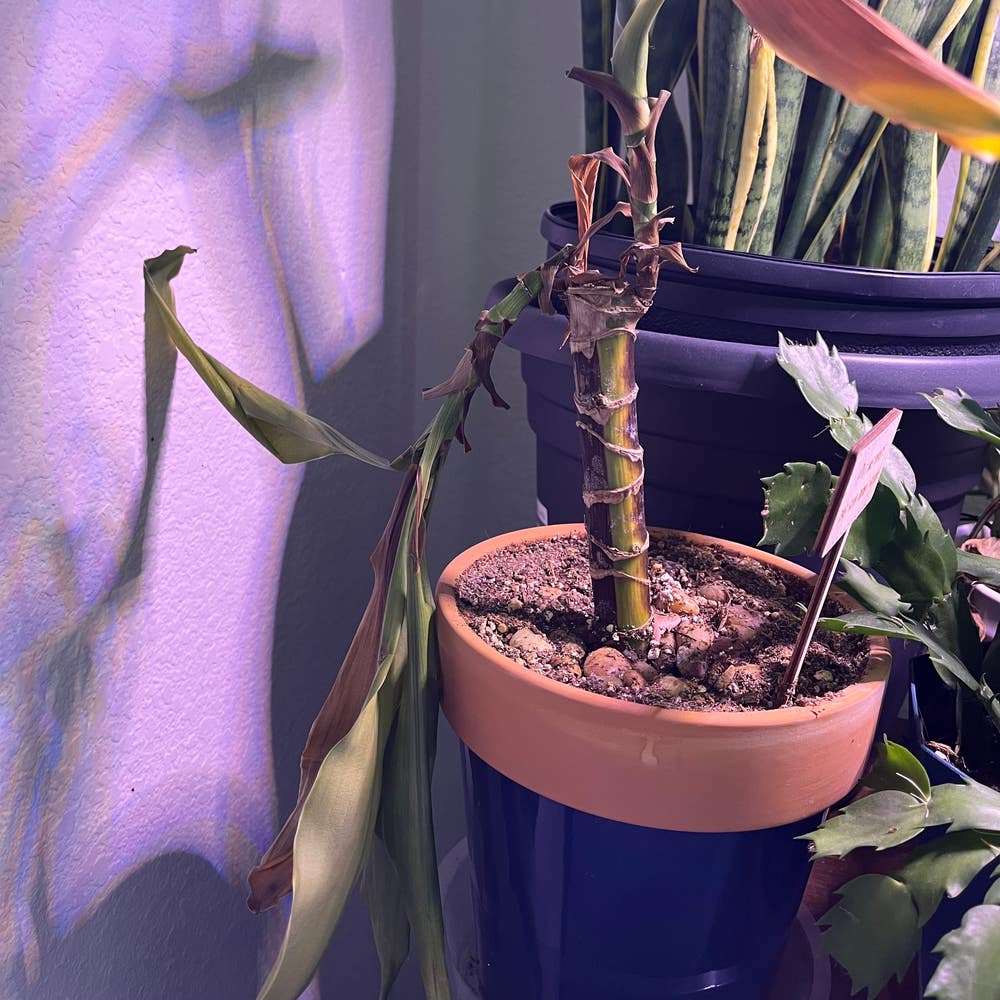
Why Are My Dracaena 'Sted Sol Cane' Leaves Dropping?
Dracaena fragrans 'Sted Sol Cane'
By the Greg Editorial Team
Jun 18, 2024•5 min read
This article was created with the help of AI so we can cover more plants for you. May contain errors. See one? Report it here.
- Visual clues and timing reveal if leaf drop is a concern or natural.
- 🌊💧 Balance watering; manage light and temperature to prevent leaf drop.
- Regular inspections and consistent care keep your Dracaena healthy.
Spotting the Red Flags: Early Signs of Trouble
🚩 Visual Clues
In the world of Dracaena 'Sted Sol Cane', visual changes in leaves are the equivalent of a plant's cry for help. Discoloration, such as yellowing or browning, should set off your internal alarms. Texture shifts, like leaves going from supple to crispy, are also distress signals. Don't overlook these changes; they're significant indicators that your plant is not in its happy place.
⏰ Timing and Pattern
Timing is everything. If your Dracaena starts shedding leaves like a dog in summer, take note of when this happens. Is it a seasonal light show or a random leaf apocalypse? Patterns in leaf drop can be telling – consistent loss might be a natural process, but sporadic dropping is a red flag. Keep a close eye on these patterns; they're the breadcrumbs on the trail to pinpointing the issue.

Rooting Out the Causes: Why Leaves May Fall
💧 Water Woes
Overwatering is like giving your plant a bath with no way to get out of the tub. Roots become waterlogged, leading to leaf drop as the plant tries to save itself. On the flip side, underwatering turns your dracaena into a thirsty hitchhiker in the desert, shedding leaves to conserve what little moisture it has left. Keep the soil's moisture level balanced – think of a wrung-out sponge, not a wet mop.
🌞 Light and Temperature Tensions
Too much sun and your dracaena might as well be sunbathing on the equator – leaf scorch is real. Not enough light, and it's like living in a cave – leaves drop in protest. Temperature swings are like unexpected plot twists for your plant; they cause stress, leading to a dramatic leaf drop. Aim for a stable environment, where your dracaena can bask in consistent, indirect light and live without the fear of temperature mood swings.
👾 The Unseen Culprits: Pests and Diseases
Pests are the uninvited guests at the dinner party, nibbling away at your plant's health. Look for sticky residue or actual bugs under the leaves – a telltale sign of freeloading pests. Fungal diseases are the silent saboteurs, thriving in poor air circulation and excess moisture, leaving your dracaena's leaves dropping like flies. Keep an eye out for brown spots with dark rings or soft, water-soaked spots. Remember, prevention is better than cure – maintain good airflow and don't overwater.

The Recovery Plan: Nursing Your Plant Back to Health
💧 Balancing the Watering Equation
Overwatering and underwatering are the frenemies of your Dracaena 'Sted Sol Cane'. Get it right by sticking your finger into the soil up to the first knuckle. If it's dry, water time; if not, hold off. Your plant's not a camel, but it's not a fish either.
Consistency wins the race. Schedule your waterings to allow the soil to dry out a bit in between. If the leaves droop, it's a cry for help—check the soil before you reach for the watering can.
🌞 Creating the Ideal Comfort Zone
Light and temperature need to be Goldilocks-level: just right. Too much light, and your plant's leaves throw a fit; too little, and they sulk. Find that sweet spot where your plant basks in the glow without getting a sunburn.
Temperature should be steady—think comfortable room temperature, not a sauna or an igloo. Avoid placing your plant in the path of drafts or near heat sources. It's not about extremes; it's about creating a chill, stable vibe.
Keep an eye on your plant's response to these changes. It's like a silent conversation; listen to what it's telling you. Adjust your care routine accordingly, and remember, patience is key in the plant rehab game.

Keeping Leaves on Lock: Prevention Tactics
🛡️ Consistency is Key
Consistency in care is the bedrock of plant health. Your Dracaena 'Sted Sol Cane' thrives on a predictable routine. Watering should be regular but adapted to the plant's needs, avoiding the extremes of a desert or a swamp. Light conditions must be stable—no tanning sessions followed by days in the dark.
🚨 Vigilance Against Invaders
Regular inspections are your plant's lifeline. Peek under the leaves, scrutinize the stems, and investigate the soil. Pests and diseases are sneaky; catching them early is like intercepting a spy before they've breached the perimeter.
📊 Monitoring Plant Health
Keep a log of your plant's health and your care adjustments. It's not just for show—it's a critical tool for tracking your plant's well-being. If the leaves start looking sad, it's time to switch up your game plan.
🐜 Pest and Disease Management
Quarantine new plants to prevent unwanted guests. Maintain a clean environment and promote good air circulation. If pests make an appearance, respond with insecticidal soap or neem oil—think of it as showing them the door, firmly.
✂️ Pruning and Maintenance
Prune with purpose. Remove any damaged leaves with sterilized tools to prevent disease spread. It's like giving your plant a clean slate, not just a new haircut.
🛡️ Integrating Prevention into Routine Care
Make prevention a part of your daily plant care mantra. Adjust watering with the seasons, rotate your plant for even growth, and wipe down leaves to deter pests. It's about creating a fortress of health around your Dracaena 'Sted Sol Cane'.
⚠️ Safety First
This content is for general information and may contain errors, omissions, or outdated details. It is not medical, veterinary advice, or an endorsement of therapeutic claims.
Always consult a qualified healthcare professional before using any plant as food, medicine, or supplement.
Never eat any plant (or feed one to pets) without confirming its identity with at least two trusted sources.
If you suspect poisoning, call Poison Control (800) 222-1222, the Pet Poison Helpline (800) 213-6680, or your local emergency service immediately.
Spotted an error? Please report it here.
Combat your Dracaena 'Sted Sol Cane' leaf drop by balancing 🌡️ water and light with Greg's tailored care reminders, ensuring a thriving and healthy plant.