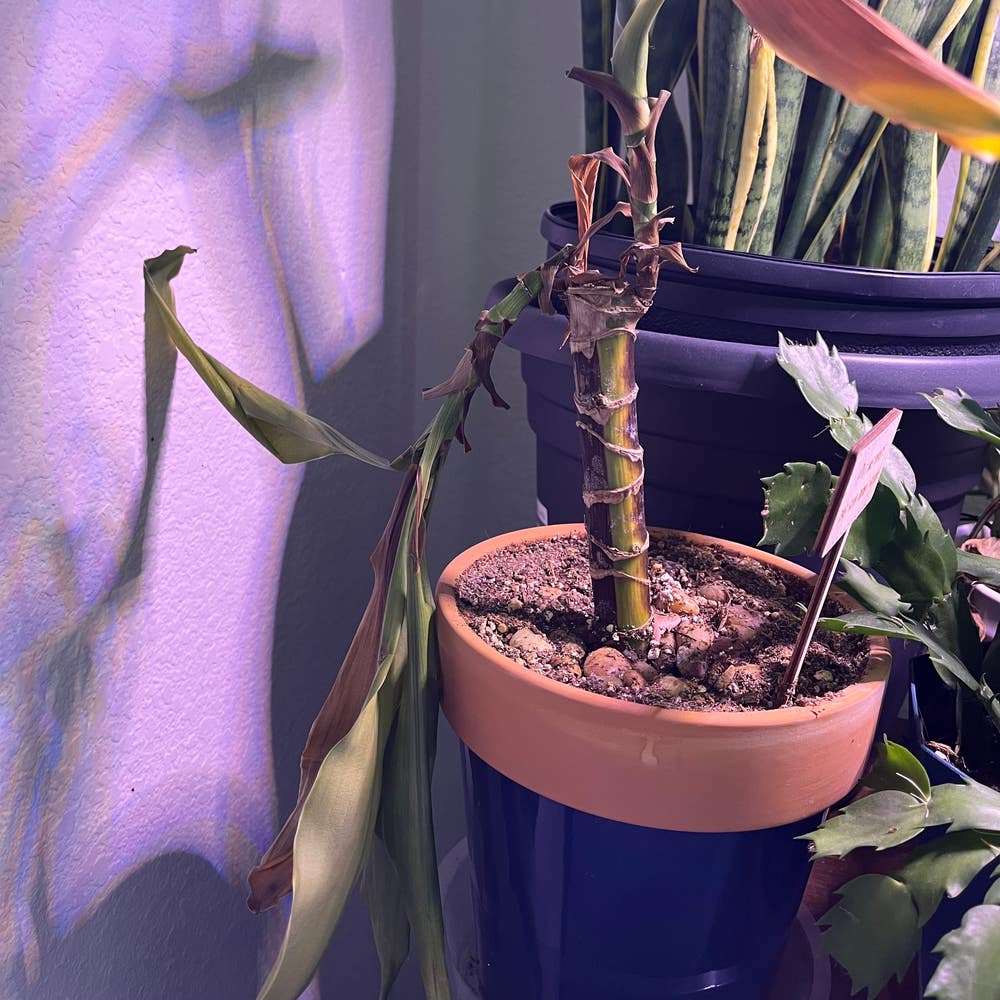
What Are The Bugs on My Dracaena 'Sted Sol Cane'? 🐛
Dracaena fragrans 'Sted Sol Cane'
By the Greg Editorial Team
Jun 18, 2024•5 min read
This article was created with the help of AI so we can cover more plants for you. May contain errors. See one? Report it here.
- 🕷️ Spider mites, scale, and mealybugs: Identify by webbing, stickiness, and white fluff.
- 🚿 Immediate action: Isolate, inspect, and clean with alcohol for quick pest control.
- 🌱 Prevent with cleanliness, moisture control, and regular plant health checks.
Spot the Invaders: Identifying Common Pests
🕷️ Spider Mites
Webbing and leaf damage are the calling cards of spider mites. These tiny pests create silk-like threads, especially on the undersides of leaves. If you notice a speckled or dusty appearance on your Dracaena 'Sted Sol Cane,' it's time to suspect these unwelcome guests.
🛡️ Scale
Scale insects masquerade as harmless bumps on your plant, but they're anything but benign. Sticky leaves and a waxy appearance are your clues. If you spot these, you're dealing with scale insects, freeloaders that need to be evicted.
🦟 Fungus Gnats and Fruit Flies
A sudden appearance of tiny black flies around your plant is a red flag for fungus gnats or fruit flies. These pests love moist soil, and their larvae can be found just beneath the surface. Keep an eye out for adult flies, but don't forget to check the soil for the wriggling larvae.
🐛 Mealybugs
The white, cottony residue mealybugs leave behind is hard to miss. These pests are like fluffy white vandals, and if you spot them, it's time for a mealybug meltdown. Isolation and cleaning with alcohol-dipped swabs are your first steps.
🦗 Thrips and Whiteflies
Thrips leave behind unwanted streaks on leaves, while whiteflies are the flyaways that scatter when disturbed. Both pests are a nuisance, with whiteflies being particularly easy to spot due to their tendency to congregate on the undersides of leaves.

Quick Response: Immediate Actions to Combat Pests
When your Dracaena 'Sted Sol Cane' shows signs of pest distress, immediate action is non-negotiable.
🛡️ Isolation: The First Line of Defense
Isolate the plant. Think of it as putting your green buddy in a protective bubble, away from its leafy peers. This stops those pesky bugs from turning your plant collection into their next conquest.
🔍 Inspection: What to Look for and Where
Grab a magnifying glass and play detective. Inspect every nook and cranny: under leaves, along stems, and in the soil. Spot the invaders? Time to move to the next step.
💦 Initial Treatment: Quick Fixes to Prevent Spread
Wipe down the leaves and stems with alcohol-dipped swabs. It's like hand-to-hand combat against the pests. For a less hands-on approach, shower your plant to blast off the freeloaders. Remember, the goal here is to prevent these critters from throwing a rave in the rest of your plant collection.

Winning the War: Effective Treatment Strategies
🌿 Natural Remedies
Neem oil and insecticidal soap are your plant's first line of defense. These natural solutions pack a punch against pests while being kind to the environment. Apply thoroughly to the underside of leaves and repeat treatments to break the pest life cycle.
💣 Chemical Solutions
When natural remedies don't cut it, it's time to consider chemical pesticides. Use these with caution, as they're the heavy artillery in your pest control arsenal. Read labels carefully and apply with precision to minimize environmental impact. Reserve these for the most stubborn infestations.

Prevention: Keeping Your Dracaena 'Sted Sol Cane' Pest-Free
🧹 The Cleanliness Commandment
Cleanliness isn't just about aesthetics; it's your plant's shield. Regularly wipe down leaves with a microfiber cloth to remove dust and potential pest hideouts. This simple act is like giving your Dracaena a suit of armor against the tiny critters that would love to call it home.
🚪 Quarantine New Recruits
New plants can be Trojan horses for pests. Keep them isolated for a few days to ensure they're not harboring any unwanted guests. This quarantine period is like a background check for plants—better safe than infested.
💧 Moisture Management
Overwatering is the Dracaena's kryptonite, especially for attracting fungus gnats. Ensure the soil is well-draining and only water when the top inch is dry. Think of it as a moisture curfew—too much partying (watering) can lead to unwanted (pest) guests.
👀 Routine Reconnaissance
Regular checks under leaves and near the soil are crucial. Catching pests early is like spotting a typo in a tweet before it goes viral—act fast to avoid a bigger problem. Keep an eye out for the telltale signs of pests, such as webbing, stickiness, or the pests themselves.
💦 Humidity Hacks
Dracaena 'Sted Sol Cane' loves a bit of humidity, but not too much. Use a tray of wet pebbles to provide a balanced atmosphere. It's like a spa day for your plant that also deters pests.
🌱 Fertilizer Fortitude
During the growing season, feed your Dracaena monthly with diluted houseplant fertilizer. Proper nutrition is like a regular workout for your plant—it builds strength to fend off pests.
🛠 Tool Sterilization
Keep your pruning tools clean and sharp. Dirty tools can spread diseases faster than a rumor in a high school hallway. After each use, give them a good clean to prevent any accidental plant sabotage.
💨 Airflow Affirmation
Good air circulation is vital. Use a fan if necessary to keep the air moving. Stagnant air is the enemy—it's like a stagnant conversation, nothing good comes of it.
🛡️ The Ultimate Prevention
Remember, the best defense is a good offense. By keeping your Dracaena 'Sted Sol Cane' healthy and monitoring it closely, you'll be less likely to encounter pest problems. It's like having a good immune system—you're not invincible, but you're better equipped to deal with whatever comes your way.
⚠️ Safety First
This content is for general information and may contain errors, omissions, or outdated details. It is not medical, veterinary advice, or an endorsement of therapeutic claims.
Always consult a qualified healthcare professional before using any plant as food, medicine, or supplement.
Never eat any plant (or feed one to pets) without confirming its identity with at least two trusted sources.
If you suspect poisoning, call Poison Control (800) 222-1222, the Pet Poison Helpline (800) 213-6680, or your local emergency service immediately.
Spotted an error? Please report it here.
Keep your Dracaena 'Sted Sol Cane' pest-free 🐛 with Greg's tailored care reminders and proactive health tracking for early bug detection and prevention.