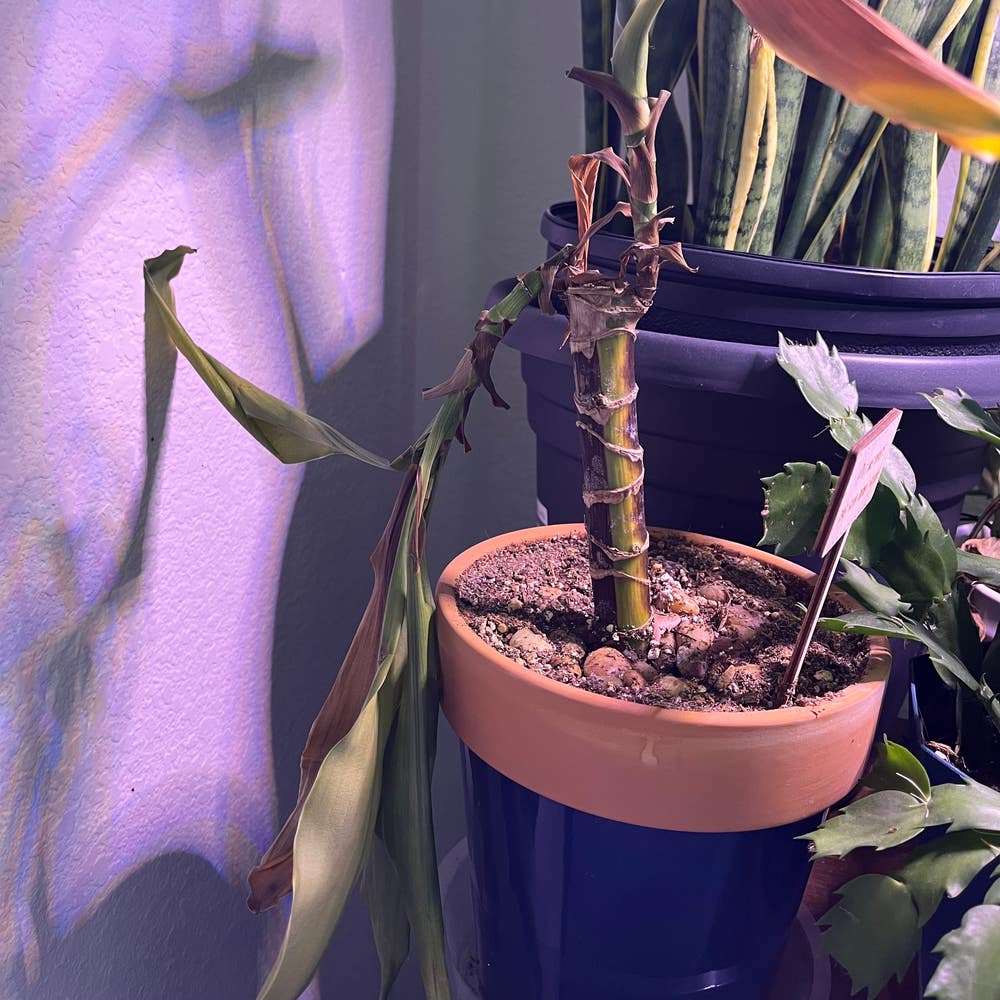
Why Are My Dracaena 'Sted Sol Cane' Leaves Curling?
Dracaena fragrans 'Sted Sol Cane'
By the Greg Editorial Team
Jun 18, 2024•4 min read
This article was created with the help of AI so we can cover more plants for you. May contain errors. See one? Report it here.
- Leaf curling signals trouble, like improper watering or environmental stress.
- 🌡️ Avoid temperature and humidity extremes to prevent curling.
- 💧 Water correctly and provide indirect light for healthy leaves.
Spotting the Signs: When Your Dracaena's Leaves Start to Curl
🌀 Identifying Leaf Curl
In Dracaena 'Sted Sol Cane', leaf curling manifests as leaves that twist away from their usual flat, elongated shape. Healthy leaves are firm with a waxy sheen, so any deviation from this could signal trouble.
🚩 Common Symptoms Accompanying Curling
Beyond the curl, look for discoloration or a soggy texture. These symptoms, coupled with leaf curling, might indicate issues ranging from watering missteps to environmental stress. Keep an eye out for stunted growth or dry, crispy edges—they're red flags that your Dracaena is calling for help.

The Usual Suspects: Common Causes of Leaf Curling
🚰 Thirsty Roots or Drowning?
Watering your Dracaena 'Sted Sol Cane' is a delicate dance. Underwatering makes the leaves curl inward, a desperate attempt to hold onto moisture. Conversely, overwatering suffocates the roots, leaving them gasping for air, which also leads to leaf curling. The key is to find that sweet spot where the soil feels like a wrung-out sponge—moist but not waterlogged.
🌞 It's Getting Hot in Here
Temperature is a drama queen when it comes to Dracaena care. Too hot, and the leaves curl up tighter than a rolled yoga mat. Temperature stress can send your plant into a tizzy, with leaves curling as if trying to escape the heat. Aim for a stable environment, where the temperature doesn't swing more wildly than a pendulum.
💨 A Breath of Fresh Air
Humidity and air circulation are the unsung heroes of plant health. Too dry, and your Dracaena's leaves will curl up like they're in a desert. Humidity levels should mimic a tropical breeze, not a Saharan wind. And don't forget about air circulation—stagnant air is as bad for your plant as it is for a crowded elevator. Keep the air moving to keep those leaves uncurled and happy.

Nip it in the Bud: Addressing the Curling Crisis
🚰 Balancing the Watering Equation
Watering your Dracaena 'Sted Sol Cane' is less about sticking to a schedule and more about observing your plant's needs. The soil should be your guide; when the top inch feels dry, it's time to water. Use the soak and dry method—thoroughly drench the soil, then let it drain completely. Overwatering is a common misstep, so ensure your pot has adequate drainage to avoid waterlogged roots that could lead to leaf curl.
Keeping Cool and Carrying On
Your Dracaena is not a sunbather. It prefers stable temperatures—think consistent, not tropical heat waves or Arctic blasts. Keep it away from direct sunlight, heaters, and drafts. If your indoor air feels like a desert, consider that a red flag. A steady environment will make your plant less likely to throw a leaf-curling tantrum.
Humidity and Airflow Harmony
Humidity and airflow are like the yin and yang of plant care. Too dry, and your Dracaena's leaves may start to curl; too moist, and you risk fungal issues. Aim for a humidity level around 40-50%. If your home's air is drier than a stand-up comedian's humor, a humidifier or a pebble tray with water can help. Just remember, good air circulation is crucial, so keep the air moving with a gentle fan to prevent stagnant conditions.

Feeding Your Dracaena Right: Nutrients and Light
💪 A Balanced Diet for Your Plant
Nutrient deficiencies can turn your Dracaena's leaves into a sad, curling display. To prevent this, a balanced fertilizer is key. But be cautious—over-fertilization can lead to root burn and a nutrient imbalance, doing more harm than good.
Nitrogen fuels leaf and stem growth, phosphorus supports roots and flowers, and potassium maintains overall health. Don't forget calcium and magnesium—essential for cell walls and photosynthesis, respectively.
🕰 Fertilization Frequency
For a thriving Dracaena, fertilize every 6-8 weeks during the growing season. In winter, pull back to prevent nutrient overload. Remember, it's not just about dumping food; it's about timing and balance.
💡 Let There Be (The Right Amount of) Light
Your Dracaena craves bright, indirect light—too much sun and it's leaf curl city; too little and it's droop central. Find a spot that's just right, like near a north or east-facing window. And rotate your plant to ensure even exposure without the burn.
Direct sunlight is a no-go. It's like putting your plant in a tiny frying pan. Instead, aim for that cozy nook vibe, where the light is gentle but sufficient. This is the sweet spot for avoiding leaf stress and keeping your Dracaena's leaves uncurled and happy.
⚠️ Safety First
This content is for general information and may contain errors, omissions, or outdated details. It is not medical, veterinary advice, or an endorsement of therapeutic claims.
Always consult a qualified healthcare professional before using any plant as food, medicine, or supplement.
Never eat any plant (or feed one to pets) without confirming its identity with at least two trusted sources.
If you suspect poisoning, call Poison Control (800) 222-1222, the Pet Poison Helpline (800) 213-6680, or your local emergency service immediately.
Spotted an error? Please report it here.
Avoid the stress of leaf curling in your Dracaena 'Sted Sol Cane' by letting Greg's custom reminders 🌀 keep your plant's environment perfectly balanced.