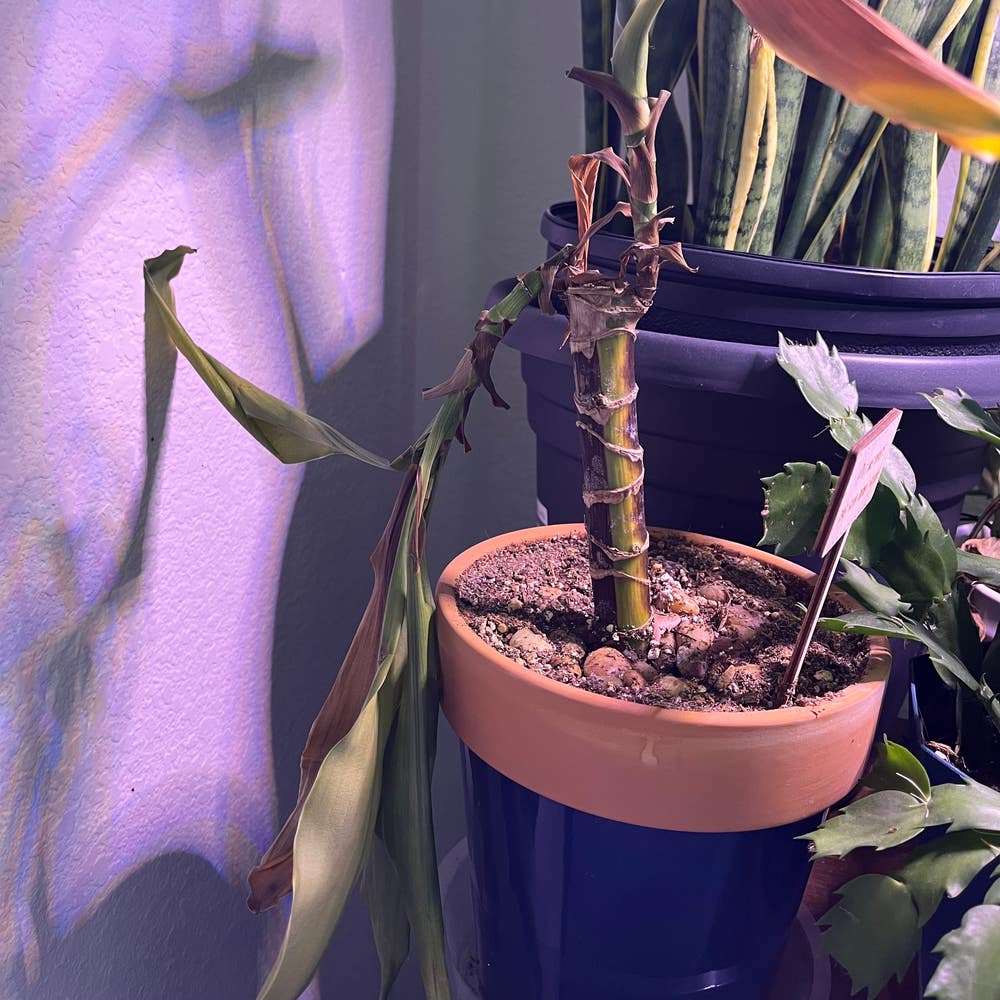
Why Does My Dracaena 'Sted Sol Cane' Have Yellow Leaves? 🍂
Dracaena fragrans 'Sted Sol Cane'
By the Greg Editorial Team
Jun 18, 2024•4 min read
This article was created with the help of AI so we can cover more plants for you. May contain errors. See one? Report it here.
- 🌿 Over/underwatering causes yellow leaves; let soil dry between waterings.
- ☀️ Filtered light and 65° – 78° F keeps Dracaena leaves healthy.
- 🐛 Prevent pests with neem oil and regular leaf inspections.
Spotting the Trouble: Yellow Leaves on Your Dracaena
💧 Water Woes
Yellow leaves on your Dracaena 'Sted Sol Cane' might be waving a red flag about your watering habits. Overwatering can turn leaves yellow-brown and limp, while underwatering leaves them dry and wilting.
🚰 How to Strike the Perfect Watering Balance
To avoid water woes, let the soil dry out between waterings and ensure it's well-draining. Finger-check the soil; if the top inch is dry, it's time to water. If it's soggy, hold off.
🌞 Light and Temperature Tango
Light and temperature play a crucial duet in the health of your Dracaena's leaves. Too much direct sunlight can cause leaves to curl and pale, while too little results in small new leaves.
💡 Tips for Creating a Cozy Environment for Your Dracaena
Position your plant in filtered light and maintain a room temperature between 65° – 78° F. Rotate the plant regularly to prevent leaf burn and promote even growth.
🍽️ Hungry Plant, Pale Leaves
Pale leaves can also signal a nutrient deficiency. Nitrogen is vital for keeping your Dracaena's leaves vibrant and green.
💡 Fertilizing: What Works Best for Dracaena 'Sted Sol Cane'
Use a balanced, water-soluble fertilizer every few weeks during the growing season. In winter, reduce feeding to prevent nutrient overload.

Unwanted Guests: Pests and Your Plant
🐜 Common Culprits
Pests can turn your Dracaena 'Sted Sol Cane' from a tropical treasure to a troubled plant. Spider mites, mealybugs, and thrips are the usual suspects. These tiny terrorists are attracted to the warm, humid environments your Dracaena loves.
🚪 Show Them the Door
Neem oil is your plant's bouncer, naturally showing pests the exit. Insecticidal soap acts as the cleanup crew, eradicating any lingering party crashers. For a DIY approach, a soapy water solution can be used to wipe down leaves. Remember, isolation is key to prevent an infestation from spreading to your other green guests.
- Inspect regularly, especially the undersides of leaves.
- Use a cotton swab dipped in alcohol for precision pest removal.
- Introduce lavender or other insect-repelling plants as a natural deterrent.
- Ensure your Dracaena isn't a breeding ground by maintaining cleanliness and proper humidity levels.
By staying vigilant and acting quickly, you can keep your Dracaena 'Sted Sol Cane' pest-free and thriving.

Turning Over a New Leaf: Solutions and Prevention
💧 Watering Wisdom
Watering your Dracaena 'Sted Sol Cane' is less about sticking to a schedule and more about understanding its needs. Check the soil before you water—dryness at the top inch is your green light. If it's moist, hold off to avoid the dreaded root rot. Remember, overwatering is a pest's paradise, so keep it balanced to avoid unwanted guests.
🌞 Light and Climate Control
Indirect light is the Dracaena's jam. Too much sun and you're asking for leaf burn, too little and you'll get a lackluster plant. Rotate your plant regularly for even growth and to prevent it from reaching for the light like a kid for candy. As for temperature, keep it consistent—no sudden drafts or heat waves, please.
🍽️ Feeding for Greenery
Fertilize your Dracaena during its growing season with a balanced liquid fertilizer, but don't go overboard. Think of it as a nutrient-rich snack rather than a full-on feast. Overfeeding leads to salt buildup, and nobody wants that. Less is more here.
🛡️ Keeping Pests at Bay
Proactive pest control is like brushing your teeth; do it regularly to prevent issues. Dust the leaves to keep them breathing easy and inspect for freeloaders. If pests do crash the party, show them the door with neem oil or insecticidal soap. And keep that air circulating—it's like a no-fly zone for bugs.

⚠️ Safety First
This content is for general information and may contain errors, omissions, or outdated details. It is not medical, veterinary advice, or an endorsement of therapeutic claims.
Always consult a qualified healthcare professional before using any plant as food, medicine, or supplement.
Never eat any plant (or feed one to pets) without confirming its identity with at least two trusted sources.
If you suspect poisoning, call Poison Control (800) 222-1222, the Pet Poison Helpline (800) 213-6680, or your local emergency service immediately.
Spotted an error? Please report it here.
Keep your Dracaena 'Sted Sol Cane' leafy and lush 🍃 with Greg's custom watering reminders, tailored to prevent yellow leaves and promote perfect growth.