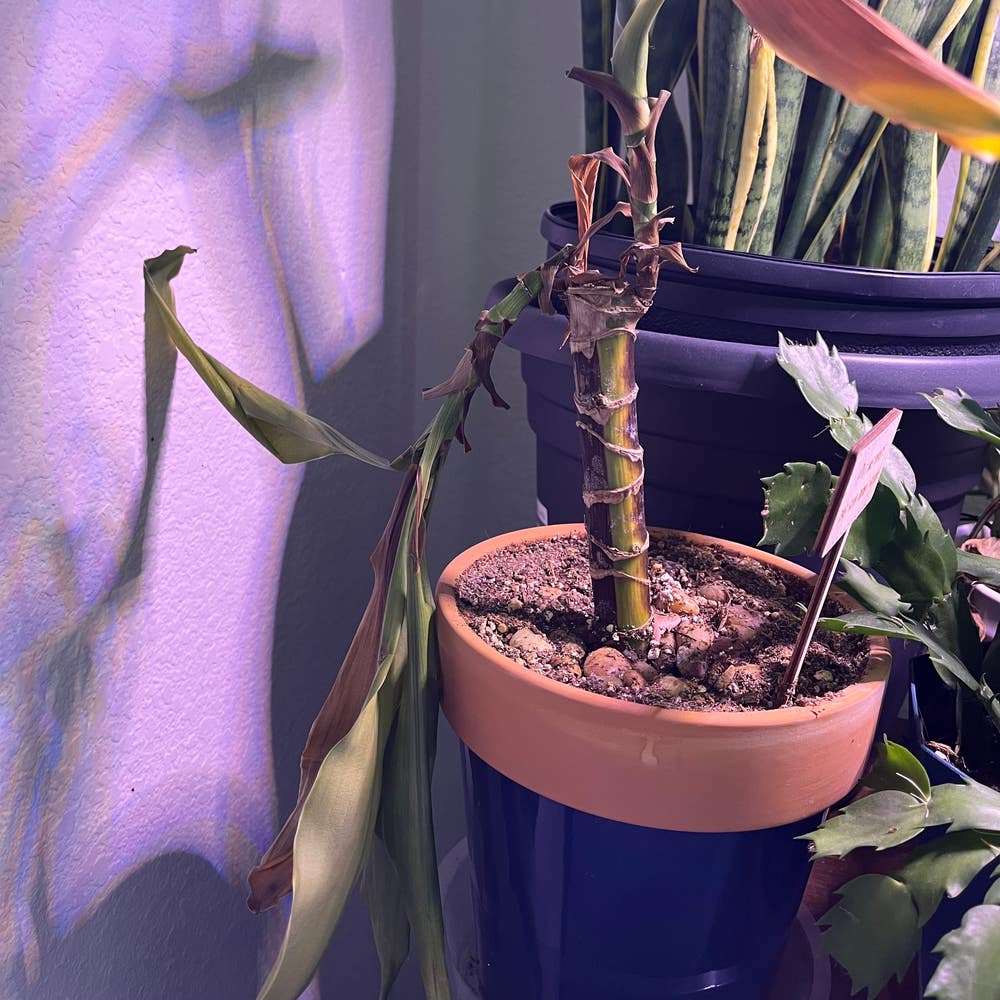
Why Are My Dracaena 'Sted Sol Cane' Leaves Mushy? 💧
Dracaena fragrans 'Sted Sol Cane'
By the Greg Editorial Team
Jun 18, 2024•3 min read
This article was created with the help of AI so we can cover more plants for you. May contain errors. See one? Report it here.
- Overwatering often causes mushy leaves, indicating root rot or other issues.
- 🌱 Prune and sterilize to prevent disease spread and encourage recovery.
- Proper environment and watering are key to Dracaena 'Sted Sol Cane' health.
Spotting the Trouble: Signs Your Dracaena 'Sted Sol Cane' Has Mushy Leaves
🚨 Visual Symptoms
Mushy leaves on your Dracaena 'Sted Sol Cane' scream for attention. Soggy, overripe-fruit-like texture? That's your red flag. Leaves should stand firm and proud, not droop like they've given up on life. If they fall off with a gentle touch, it's a code red situation.
🕵️♂️ Root Check-Up
Don't just stand there—dig a little deeper. Gently unearth your plant and inspect the roots. Black or brown and slimy? That's the autograph of root rot. It's not just bad, it's plant ICU level bad. If the roots resemble overcooked spaghetti, it's time for some serious plant triage.

First Aid for Mushy Leaves
💧 Cutting Back on Water
Overwatering is often the culprit behind mushy leaves. It's crucial to let the soil dry out before watering again. Check the top inch of soil; if it's damp, hold off on the H2O. This isn't about neglect—it's about giving your plant the tough love it needs to strengthen its roots.
🌱 Pruning with Precision
Time to channel your inner surgeon and remove the mushy leaves. Sterilize your pruning shears with alcohol to prevent spreading any disease. Cut back to healthy tissue, then clean your tools after each snip as if prepping for the next operation. Dispose of the removed leaves like hazardous waste—they're not coming back, and you don't want them infecting the rest.

Root Recovery: Dealing with Root Rot
🌱 Unearthing the Problem
When your Dracaena 'Sted Sol Cane' starts to feel like a wet sponge rather than a sturdy plant, root rot might be the culprit. Gently remove the plant from its pot, like you're handling a fragile relic. Brush away the soil and examine the roots. Healthy roots are firm and have a light color, while rotten ones are dark, mushy, and likely smell worse than last week's leftovers. If you find the latter, it's time to play plant surgeon.
🌱 Soil and Pot Makeover
After the amputation of the rotten roots, give your plant a fresh start with a soil mix that's well-draining—think of it as a fluffy bed for the roots. Choose a pot with drainage holes that are so generous they could be considered philanthropic. This isn't just about aesthetics; it's about giving your plant the drainage it desperately needs to avoid a repeat performance of root rot. If you're using a decorative pot without holes, nest a practical plastic pot inside to marry form with function.

Keeping Your Dracaena 'Sted Sol Cane' Happy and Healthy
💧 Perfecting the Watering Technique
Your Dracaena 'Sted Sol Cane' is not a fan of soggy feet. Watering should be a ritual, not a routine. Check the soil's top inch; if it feels like a desert, it's time to quench its thirst. Use room temperature water to avoid shocking its delicate roots. A moisture meter can be your secret weapon, helping you strike that perfect balance between parched and waterlogged.
🌞 The Right Environment
Imagine your Dracaena 'Sted Sol Cane' as a Goldilocks of the plant world. Light should be just right—bright but indirect, like a sunny spot shielded by a sheer curtain. Temperature-wise, keep it cozy between 65° - 78°F (18° - 26°C). And for humidity, think tropical but not rainforest; aim for 40% - 80%. A pebble tray or humidifier can help, but don't turn your living room into a steam room. Rotate your plant occasionally to ensure even growth and wipe those leaves down to keep them dust-free and efficient at photosynthesis.
⚠️ Safety First
This content is for general information and may contain errors, omissions, or outdated details. It is not medical, veterinary advice, or an endorsement of therapeutic claims.
Always consult a qualified healthcare professional before using any plant as food, medicine, or supplement.
Never eat any plant (or feed one to pets) without confirming its identity with at least two trusted sources.
If you suspect poisoning, call Poison Control (800) 222-1222, the Pet Poison Helpline (800) 213-6680, or your local emergency service immediately.
Spotted an error? Please report it here.
Revive your Dracaena 'Sted Sol Cane' from soggy to sturdy 🌱 by relying on Greg to nail the perfect watering rhythm and dodge overwatering woes!