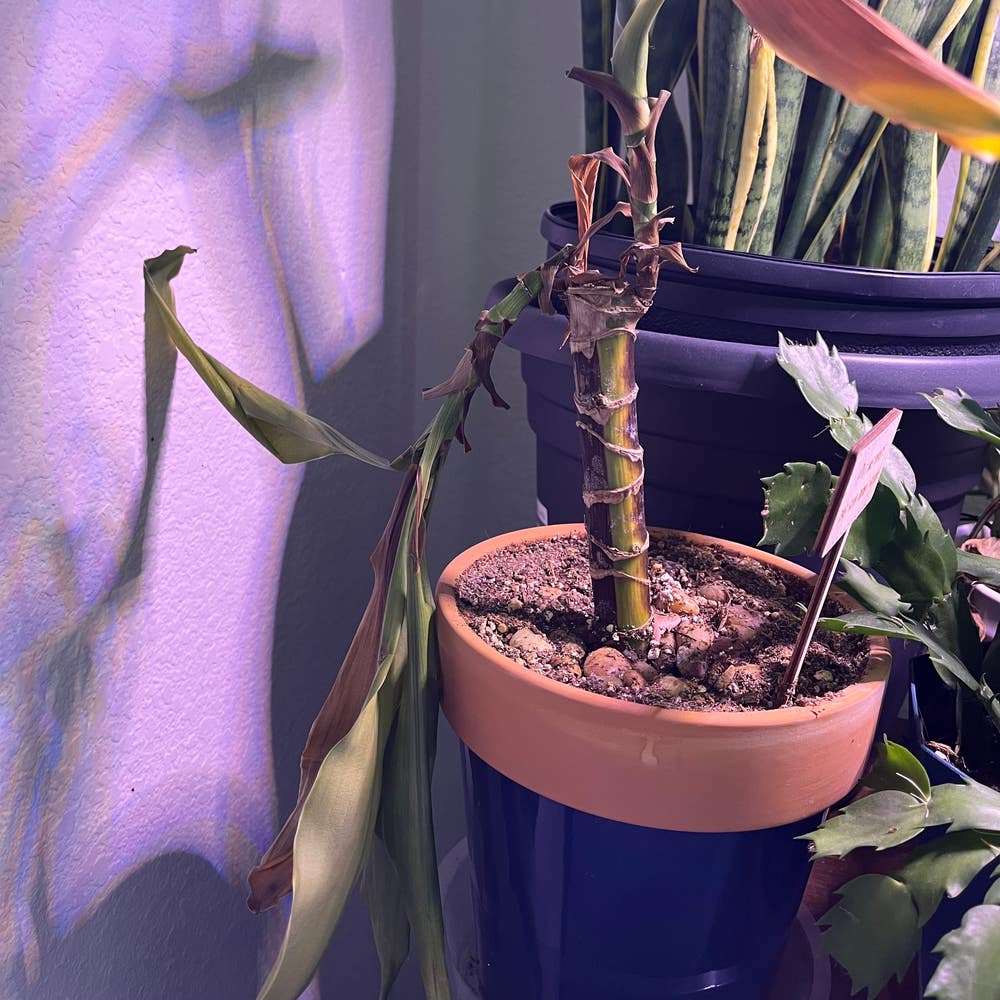
Best Potting Soil Mix for Dracaena 'Sted Sol Cane'
Dracaena fragrans 'Sted Sol Cane'
By the Greg Editorial Team
Jun 18, 2024•5 min read
This article was created with the help of AI so we can cover more plants for you. May contain errors. See one? Report it here.
- Mold and odors signal bad soil, risking root rot and nutrient issues.
- 🌱 Choose peat moss, perlite, and sand for a healthy, homemade mix.
- Repot or adjust soil to revive Dracaena and prevent future problems.
Spotting Trouble: When Your Dracaena's Soil Goes Bad
🚩 Telltale Signs of Unhappy Soil
Mold sightings are the red flags of soil distress. If you spot a fuzzy or slimy intruder, it's time for action. Unhealthy soil also has a distinct stench, akin to the funk of decay, signaling that your Dracaena's environment is off-kilter.
👃 Sniffing out trouble: What does unhealthy soil smell like?
A foul odor from your potting mix isn't just unpleasant—it's a cry for help. The smell of rotting organic matter should prompt immediate intervention to save your plant from impending doom.
🌪️ The Fallout: How Bad Soil Affects Your Dracaena
Root rot is the silent assassin of Dracaena plants, often stemming from soggy, poorly draining soil. It's a death sentence if not caught early. Nutrient deficiency follows suit, stunting growth and dimming the vibrant green that Dracaenas are known for.
🥦 Nutrient deficiency drama
When the soil goes bad, your Dracaena's diet suffers. Expect a dramatic display of yellowing leaves and a general look of malaise as essential nutrients become scarce.

Picking the Perfect Potting Mix
🌱 Commercial Mixes: What to Look For
When hunting for a commercial potting mix for your Dracaena 'Sted Sol Cane', think Goldilocks: not too heavy, not too light. Dracaena-friendly ingredients are your target. Look for a mix that boasts a blend of peat moss or coco coir for moisture control and slight acidity, with a dash of perlite or pumice for that airy, breathable structure.
The pH game is crucial; aim for a mix that's slightly acidic. A pH that's too high or too low is like a dinner party with unwelcome guests—it just doesn't work. Ensure the mix sits comfortably between 6.0 and 6.5 on the pH scale to keep your Dracaena's roots happy and healthy.
🚫 Avoiding the Bad Stuff
Heavy soils are the party poopers of the potting world. They're dense, they're clumpy, and they're a no-go for your Dracaena. These soils suffocate roots faster than a thriller's plot twist. Instead, opt for a mix that's as light as your last paycheck—something that ensures proper drainage.
Poor drainage is the villain of the piece. It's the equivalent of putting your plant's feet in concrete boots. You want your Dracaena's roots to breathe, not to swim for their lives. So, steer clear of mixes that hold water like a sponge; otherwise, you're setting the stage for a root rot tragedy.

Crafting Your Own Dracaena-Specific Soil
Creating the ideal potting mix for your Dracaena 'Sted Sol Cane' is like being a chef in a gourmet kitchen—it's all about the right ingredients and balance.
🌱 The Base: Peat Moss or Its Alternatives
Peat moss is the go-to for many green thumbs, thanks to its moisture retention and aeration qualities. But if you're eco-conscious or peat's not your jam, coir fiber is a sustainable stand-in. Remember, if peat dries out, it can be stubborn about rehydrating, so keep it moist.
💨 The Aeration Agents: Perlite and Friends
Perlite is the unsung hero of root health, creating pockets of air that prevent soil compaction. Aeration is key; without it, you're basically suffocating your plant's roots. If perlite's not on hand, pumice or pine bark fines can also play the role of aeration agents.
🌊 The Drainage Boosters: Coarse Sand and Beyond
Coarse sand is your drainage dynamo, ensuring water flows freely and roots don't get waterlogged. But don't stop there—mix in some perlite or small rocks to elevate the drainage game. Just like a good thriller, you want no pooling at the top, keeping the suspense in the story, not in your plant's pot.

When Soil Goes South: Fixing the Mix
🌱 The Repotting Rescue
Repotting your Dracaena 'Sted Sol Cane' is like hitting the refresh button on its environment. Spring or early summer is the ideal time for this task, ensuring the plant is not in its flowering phase. Here's how to do it:
- Prepare your materials: You'll need a new pot, one size larger than the current one, with adequate drainage holes. Also, gather fresh potting mix, a trowel, and gloves.
- Remove the plant: Gently take the Dracaena out of its pot, being careful not to damage the roots.
- Inspect and trim: Look for signs of root rot or damage and trim as necessary, leaving only healthy roots.
- Add new potting mix: Place a layer of fresh, well-draining soil at the bottom of the new pot.
- Reposition your plant: Set the Dracaena in the center and fill around it with more potting mix.
- Water and settle: Give it a thorough watering to help settle the soil and eliminate air pockets.
🚑 Soil CPR: Reviving Your Mix
Sometimes, the soil can be revived without a full repotting. Here's how to breathe new life into your Dracaena's potting mix:
- Adjust aeration: If the soil is compacted, mix in perlite or coarse sand to improve airflow.
- Enhance drainage: Add materials like pumice or small gravel to encourage excess water to flow through, preventing waterlogged conditions.
- Mold mitigation: If mold is present, remove the top layer of soil and replace it with fresh mix. Ensure the plant is not overwatered and has ample airflow around it.
Remember, regular soil checks can prevent these issues from escalating. Keep an eye on moisture levels and adjust your watering schedule as needed.
⚠️ Safety First
This content is for general information and may contain errors, omissions, or outdated details. It is not medical, veterinary advice, or an endorsement of therapeutic claims.
Always consult a qualified healthcare professional before using any plant as food, medicine, or supplement.
Never eat any plant (or feed one to pets) without confirming its identity with at least two trusted sources.
If you suspect poisoning, call Poison Control (800) 222-1222, the Pet Poison Helpline (800) 213-6680, or your local emergency service immediately.
Spotted an error? Please report it here.
Revitalize your Dracaena's growth with the ideal soil mix and let Greg keep it flourishing 🌿 by customizing your watering plan to prevent soil woes.