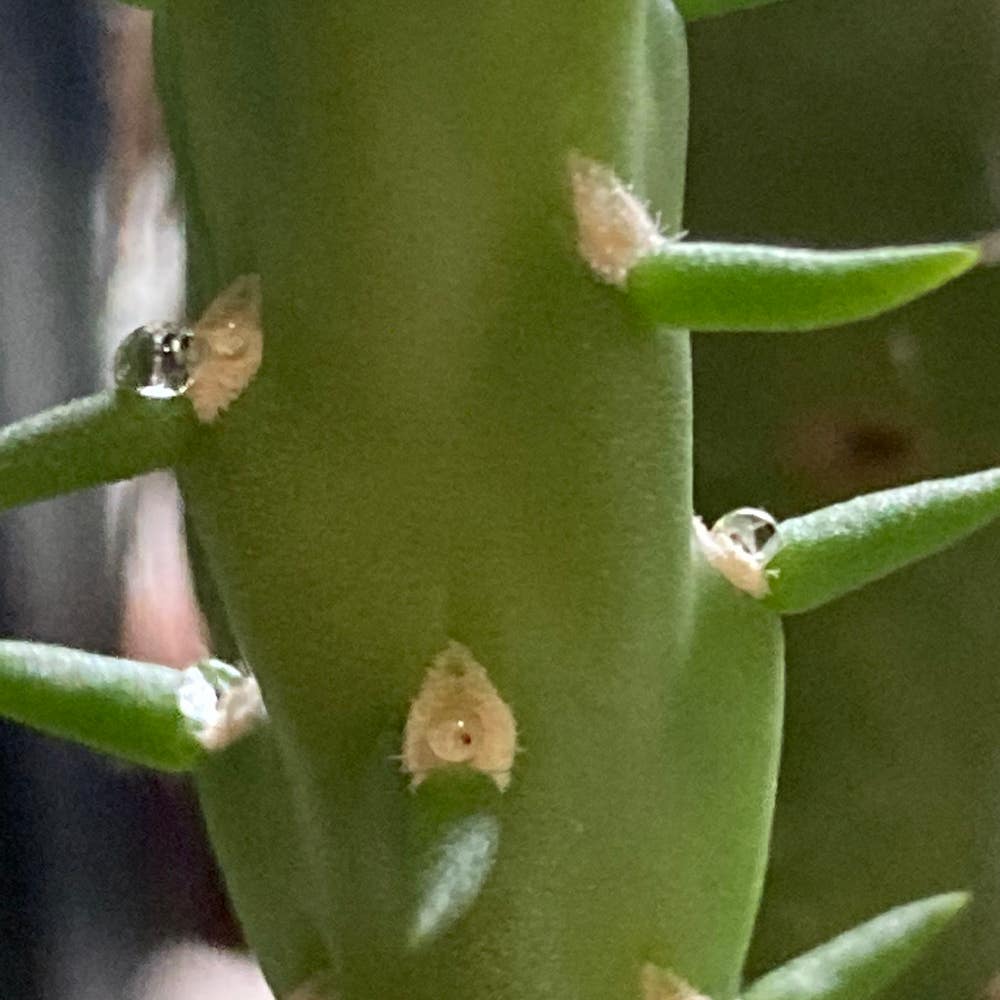
Common Chain-Link Cholla Problems
Cylindropuntia cholla
By the Greg Editorial Team
Feb 13, 2024•3 min read
This article was created with the help of AI so we can cover more plants for you. May contain errors. See one? Report it here.
Revive your Cholla's charm 🌵 by tackling these common issues with our survival guide!
- Shriveled or mushy stems? Adjust watering for your Chain-Link Cholla.
- Fading color or droopiness? Check light exposure and temperature.
- Pests or mold? Early detection and treatment are key to saving your Cholla.
Introduction
Recognizing the distress signals of a Chain-Link Cholla is crucial for its survival. Let's dive into the symptoms and solutions.
💧 Water Woes: Too Much or Too Little
Shriveled Stems and Yellowing
When your Cholla's stems shrivel and its color fades to yellow, it's crying out for a consistent watering schedule.
Mushy Mess
A Cholla with stems as mushy as overripe fruit is likely drowning in excess water. Time to dry out and potentially repot.
Thirsty Cactus
Under-watering creeps up silently, leaving your Cholla wrinkled and lackluster. It's a desert dweller that still needs a drink.
🌞 Light and Temperature: Finding the Sweet Spot
Fading Beauty
Irregular light robs your Cholla of its vibrant color, turning it into a fading beauty.
Too Hot to Handle
Extreme temperatures can cause your Cholla to droop like a melting candle. It's all about finding that temperature sweet spot.
🐜 Pests and Pathogens: Uninvited Guests
Bug Battles
Pests are the party crashers no one invited. Discoloration and a lack of vigor are the first signs of an infestation.
Fungus Among Us
Mold on your Cholla is like an unwanted house guest. Spot it early to prevent a full-blown takeover.
🌱 Root Rot: The Silent Killer
Soggy Roots and Foul Odors
Root rot in a Cholla is like a bad smell you can't ignore. Soggy roots and a stench mean it's time for intervention.
Surgery for Survival
When root rot strikes, it's time for surgery. Trim the rot, repot, and hope for a Cholla comeback.
Conclusion
In the gritty world of Chain-Link Cholla care, vigilance is your watchword. Like a hawk eyeing its prey, keep a keen eye on your spiky friend for signs of distress. Regular checks are the bread and butter of plant parenting, and swift action is your ace in the hole when trouble comes knocking.
Remember, your Cholla isn't just surviving; with the right moves, it's thriving. Consistency in watering, light exposure, and temperature control isn't just good practice—it's a lifeline. And when pests or pathogens try to crash the party, be the bouncer—show them the door with prompt and decisive care.
Don't let root rot play the silent assassin. If you catch that funky smell or spot those soggy roots, it's time for some plant surgery—stat. Trim the dead weight, repot in fresh soil, and your Cholla could bounce back like a champ.
So, keep your eyes peeled, your watering can ready, and your sense of humor intact. Your Chain-Link Cholla's health is a testament to your care—a living sculpture shaped by your attentiveness and resolve. Stay sharp, plant whisperers. Your Cholla's counting on you.
⚠️ Safety First
This content is for general information and may contain errors, omissions, or outdated details. It is not medical, veterinary advice, or an endorsement of therapeutic claims.
Always consult a qualified healthcare professional before using any plant as food, medicine, or supplement.
Never eat any plant (or feed one to pets) without confirming its identity with at least two trusted sources.
If you suspect poisoning, call Poison Control (800) 222-1222, the Pet Poison Helpline (800) 213-6680, or your local emergency service immediately.
Spotted an error? Please report it here.
Prevent Chain-Link Cholla woes by spotting early distress signals, and let Greg keep your cactus happy and healthy 🌵 with tailored care reminders.