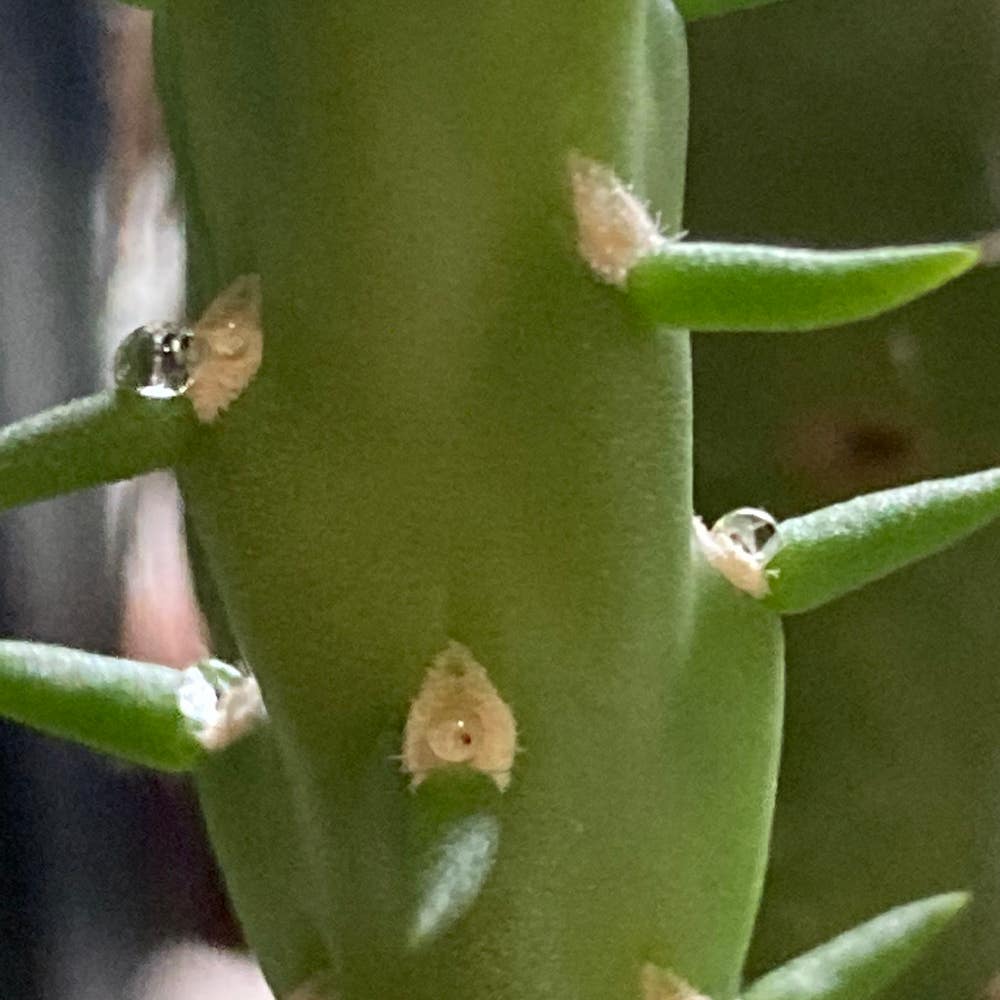
🌵 Why Is My Chain-Link Cholla Dropping Leaves?
Cylindropuntia cholla
By the Greg Editorial Team
Feb 13, 2024•3 min read
This article was created with the help of AI so we can cover more plants for you. May contain errors. See one? Report it here.
Stop your Chain-Link Cholla's leaf drop 🍂 and revive its vibrant spikes with proven care tips!
- Rapid leaf drop is a red flag—don't ignore visual cues.
- Balance water and temperature to prevent leaf loss in Cholla.
- Regular check-ups and early intervention save Cholla leaves.
Spotting the Signs of Trouble
🚨 Telltale Symptoms of Leaf Drop
Visual cues are key when your Chain-Link Cholla seems off. Leaves losing their vibrant color or developing spots are distress signals. Timing matters; if leaf drop is sudden or progresses rapidly, it's a red flag.
🚨 Stress Signals Beyond Leaf Drop
Other stress indicators include sticky leaves, a general wilt, or a slowdown in growth. These signs, especially when combined with leaf drop, shouldn't be ignored. Regular check-ups can catch these early and prevent a full-blown botanical breakdown.
The Usual Suspects: Common Causes of Leaf Drop
💧 Thirsty Roots or Drowning Despair?
🏜️ Underwatering: The Silent Thirst
Dry, curling leaves and a soil bed that's as parched as a desert landscape scream underwatering. Your Chain-Link Cholla's roots are begging for a drink.
🚰 Overwatering: The Root Rot Promoter
On the flip side, leaves that are discolored and swollen, paired with a soil consistency closer to a swamp, point to overwatering. This is a one-way ticket to root rot city.
🌡 Feeling the Heat or Chilled to the Core
🌡 Temperature Swings: The Leafy Rollercoaster
Too hot and your Cholla's leaves might drop like it's shedding its summer coat. Too cold, and they'll fall off as if bracing for a leafless winter. Temperature extremes are a no-go.
🐜 Uninvited Guests: Pests and Pathogens
🦟 Pests: The Sneaky Invaders
Speckled leaves or a sticky residue? You've got uninvited guests. Pests like spider mites and mealybugs love to feast on your Cholla's leaves.
🦠 Pathogens: The Invisible Assailants
If pests weren't enough, pathogens come in like silent ninjas, bringing diseases that cause your Cholla's leaves to drop as if they're dodging attacks.
Turning Over a New Leaf: Remedial Actions
💧 Fine-Tuning Your Watering Wisdom
Watering your Chain-Link Cholla is less art, more science. Start by checking the soil moisture. If the top inch is dry, it's time to water. Deep, infrequent watering is the mantra here. Ensure it drains well; no plant enjoys wet feet for long.
🌱 Soil and Sunlight: Getting the Mix Right
Well-draining soil is non-negotiable. Mix in perlite or pumice to give roots the air they crave. Sunlight is another key ingredient. Your Cholla needs full sun, but if leaf drop is rampant, a little shade might be in order. Adjust exposure gradually to prevent shock.
🐜 Pest Patrol: Evicting Unwanted Visitors
Pests can be stealthy invaders. Regularly inspect your plant for signs of infestation. If you spot trouble, opt for targeted treatments—no need for chemical warfare. Good air circulation helps too; it's like giving your plant its personal space.
Proactive Plant Parenting: Preventing Future Leaf Drop
🔄 Mastering the Art of Consistency
Establishing routines is crucial for your Chain-Link Cholla's health. Like a well-timed clock, your plant thrives on predictability. Watering should be as regular as your favorite weekly TV show, with adjustments made for seasonal changes. Soil checks should be part of your routine, ensuring the medium is neither too dry nor too saturated.
👀 Vigilance and Early Intervention
Regular check-ups are your Cholla's lifeline. Inspect your plant like you're searching for Easter eggs, looking for early signs of pests, disease, or stress. Catching issues early is like fixing a leak before it floods the basement—it saves you a world of trouble. Adjust care promptly, like updating your phone when that annoying reminder pops up.
⚠️ Safety First
This content is for general information and may contain errors, omissions, or outdated details. It is not medical, veterinary advice, or an endorsement of therapeutic claims.
Always consult a qualified healthcare professional before using any plant as food, medicine, or supplement.
Never eat any plant (or feed one to pets) without confirming its identity with at least two trusted sources.
If you suspect poisoning, call Poison Control (800) 222-1222, the Pet Poison Helpline (800) 213-6680, or your local emergency service immediately.
Spotted an error? Please report it here.
Combat your Chain-Link Cholla's leaf drop by tracking 🕵️♂️ its health with Greg's tailored care plans and real-time community support.