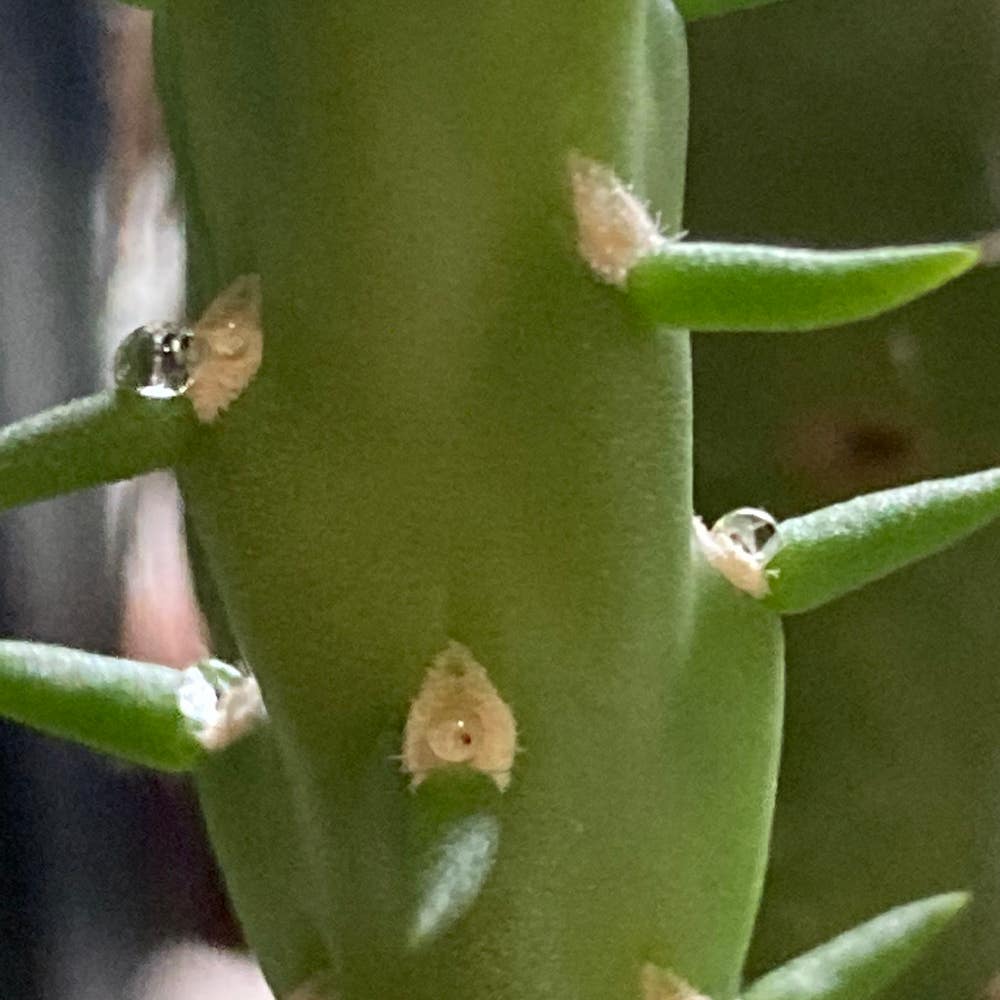
Why Are There Brown Spots on My Chain-Link Cholla?
Cylindropuntia cholla
By the Greg Editorial Team
Feb 13, 2024•4 min read
This article was created with the help of AI so we can cover more plants for you. May contain errors. See one? Report it here.
Rescue your Cholla from brown spot woes 🌵—learn the secrets to a spotless cactus!
- Sunlight and overwatering are common culprits for brown spots.
- Diagnose with inspection and adjust light and water accordingly.
- Prevent with regular care, including pest and disease prevention tactics.
Spotting the Culprits: Common Causes of Brown Spots
🌞 Too Much Sun, Too Little Shade
Intense sunlight can turn your Chain-Link Cholla into a brown-spot billboard. If your cactus sports dry, crispy patches on its most sun-kissed curves, it's screaming for some shade.
💧 When Water Becomes a Foe
Overwatering is like giving your cactus an unwanted bath. Look for soft, dark spots—these are telltale signs that your Cholla's roots are drowning in excess moisture.
👾 Uninvited Guests: Pests and Diseases
Pests are the party crashers no plant asked for. Tiny bite marks or webbing? You've got uninvited guests. Diseases show up as brown spots with a yellow halo or concentric rings, signaling it's time for some plant first aid.
Playing Detective: How to Diagnose Brown Spots
🔍 Examining the Evidence
To kick off your plant investigation, start with a visual inspection. Look for patterns in the brown spots—uniform or random, small or large. Check both the topside and underside of leaves. Feel the spots; their texture can be a telltale sign, whether they're raised, sunken, or flat.
🕵️ Ruling Out Suspects
Differentiate between causes by assessing the environment. Too much sun often results in spots on the areas most exposed to light. Overwatering, on the other hand, might make the soil feel soggy and lead to spots that are soft and mushy. Pests leave behind evidence like webbing or visible critters, while diseases might show as concentric rings or wet lesions.
🕵️ Seeking Professional Help
If your sleuthing doesn't solve the mystery, don't hesitate to seek expert advice. Snap clear photos of the affected areas and note any progression. Reach out to local extension services or consult a plant pathologist. They can provide diagnostic testing to pinpoint the problem with precision. Remember, accurate identification is key to effective treatment.
The Recovery Plan: Treating Brown Spots
🌞 Adjusting the Environment
Sunlight can be both a friend and a foe to your Chain-Link Cholla. If brown spots are sunburn marks, it's time to dial down the exposure. Create a sun-safe zone by positioning your cactus in a spot with bright, indirect light. This might mean moving it a few feet away from that sun-bathed window or providing some sheer curtains as a buffer.
Watering routines need a second look when brown spots appear. Overwatering is a common culprit, so let the soil's top layer dry out before giving your Cholla another drink. Aim to water at the base, and do it in the morning to allow any stray droplets on the leaves to evaporate under the gentle morning sun.
🐜 Pest Control and Disease Management
When it comes to pests, neem oil and insecticidal soaps are your go-to for a non-toxic smackdown. They're effective against a range of uninvited guests, from aphids to spider mites. Apply with the precision of a sniper, targeting only the affected areas to avoid collateral damage to beneficial insects.
Fungal infections demand a more aggressive approach. If natural remedies like baking soda sprays don't cut it, bring in the chemical cavalry. Copper-based fungicides are like the plant's personal bodyguards, forming a protective barrier on leaf surfaces. Apply thoroughly, as if painting a masterpiece, and stick to a regular reapplication schedule.
Remember, the right environment and vigilant pest control are your best defense. Keep your Cholla's home stable and its enemies in check, and you'll be on your way to restoring its spot-free glory.
Keeping the Spots at Bay: Prevention Tactics
🕵️♂️ Regular Check-Ups
Inspect your Chain-Link Cholla like it's a part of your morning routine. Look for early signs of distress such as discoloration or spotting, and act swiftly if you spot them. Regular grooming, including the removal of dead leaves, is essential to keep your plant looking sharp and healthy.
🏡 Creating the Ideal Home
Balance is crucial when it comes to light and water. Your Cholla doesn't need a sunbath; it prefers a steady, indirect glow. Watering should be like a well-timed comedy—only when the timing is perfect. Too much, and you're drowning the punchline; too little, and the joke falls flat.
🛡️ Proactive Pest and Disease Measures
Preventative treatments are your Cholla's best friend. Keep an eye out for pests and show them the door with insecticidal soap or neem oil before they settle in. Adjust your care with the seasons—less water in the winter, more shade in the summer. And remember, a clean environment is less inviting to diseases, so keep your tools and plant area tidy.
⚠️ Safety First
This content is for general information and may contain errors, omissions, or outdated details. It is not medical, veterinary advice, or an endorsement of therapeutic claims.
Always consult a qualified healthcare professional before using any plant as food, medicine, or supplement.
Never eat any plant (or feed one to pets) without confirming its identity with at least two trusted sources.
If you suspect poisoning, call Poison Control (800) 222-1222, the Pet Poison Helpline (800) 213-6680, or your local emergency service immediately.
Spotted an error? Please report it here.
Banish those brown spots on your Chain-Link Cholla by using Greg to diagnose 🕵️♂️ and adjust care routines with precision, ensuring a vibrant and healthy cactus!