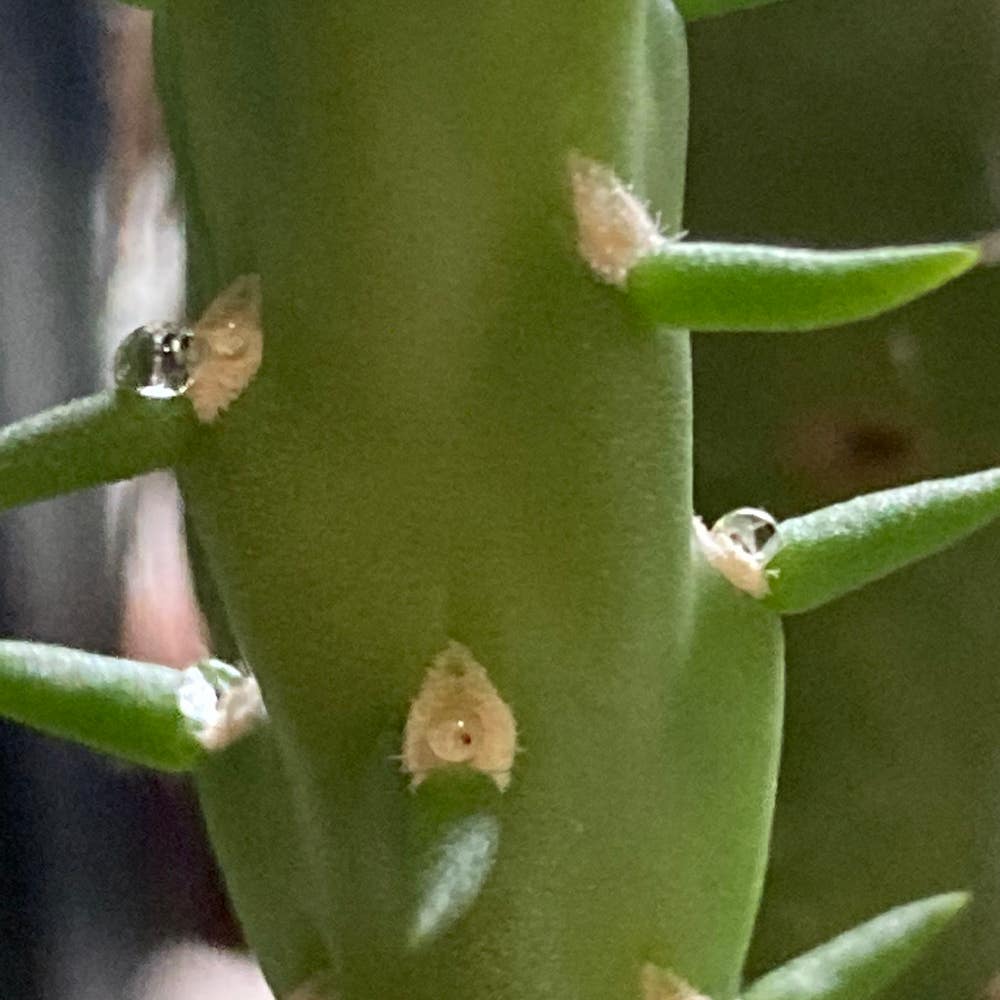
Why Are My Chain-Link Cholla Leaves Mushy?
Cylindropuntia cholla
By the Greg Editorial Team
Feb 13, 2024•6 min read
This article was created with the help of AI so we can cover more plants for you. May contain errors. See one? Report it here.
Prevent a mushy disaster for your Cholla with these crucial care tips—your plant's health depends on it! 🌵🚫💧
- Mushy leaves mean distress, signaling overwatering and potential root rot.
- Feel the leaf: Healthy ones bounce back, mushy ones cave like a sponge.
- Immediate action: Stop watering, let soil dry, and ensure proper drainage.
Spotting the Trouble: Diagnosing Mushy Leaves
👁️ Visual Cues: The Look of Lethargy
Discoloration is your plant's cry for help. If your Chain-Link Cholla's leaves are turning a sad shade of yellow or brown, they're not trying out a new look; they're in distress. Leaves that resemble overcooked vegetables are a classic sign of mushiness.
🖐️ Touch and Tell: The Squish Factor
Get tactile with your Cholla. A healthy leaf should have the confidence of a fresh salad green, snapping back when you poke it. If it feels like a sponge and caves under pressure, you've got a case of the mushies. Leaves should bounce back, not give in to despair.
⏰ When to Worry: The Spread of Sogginess
Keep an eye on the frequency and spread of the mushiness. If it's more than an isolated leaf or two, it's time to put on your plant detective hat. Leaves falling off without a fight or feeling like a deflated balloon are not just a bad day for your Cholla; it's a red flag.
🕵️ Early Detection: Plant Prognostics
Regular leaf inspections are non-negotiable. Catching mushiness early is like catching a typo in a tweet before it goes viral—it saves you from a world of trouble. If the leaves feel like they've given up on life, it's intervention time.
🤔 Common Confusions: Droopy vs. Mushy
Don't mix up droopy with mushy. A droopy leaf might perk up with a drink, but a mushy one has been drowning. And if the leaves are dropping like flies, it's not a graceful exit—it's a SOS signal.
The Usual Suspects: Common Causes of Mushy Leaves
💦 Too Much Love: The Overwatering Dilemma
Overwatering is like a helicopter parent for plants—it means well but ends up smothering. Chain-Link Cholla cacti are no exception. They prefer tough love, thriving on neglect rather than constant attention. If your Cholla is sitting in soil that's perpetually wet, you're essentially giving its roots a never-ending bath. This leads to a classic case of mushy leaves, where the plant's once firm and spiky exterior turns into a soft and squishy disappointment.
Signs Your Cholla is Drowning in Water
A Cholla that's heavier than it should be is a red flag. The soil should dry out between waterings, not stay damp like a sponge that's afraid to dry. Leaves that yield to a gentle squeeze more than they resist are crying out for an intervention. And if you spot any black or brown spots, it's not a new leaf pattern; it's a sign of fungal infection, courtesy of too much H2O.
How Overwatering Leads to Mushy Leaves
When roots can't breathe, they can't feed your Cholla properly. This results in leaves that are more limp than a forgotten salad. The plant's robustness takes a hit, and before you know it, you're dealing with a mushy mess. It's a sad tale of good intentions gone awry.
🌱 Under the Surface: Root Rot and Its Mushy Aftermath
Root rot is like the bad guy in a horror movie—it's often hidden, causing damage before you even know it's there. It's the dark side of overwatering, where the roots turn into a brown, mushy horror show. This is bad news for your Cholla, as the roots are its lifeline.
Spotting Root Rot Before It's Too Late
If your Cholla smells like it's fermenting rather than flourishing, that's a telltale sign of root rot. The base of the plant should be firm and dry, not soft and smelly. Musty odors and a base that feels like a rotten apple are your cues to act fast.
The Connection Between Root Health and Leaf Texture
Healthy roots equal healthy leaves. It's that simple. When root rot sets in, it's like cutting off the plant's supply chain. The leaves lose their vigor and firmness, turning into a mushy mess. It's a direct correlation: compromised roots lead to compromised leaves. Keep an eye on the base of your Cholla; it's the foundation of the plant's health.
First Aid for Your Cholla: Immediate Steps to Take
💧 Cutting Back: Adjusting Your Watering Routine
Stop watering immediately. Your Cholla's roots are gasping for air, not water. Let the soil go bone-dry before you even consider another watering session. This is a critical step, not a mere suggestion.
🌡️ How Much is Too Much? Finding the Right Balance
Check the soil before reaching for the watering can. If it feels damp an inch down, hold off. If it's dry, give it a thorough drink, ensuring excess water drains out completely.
⏳ The Waiting Game: Letting the Soil Dry
Patience is key. Wait for the soil to dry out entirely between waterings. This isn't a game of chance; it's a calculated pause to prevent further damage.
🌱 Changing the Environment: Soil and Pot Considerations
🌿 Switching to Well-Draining Soil
Ditch the swampy soil mix. Refresh with a well-draining concoction, like a cactus or succulent mix with added perlite or coarse sand. Your Cholla will thank you.
🍶 Choosing the Right Pot to Prevent Waterlogging
The pot matters. Ensure it has drainage holes and isn't a size too big. Terracotta pots are a win for their breathability. Remember, your Cholla's life depends on avoiding a soggy bottom.
Keeping It Firm: Long-Term Prevention Strategies
🚰 Engineering the Escape: Ensuring Proper Drainage
Drainage holes are the unsung heroes in the fight against mushy leaves. They're like secret escape routes for excess water. Make sure your pot has them; it's non-negotiable. But don't stop there. The material lining the bottom of your pot matters too. Gravel or broken pottery can act as a filtration layer, preventing soil from clogging up those vital escape paths.
For soil, think of it as the VIP section for your Cholla's roots. A mix rich in perlite or sand gives it that airy, loose texture that roots love. It's like creating a mini oasis where water and air flow freely, keeping root rot at bay.
👀 Vigilant Care: Monitoring Soil Moisture Levels
Moisture meters are the undercover agents in the soil, giving you the intel you need to water wisely. Or, go old-school with the finger test—if it's dry an inch down, it's time to water. No more soggy surprises.
Seasons change, and so should your watering habits. In the cooler months, your Cholla might need less, like a light drizzle. But come summer, it's time to ramp it up. Think of it as the difference between sipping a cocktail and downing a big gulp.
Remember, the goal is to avoid waterlogged soil at all costs. It's not just about keeping your plant alive; it's about letting it thrive.
⚠️ Safety First
This content is for general information and may contain errors, omissions, or outdated details. It is not medical, veterinary advice, or an endorsement of therapeutic claims.
Always consult a qualified healthcare professional before using any plant as food, medicine, or supplement.
Never eat any plant (or feed one to pets) without confirming its identity with at least two trusted sources.
If you suspect poisoning, call Poison Control (800) 222-1222, the Pet Poison Helpline (800) 213-6680, or your local emergency service immediately.
Spotted an error? Please report it here.
Avoid the mushy-leaf mishap in your Chain-Link Cholla with Greg's personalized care reminders 🌵, ensuring your plant gets the perfect amount of water without the guesswork.