Why Does My Caladium 'Red Flash' Have Yellow Leaves?
Caladium 'Red Flash'
By the Greg Editorial Team
Mar 09, 2024•5 min read
This article was created with the help of AI so we can cover more plants for you. May contain errors. See one? Report it here.
Save your Caladium 'Red Flash' from yellow peril 🍂 by uncovering and fixing the underlying issues!
- 🌊 Overwatering and underwatering both cause yellow leaves; check soil moisture.
- ☀️🌿 Proper light exposure is key; too much or too little harms leaves.
- 🥗 Nutrient balance is crucial; use balanced fertilizer and monitor for deficiencies.
Spotting the Signs: Yellow Leaves on Your Caladium
🚰 Recognizing Overwatering
Yellow leaves on your Caladium 'Red Flash' might be screaming overwatering. If the pot feels like you're lifting weights, it's time to ease up on the hydration. Check for a soggy soil feel and a musty smell—both signs you're overdoing the water. Mold or fungus on the leaves? That's a big no-no, indicating too much moisture.
🏜️ Identifying Underwatering
Conversely, leaves turning yellow could be a cry for thirst. If the soil feels as dry as a desert, your Caladium is begging for a drink. Wilting leaves are a dead giveaway that your plant's water needs aren't being met.
🌞 Assessing Light Exposure
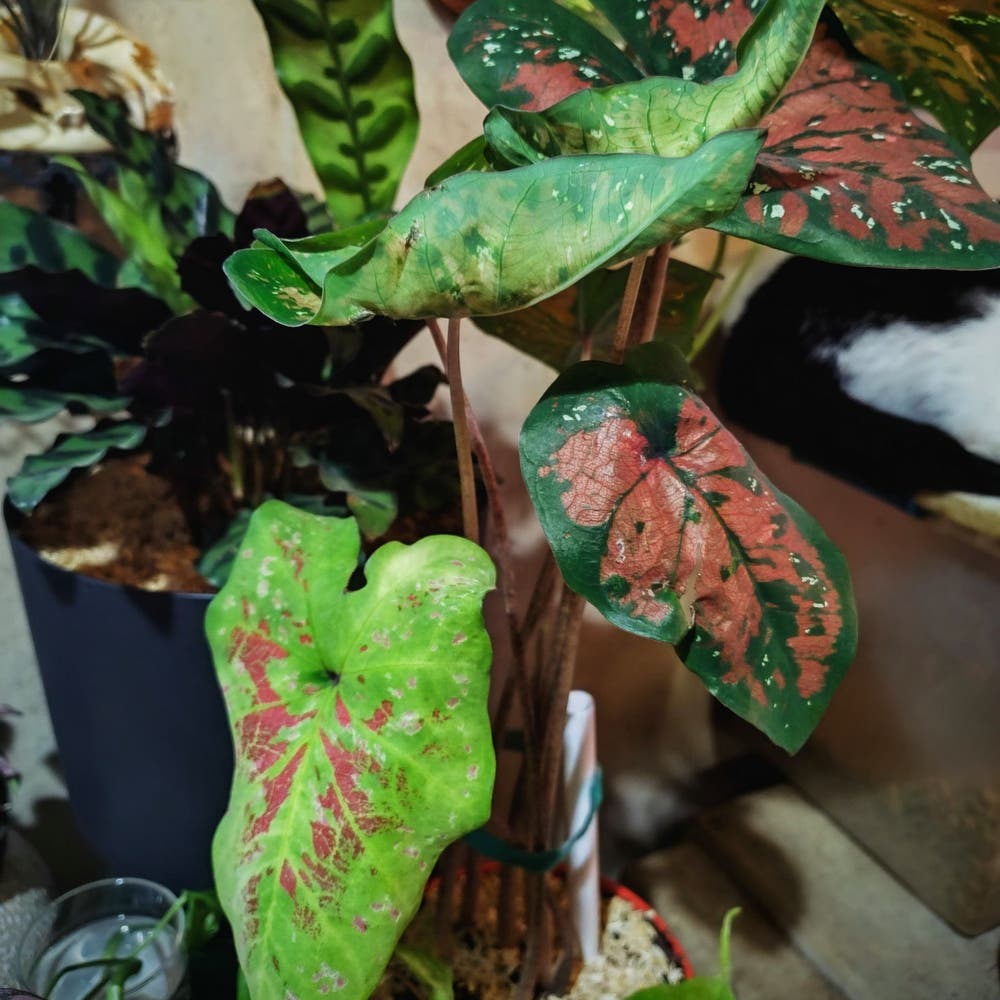
Lighting is key. Too much sun and your Caladium's leaves might sport a sunburned look, while too little light can lead to a lackluster yellow. Aim for that sweet spot where the light is just right to keep your Caladium's leaves lush and vibrant.
🍽️ Detecting Nutrient Shortfalls
Nutrient deficiencies often manifest as yellowing leaves. Older leaves turning yellow could point to a lack of nitrogen, while yellowing between the veins might indicate an iron deficiency. Keep an eye out for these patterns and consider a soil test to tackle any specific nutrient needs head-on.
Fixing the Water Woes
💧 Fine-Tuning Your Watering Routine
Watering your Caladium 'Red Flash' is more rhythm than routine. Start by checking the soil's top inch; if it's dry, it's time for a drink. Aim for a weekly schedule, but stay flexible—adjust for temperature and humidity. Use room-temperature water to avoid shocking the roots, and always water at the base to keep leaves dry and happy.
🚰 Improving Soil Drainage
Drainage is your plant's lifeline. Ensure your pot has holes in the bottom, and consider mixing in perlite or sand to keep the soil from holding excess water hostage. If you're dealing with a swampy situation, it's time to repot with a well-draining mix. Think of it as giving your plant's roots a new, breathable home where they can thrive without the threat of root rot.
Let There Be (The Right Amount of) Light
💡 Adjusting Light for Optimal Health
Caladium 'Red Flash' is a bit of a diva when it comes to lighting. Bright, indirect light is its jam. Too much sun, and it throws a fit with scorched leaves; too little, and it gets all leggy and weird.
🎯 Finding the Sweet Spot
To prevent your Caladium from going full drama, rotate it regularly. This ensures all sides get their moment in the spotlight, without any diva tantrums. If your windows are serving up too much solar intensity, sheer curtains are your go-to. They're like sunglasses for your plant, softening the harsh rays to a gentle glow.
🔦 Light Meter Magic
Not sure if you're hitting that light sweet spot? Whip out a light meter app. It's like having a secret agent that tells you exactly where the light is just right. No guesswork, no light-related mishaps.
🍂 Seasonal Shuffle
Remember, the sun has a schedule of its own. What works in spring might fry your plant in summer. Stay on your toes and be ready to move your green buddy as the seasons change. It's like a dance, and you're leading.
🔄 Gradual Transitions
Thinking of moving your plant? Do it slowly. A sudden shift can shock your Caladium more than a plot twist in a telenovela. Introduce it to new light conditions bit by bit, and watch for signs of contentment (or distress).
👀 Keep an Eye on the Prize
Lastly, observe your plant like it's the most interesting thing on TV. Leaves stretching out? It's craving more light. Leaves getting crispy? Dial back on the sunbathing. It's all about being responsive and finding that Goldilocks zone where everything is just right.
Nourishing Your Caladium 'Red Flash'
💪 Choosing the Right Fertilizer
Caladium 'Red Flash' is as hungry for nutrients as a teenager after sports practice. Balanced fertilizers are your best bet, with equal parts nitrogen, phosphorus, and potassium. Think of it as the plant equivalent of a well-rounded meal. Avoid fast-food equivalents like urea-heavy fertilizers; they're the nutritional villains in this story. Instead, go for slow-release types or organic options like fish emulsion. They're like a slow-cooked stew, releasing flavors—ahem, nutrients—over time.
⏰ When to Feed Your Plant
Timing is everything; it's the rhythm of the dance for your Caladium's life. Fertilize monthly during the growing season, but don't get overzealous. It's a monthly check-in, not a daily nag. If you see a white crust on the soil or your plant's growth stalls, take it as a sign to ease up. It's telling you it's full. And remember, just like a midnight snack, foliar feeding can give a quick nutrient boost. Just do it when the sun's not blazing to avoid a crispy disaster.
Keeping Yellow Leaves at Bay
🕵️ Regular Monitoring
To prevent yellow leaves, vigilance is key. Regularly inspect your Caladium 'Red Flash' for early signs of distress, such as changes in leaf color or texture. Check both the top and underside of leaves, as issues often start where they're least visible.
🌡️ Environmental Control
Creating a stable environment is crucial for the health of your Caladium. Maintain temperatures between 65-75°F (18-24°C) and keep humidity levels high to replicate their natural tropical habitat. Avoid placing your plant in locations with drafts or sudden temperature changes, which can trigger yellowing. Regularly rotate your plant to ensure even light exposure and growth, and consider using a thermostat to keep conditions consistent.
⚠️ Safety First
This content is for general information and may contain errors, omissions, or outdated details. It is not medical, veterinary advice, or an endorsement of therapeutic claims.
Always consult a qualified healthcare professional before using any plant as food, medicine, or supplement.
Never eat any plant (or feed one to pets) without confirming its identity with at least two trusted sources.
If you suspect poisoning, call Poison Control (800) 222-1222, the Pet Poison Helpline (800) 213-6680, or your local emergency service immediately.
Spotted an error? Please report it here.
Banish yellow leaves and ensure your Caladium 'Red Flash' stays radiant 🌟 with Greg's personalized watering reminders tailored to your home's unique conditions.