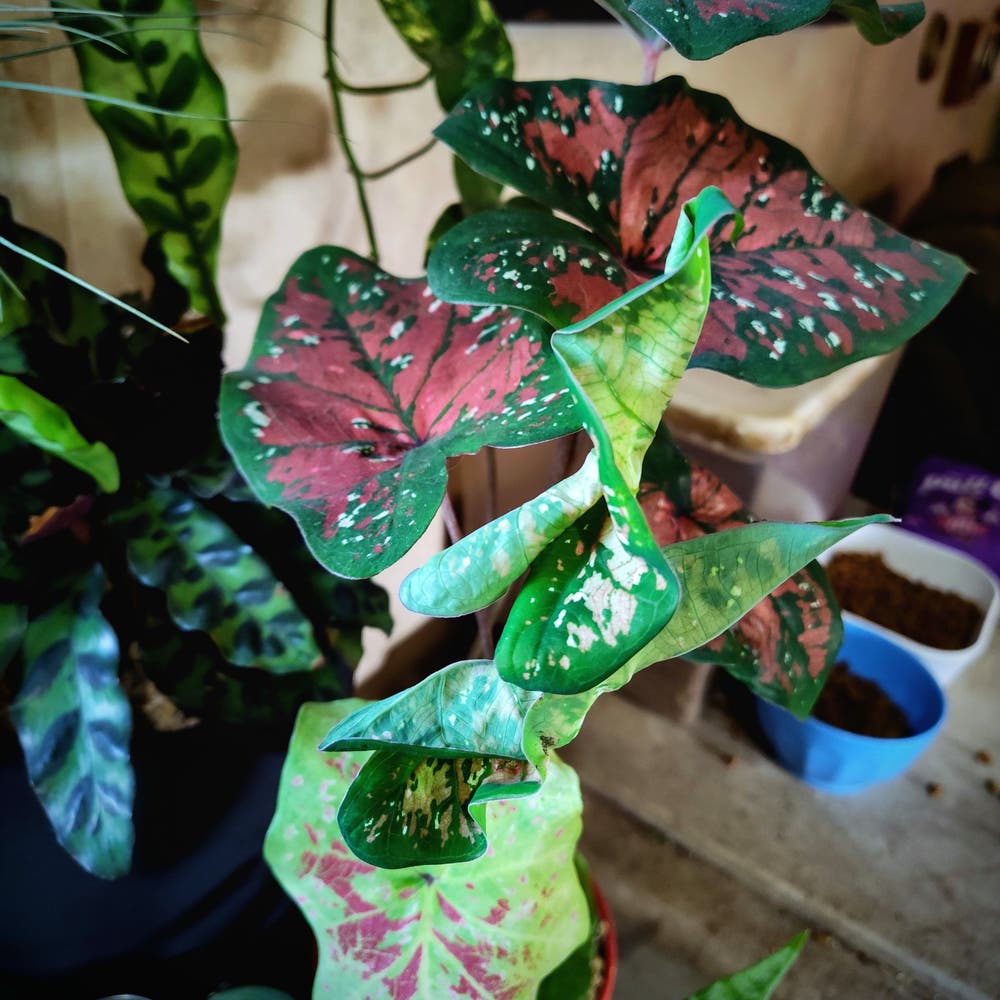
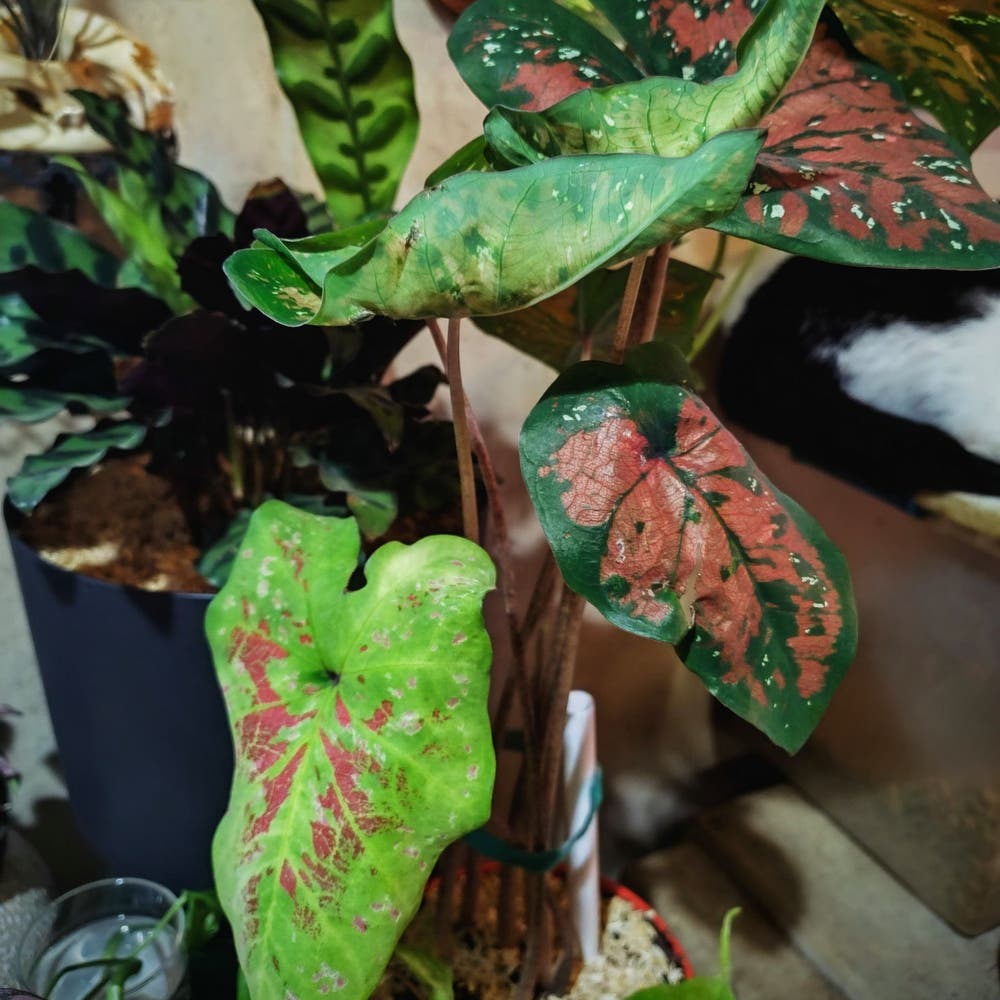
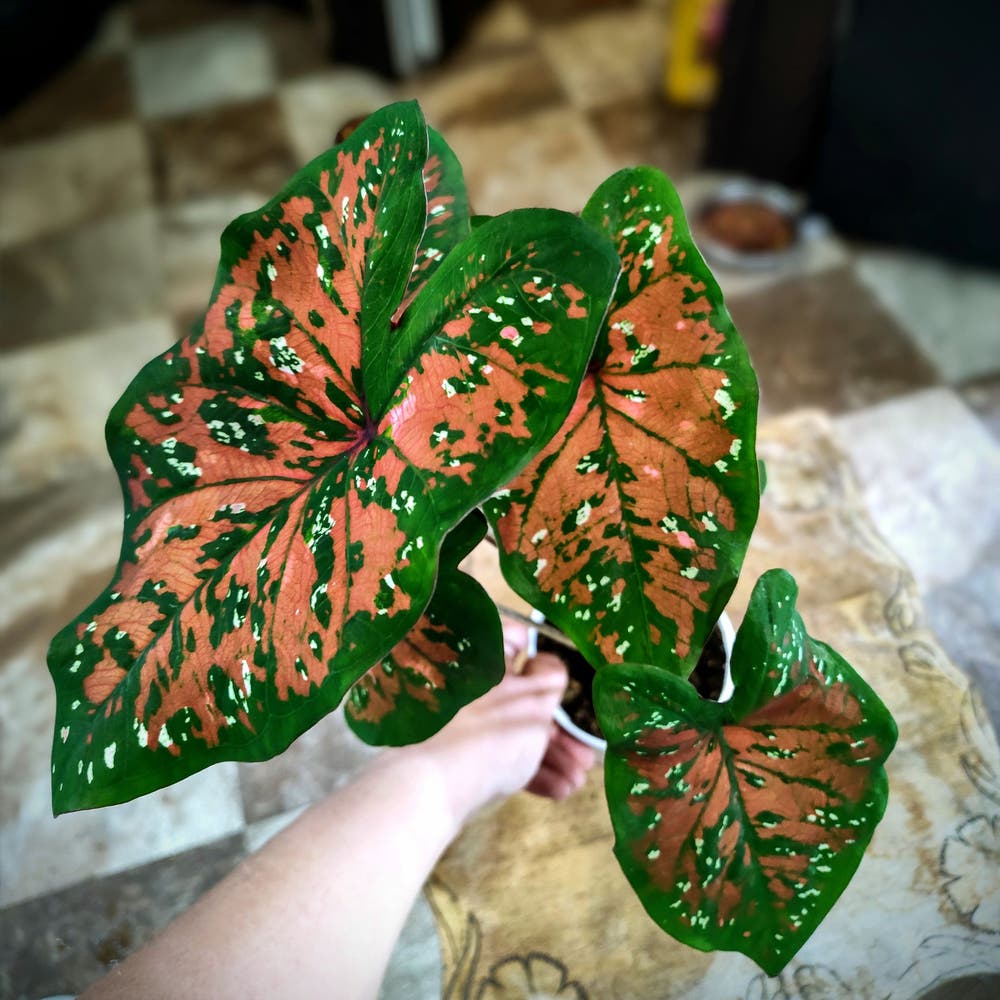
Why Are My Caladium 'Red Flash' Leaves Dropping?
Caladium 'Red Flash'
By the Greg Editorial Team
Mar 09, 2024•5 min read
This article was created with the help of AI so we can cover more plants for you. May contain errors. See one? Report it here.
Prevent your Caladium 'Red Flash' from shedding its beauty with these essential care tips! 🍂🌿
- Seasonal vs. Problematic Leaf Drop: Know when to worry.
- 🌡️ Temperature and Humidity: Key factors in leaf retention.
- 💧 Watering and Soil: Balance is essential for health.
Spotting the Signs: Is Your Caladium 'Red Flash' in Distress?
🍃 Visual Symptoms of Leaf Drop
Wilting leaves that once stood tall are your Caladium's way of saying, "Hey, I'm not okay!" When you see stems bending, it's not just a quirky plant pose; it's a sign of structural integrity issues. Yellowing leaves are like a distress flare, signaling that your 'Red Flash' needs some TLC, stat.
Rotate your pot to promote even growth and prevent your plant from getting a lopsided 'do. Pests are tiny but can wreak havoc; keep an eye out for these unwanted guests. A change in leaf color or a slowdown in growth rate is your cue to get sleuthing.
⏰ Timing and Pattern of Leaf Loss
Leaf dropping can be as predictable as your morning coffee routine or as sudden as a plot twist in a thriller. If it's seasonal, it might just be the plant's natural rhythm. But if you're witnessing an all-seasons leaf-drop marathon, that's your plant's version of a red flag.
Leaves that look like they've been through the wringer with spots, holes, or a color that's more "help me" than "healthy" are the real red flags. Keep a vigilant eye out for these signs; they're your plant's way of whispering, "I need help."
The Usual Suspects: Common Culprits Behind Leaf Drop
🌡️ Temperature Tantrums
Caladium 'Red Flash' is as fussy about temperature as a barista about coffee beans. Too hot or too cold, and your plant's leaves will drop faster than the beat at a rave. Keep the thermostat steady to avoid these tantrums. Aim for a consistent, warm environment, because sudden temperature changes are like a horror movie for your plant's delicate leaves.
💦 Humidity Hurdles
Humidity is the silent partner in crime when it comes to leaf retention. Too low, and your Caladium 'Red Flash' might go on a leaf shedding spree. It craves that tropical vibe, so think rainforest, not desert. A humidifier or a pebble tray can be a game-changer, keeping the air moist and the leaves firmly attached.
💧 Water Woes
Watering your Caladium 'Red Flash' is a balancing act worthy of a circus performer. Overwatering can drown the roots, leading to a mushy demise, while underwatering turns your plant into a crispy critter. The soak-and-dry method is your best friend here: water thoroughly, then let the soil dry out before the next watering session. Remember, yellowing leaves or a soggy stem are your plant's way of saying, "Help!"
Nurturing Roots and Shoots: Soil and Water Management
💧 Soil Solutions
Well-draining soil is the unsung hero for your Caladium 'Red Flash'. It's like the foundation of a house—vital but often overlooked. To get this right, mix in perlite or sand with your potting soil. This creates a texture that allows excess water to escape, preventing your plant's roots from sitting in moisture like a duck in a pond.
Regularly check that the soil hasn't become compacted over time. Compacted soil is a no-go—it's like trying to breathe with a pillow over your face. Keep it loose to let those roots and water move freely.
💦 Watering Wisdom
Creating a watering schedule is less about rigid timetables and more about understanding your plant's needs. The top inch of soil is your crystal ball—dry? It's time to water. But remember, it's a deep soak and then a break, not a daily sprinkle. This mimics natural rainfall, encouraging roots to reach deeper into the soil for moisture and stability.
Water thoroughly once the soil's top layer feels like a dry martini—crisp and parched. Then, let the soil dry out a bit before the next watering session. It's a delicate dance between too much and too little, but once you get the rhythm, your Caladium's leaves will stick around like loyal fans at a rock concert.
Creating the Perfect Environment
🌡️ Climate Control Indoors
Indoor Caladium 'Red Flash' plants are homebodies—they love a stable environment. Keep the temperature consistent between 70-85°F to avoid leaf drop. That means steering clear of the Bermuda Triangle of plant peril: air vents, drafty windows, and exterior doors.
Bright, indirect light is your plant's best friend. Too much sun and your Caladium's leaves might throw a fit, so position it where the light is just right. If your home is more cave than greenhouse, consider a grow light to keep your plant's photosynthesis game strong.
🌴 Outdoor Oasis
When it comes to outdoor care, think of your Caladium 'Red Flash' as needing a VIP section—sheltered from harsh elements. Wind protection is crucial, so place it near a wall or fence. Mulch is like a cozy blanket for your plant's roots, keeping them snug when temperatures drop.
Watering is key—keep the soil moist but not soggy. And remember, if Jack Frost is knocking, it's time to bring your tropical beauty indoors. No one likes a frozen plant popsicle.
⚠️ Safety First
This content is for general information and may contain errors, omissions, or outdated details. It is not medical, veterinary advice, or an endorsement of therapeutic claims.
Always consult a qualified healthcare professional before using any plant as food, medicine, or supplement.
Never eat any plant (or feed one to pets) without confirming its identity with at least two trusted sources.
If you suspect poisoning, call Poison Control (800) 222-1222, the Pet Poison Helpline (800) 213-6680, or your local emergency service immediately.
Spotted an error? Please report it here.
Ensure your Caladium 'Red Flash' thrives with stable, lush leaves 🍁 by letting Greg track and adjust your watering schedule and home environment for optimal plant health.