Why Are My Caladium 'Red Flash' Leaves Droopy?
Caladium 'Red Flash'
By the Greg Editorial Team
Mar 09, 2024•5 min read
This article was created with the help of AI so we can cover more plants for you. May contain errors. See one? Report it here.
Perk up your Caladium 'Red Flash' 🍁 with these vital tips to banish droopiness for good!
- 💧 Over/underwatering causes droopiness: Adjust watering for perky leaves.
- 🌡️ Keep 60-80°F and 60-80% humidity to prevent leaf droop.
- 🌱 Well-drained, balanced soil mix is key for Caladium health.
Spotting the Slump: Identifying Droopy Leaves
🚩 What Droopy Leaves Look Like
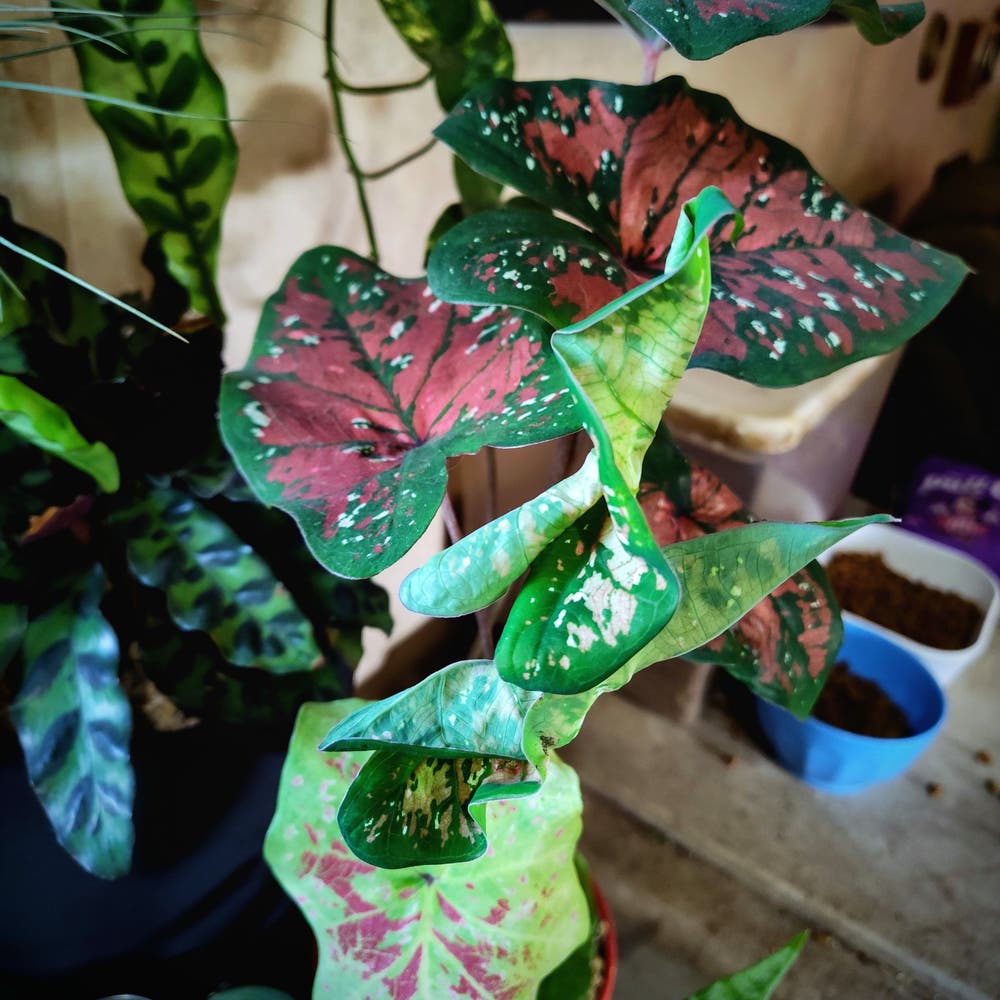
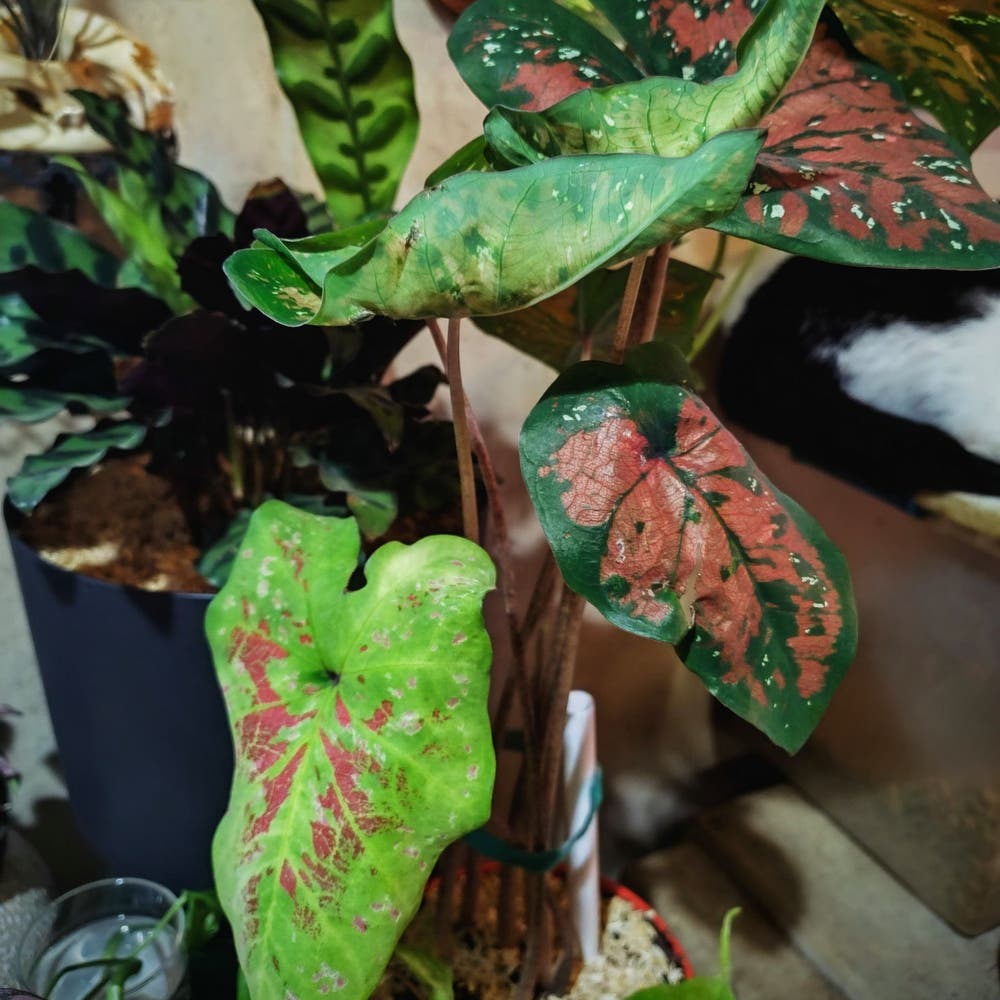
Droopy leaves on a Caladium 'Red Flash' are like a flag at half-mast—they're a sign. You'll see leaves hanging limp, lacking their usual perky posture. Consistency is key; if most leaves are down, it's not just a bad leaf day. Look for leaves that feel as uninspired as a deflated balloon, and you'll know something's up—or rather, down.
🎵 How Droopiness Differs from Natural Leaf Movement
Caladium leaves have a rhythm, moving to the beat of light and darkness. But when they're more slump than rhythm, it's not a dance—it's distress. Natural movement is graceful; droopiness is the plant's white flag. If the leaves don't perk up with the morning sun, it's time for you to step in. Watch for patterns; leaves that consistently droop, like a teenager's shoulders during a lecture, are sending an SOS.
Thirsty or Drowning? Watering Woes
💧 Signs of Overwatering and How to Fix It
Overwatered Caladium 'Red Flash' leaves are yellow and wilted, despite the soil feeling like a forgotten sponge in the sink. Root rot could be the culprit if the plant's base is softer than your favorite pillow. To fix this, stop watering immediately and let the soil dry out. For extreme cases, you might need to repot with fresh, well-draining soil.
🏜️ Signs of Underwatering and the Path to Perky Leaves
Underwatered leaves are as crisp as autumn leaves and curl up tighter than a rolled yoga mat. The pot feels lighter than your responsibilities on a Friday night. Revive your Caladium by watering it slowly, allowing the moisture to reach deep into the soil. Consistency is key; keep the soil moist but not soggy to avoid future droopiness.
Cozy Climate: Temperature and Humidity Hitches
🌡️ The Chills and Thrills: Temperature's Role in Leaf Droop
Caladium 'Red Flash' is no fan of the temperature tango. Consistency is key; aim for a steady 60-80°F (15-27°C) to prevent leaves from drooping in despair. Drafty spots are out, and so are radiators—both are notorious for causing those unwelcome temperature swings that leave your plant looking deflated.
💦 Humidity's Hug: Keeping Leaves Lively with Moist Air
Humidity is like a warm embrace for your Caladium 'Red Flash'. Target the 60-80% range to keep the foliage from turning into crispy critters. If your indoor air is drier than a comedian's punchline, consider a humidifier or a pebble tray to boost the moisture. Remember, too much humidity can be a fungal fiesta, so keep it balanced. Grouping plants can create a cozy microclimate, a little plant party, where everyone shares the moisture. Keep a hygrometer close by to monitor the levels like a plant's personal bodyguard.
The Ground Beneath: Soil and Drainage Drama
💧 Why Drainage Matters: Preventing Waterlogged Roots
Roots are like the lungs of your Caladium 'Red Flash'—they need air to breathe. When the soil is too clingy, holding water like a stage-five clinger, roots can't get the oxygen they need. This leads to the dreaded root rot, a silent killer lurking beneath the surface. To prevent this soggy catastrophe, ensure your pot has drainage holes. They're the escape route for excess water, like a fire exit in a crowded theater.
🌱 Soil Secrets: Composition for Caladium Comfort
The ideal soil mix for your 'Red Flash' should be the Goldilocks of substrates—not too dense, not too light, but just right. Aim for a mix that's a textural delight—one that holds moisture long enough to hydrate the roots but drains fast enough to avoid waterlogging. Incorporate perlite or coarse sand to keep the soil structure open and airy, like a well-ventilated room. And remember, organic matter is great, but too much of it is like an overstuffed pillow—it can smother your plant's roots. Keep the soil balanced, and your Caladium will thank you with the perkiness of a morning person on their second cup of coffee.
Reviving the Red Flash: Turnaround Tactics
🌱 Adjusting Care: Quick Fixes for Immediate Relief
Quick fixes can often revitalize droopy Caladium 'Red Flash' leaves.
Snip and Sip
Trim away any damaged leaves to redirect energy. Check the soil's moisture; if dry, water with room-temperature liquid.
Observation is Key
Regularly monitor your plant for signs of recovery or further distress. Adjust care as needed, keeping a keen eye on changes.
🌿 Long-Term Love: Routine Care to Keep Leaves Lifted
Ensuring the long-term health of your Caladium 'Red Flash' requires consistent, attentive care.
Consistency Wins
Water when the soil feels dry to the touch. Avoid overwatering to prevent root rot.
Soil and Drainage
Invest in a well-draining soil mix. This helps prevent water from pooling around the roots.
Fertilize with Finesse
During the growing season, fertilize sparingly to avoid nutrient overload.
Pest Patrol
Be vigilant about pests and diseases. Act fast if you spot any signs of infestation.
Rotate Regularly
Turn the plant periodically to encourage even growth and prevent leaning.
By implementing these immediate and long-term care strategies, your Caladium 'Red Flash' should regain its vigor and maintain its stunning appearance.
⚠️ Safety First
This content is for general information and may contain errors, omissions, or outdated details. It is not medical, veterinary advice, or an endorsement of therapeutic claims.
Always consult a qualified healthcare professional before using any plant as food, medicine, or supplement.
Never eat any plant (or feed one to pets) without confirming its identity with at least two trusted sources.
If you suspect poisoning, call Poison Control (800) 222-1222, the Pet Poison Helpline (800) 213-6680, or your local emergency service immediately.
Spotted an error? Please report it here.
Ensure your Caladium 'Red Flash' stays perky and vibrant 🍃 with Greg's personalized care reminders, tailored to your plant's unique needs and home environment!