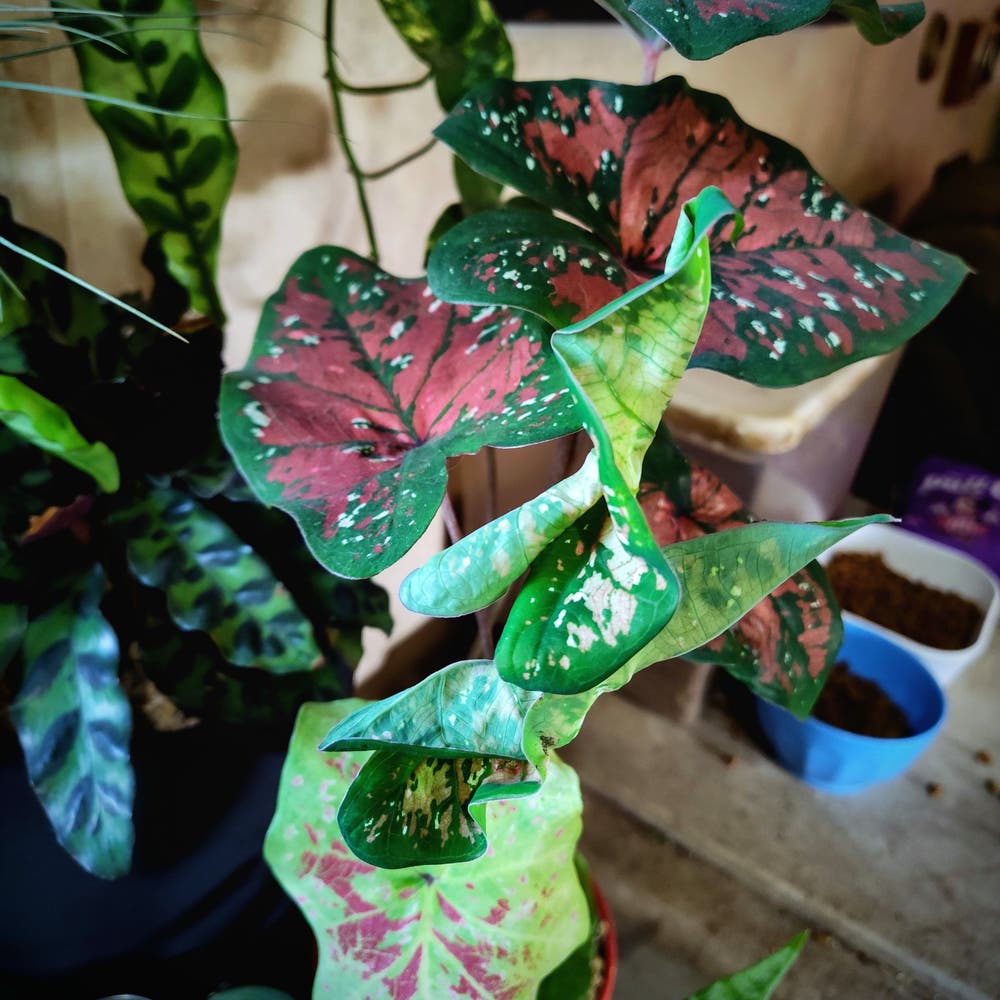
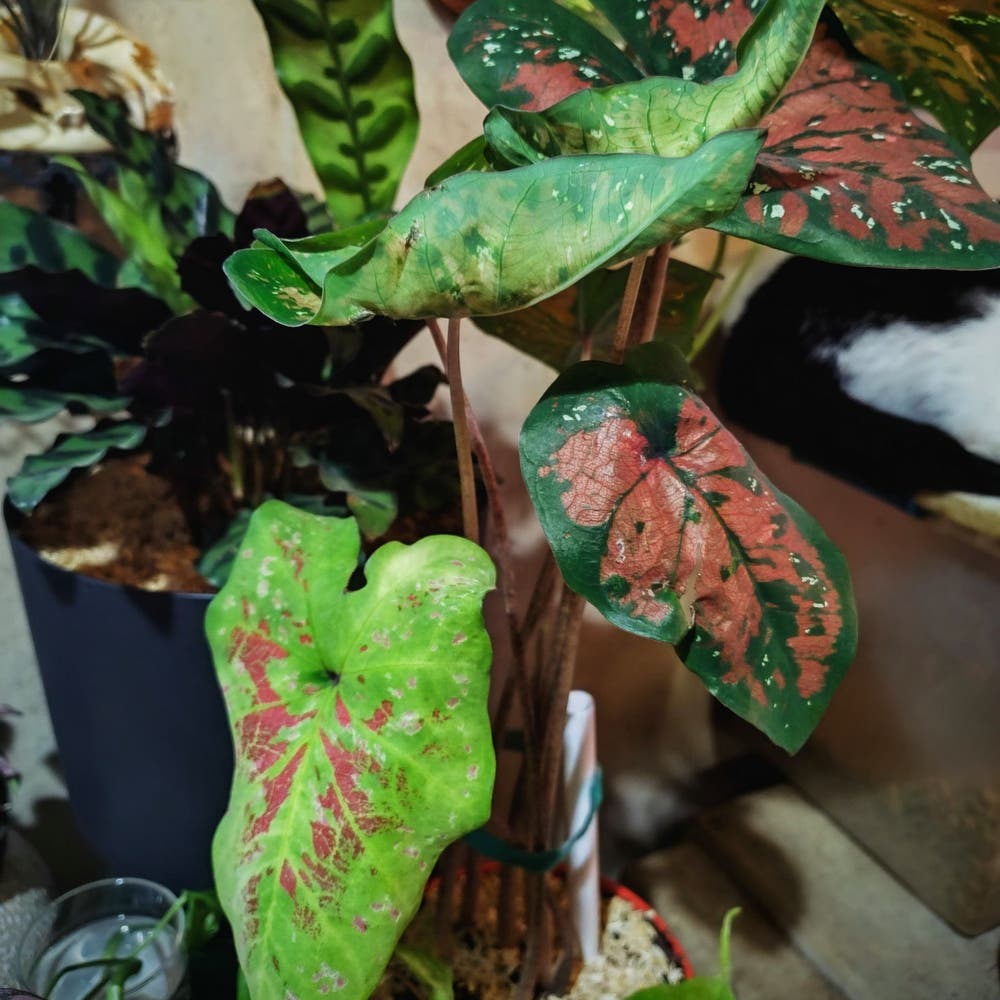
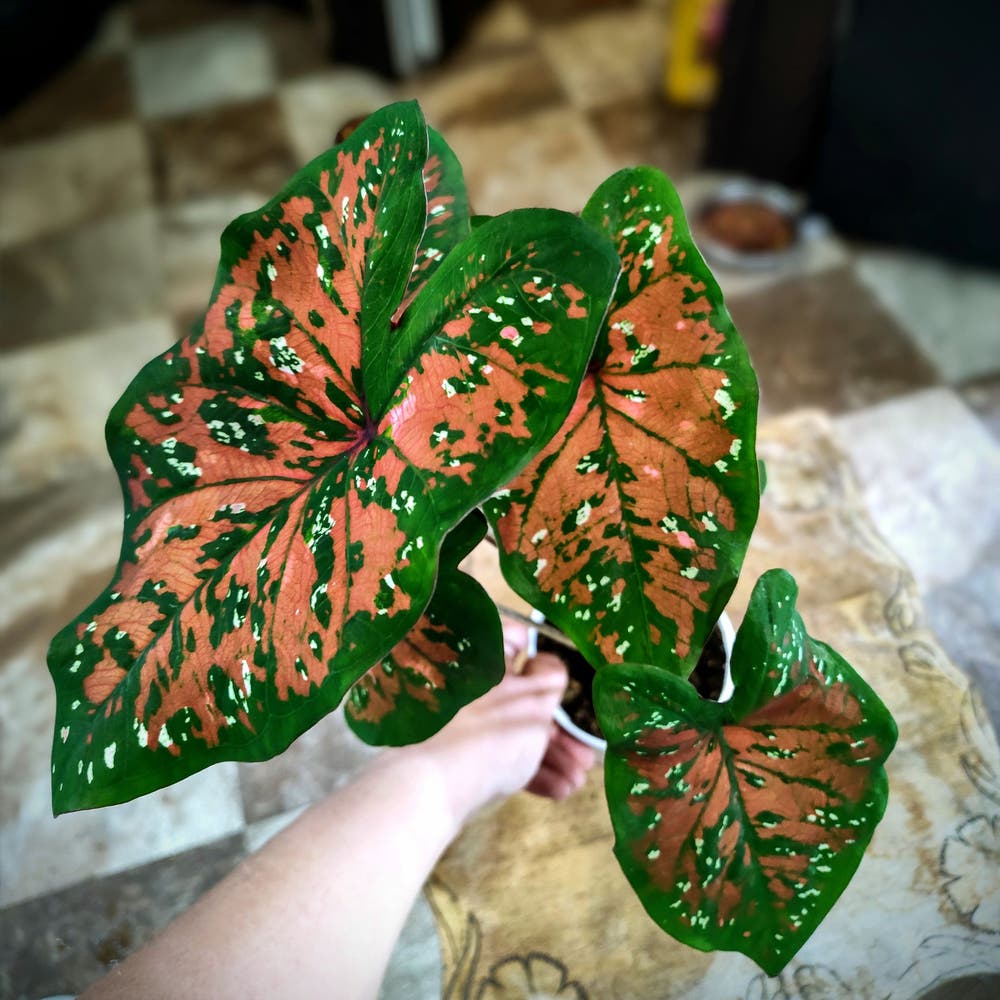
🍂 Why Are My Caladium 'Red Flash' Leaves Falling Over?
Caladium 'Red Flash'
By the Greg Editorial Team
Mar 09, 2024•4 min read
This article was created with the help of AI so we can cover more plants for you. May contain errors. See one? Report it here.
Revive your drooping Caladium 'Red Flash' 🍁 and maintain its splendor with these essential care tips.
- Over/underwatering and light issues cause droopy Caladium leaves.
- Root and soil health are key to diagnosing droopiness.
- Consistent care prevents drooping: right soil, water, and temperature.
Spot the Culprits: Common Causes for Droopy Leaves
💦 Too Much Love: Overwatering Woes
Yellowing leaves and stems as limp as overcooked spaghetti are classic signs of overwatering. Roots need to breathe, and when they're drowning, leaves droop like they've lost all hope.
Overwatering turns the soil into a soggy mess, suffocating the roots. The result? Leaves that fall over as if they're waving the white flag of surrender.
🏜️ Thirsty Roots: The Underwatering Paradox
Leaves curling inward, crispy to the touch, are your plant's SOS for water. Underwatering is like sending your Caladium on a hike in the Sahara—without a canteen.
A pot lighter than your mood on Monday morning? That's a telltale sign the soil is too dry. Dehydration causes leaves to droop as they desperately try to conserve moisture.
🌞 Feeling the Extremes: Temperature and Light Issues
Leaves wilting like they're trying to escape the sun could be heat stress, while a cold snap might leave them stiff and unresponsive.
Light is a balancing act; too little, and your plant's leaves droop in a futile search for sunlight. Too much, and they might as well be in a tanning bed without sunscreen. Aim for bright, indirect light to keep those leaves standing at attention.
Playing Detective: How to Diagnose Droopy Leaves
🕵️ Soil Sleuthing: Checking Moisture and Composition
Dive straight into the soil's secrets. Is it moist like a well-squeezed sponge or as dry as a desert? Overwatering and underwatering leave distinct signatures; soggy soil can suffocate roots, while dryness can make them desperate for a drink.
Drainage is another piece of the puzzle. If water sits in the pot like a stagnant pond, it's a red flag. Ensure your pot's drainage could rival a sieve's efficiency.
🌱 Root Health Check-Up
Roots tell tales of health or decay. Gently unearth your plant to inspect the roots. If they're brown and mushy, you've got a case of root rot. Healthy roots should be firm and white, not slimy or discolored.
Root rot is a silent assassin; it creeps in when conditions are too damp. If you spot it, it's time for a root rescue mission. Cut away the rot, and consider repotting in fresh, well-draining soil.
First Aid for Foliage: Fixing the Flop
💧 Watering Wisdom: Finding the Balance
Watering your Caladium 'Red Flash' is more art than science. Adjust your routine by waiting for the top inch of soil to dry before giving it a drink. Overwatering? Let the soil dry out a bit more. Underwatering? Don't drown it in your eagerness to compensate—gradual rehydration is key.
Tips for Proper Watering Techniques
Use room-temperature water to avoid shock to the roots. If you're unsure, the finger test never lies—poke it in and see if the soil feels dry. Consider a self-watering pot as a hassle-free alternative, ensuring consistent moisture without the risk of overdoing it.
🌞 Light and Temperature Tweaks
Optimize light exposure to keep those leaves perky. Caladiums love their sunlight like teenagers love their phones—indirect but constant. If your plant's leaves are still drooping, it might be craving more light. Move it closer to a window, but shield it from the harsh midday sun.
Stabilize temperature to prevent your plant from throwing a fit. Caladiums prefer a steady climate, so avoid placing them near drafty windows or heat sources. Think of your plant as a picky guest—too hot or too cold, and it'll let you know by the droop of its leaves.
Future-Proofing Your 'Red Flash': Prevention Tactics
💰 The Right Foundation: Soil and Pot Selection
Choosing the best soil mix is like setting up a trust fund for your 'Red Flash'—it's all about long-term stability. Opt for a well-draining concoction, rich in organic matter, with a dash of perlite or sand for that extra oomph in aeration.
Proper pot size and drainage are non-negotiable. A pot too large invites soggy conditions, while too small cramps your plant's style. Ensure drainage holes are present—no holes, no hope. Consider a stand or feet for the pot to promote airflow and prevent waterlogging.
🔄 Consistency is Key: Environmental Stability
Maintaining a consistent watering schedule is your plant's version of a steady job. It keeps things predictable and the leaves perky. Adjust your routine with the seasons—plants don't need a monsoon in winter.
Avoiding sudden changes in light and temperature is like avoiding drama in your social circle—it keeps life smooth. Find that Goldilocks zone for light and keep the temperature as stable as your favorite coffee shop's Wi-Fi. Remember, plants appreciate routine as much as you do.
⚠️ Safety First
This content is for general information and may contain errors, omissions, or outdated details. It is not medical, veterinary advice, or an endorsement of therapeutic claims.
Always consult a qualified healthcare professional before using any plant as food, medicine, or supplement.
Never eat any plant (or feed one to pets) without confirming its identity with at least two trusted sources.
If you suspect poisoning, call Poison Control (800) 222-1222, the Pet Poison Helpline (800) 213-6680, or your local emergency service immediately.
Spotted an error? Please report it here.
Keep your Caladium 'Red Flash' standing tall 🌿 with Greg's custom watering schedules and environment tips, ensuring your leaves never droop from neglect!