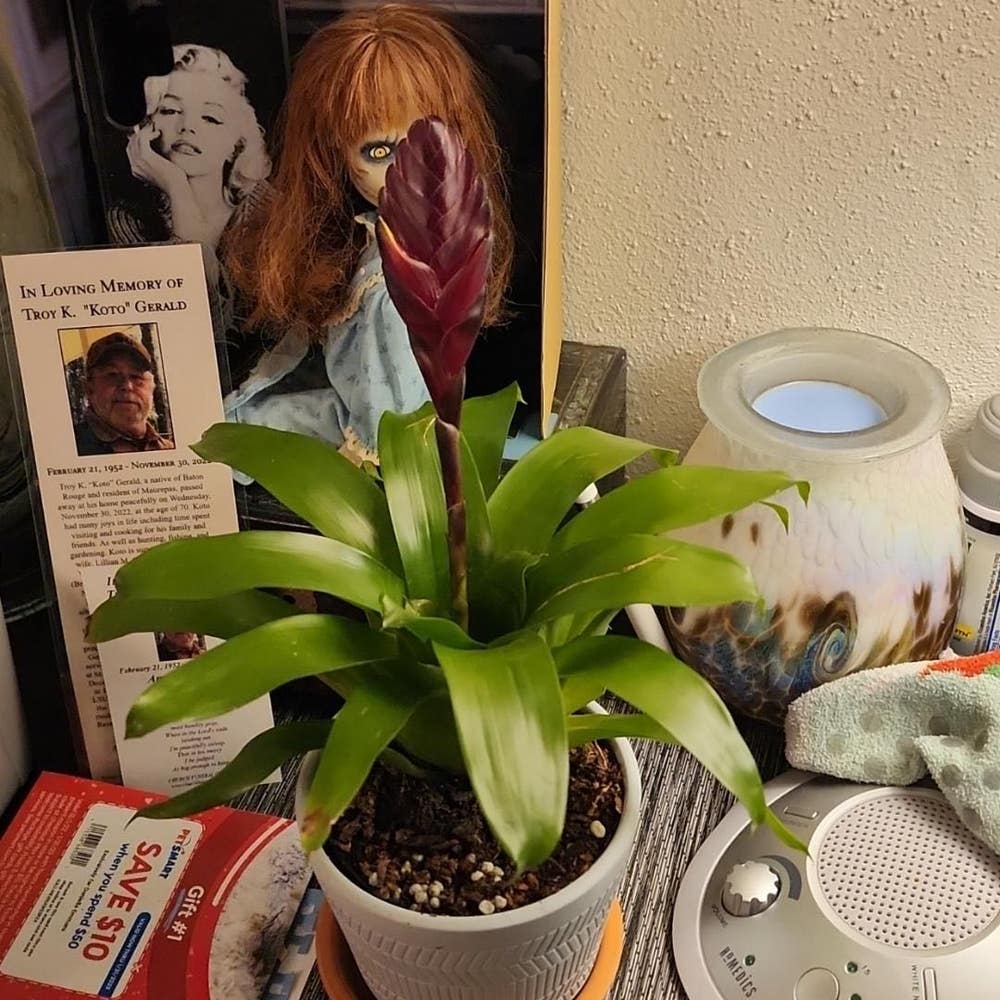
Why Does My Vriesea 'Astrid' Have Yellow Leaves? 🍂
Vriesea 'Astrid'
By the Greg Editorial Team
Mar 24, 2024•5 min read
This article was created with the help of AI so we can cover more plants for you. May contain errors. See one? Report it here.
- Over/underwatering causes yellow leaves; adjust watering and improve drainage.
- Balance light and temperature to prevent leaf damage and stress.
- Nutrient deficiencies and pests can lead to yellowing; soil test and use natural remedies.
Spotting Trouble: Signs Your Vriesea 'Astrid' is Unhappy
💧 Overwatering Woes
Yellow leaves can scream 'Help, I'm drowning!' in plant language. If your Vriesea 'Astrid' is sitting in soggy soil, it's time to rethink your watering strategy. Root rot is a silent killer, often sneaking up unnoticed until it's too late.
Quick fixes include easing up on the watering can and ensuring proper drainage. Consider a soil mix that doesn't hold onto moisture like a sponge. If the damage isn't too severe, your plant might just bounce back with some TLC and a drier environment.
🏜️ Underwatering Issues
Crispy, curling leaves are your Vriesea 'Astrid' waving a white flag of thirst. The soil pulling away from the pot's edge is another distress signal. It's not playing hard to get; it genuinely needs a drink.
Hydrate slowly and deeply to quench your plant's thirst without overwhelming it. Check the soil moisture regularly, and adjust your watering schedule to keep the soil consistently moist—not wet, not bone-dry.
🌞 Light and Shadow Play
Finding that perfect balance of light for your Vriesea 'Astrid' is like choosing the right Instagram filter—it can make all the difference. Too much direct sunlight can bleach and burn the leaves, while too little will leave your plant leggy and sad.
Adjust your plant's position to avoid the harshest rays while still basking in bright, indirect light. Think of it as giving your Vriesea a pair of sunglasses rather than a blindfold or a sunlamp.
When Temperatures Take a Toll
🌡️ Too Hot to Handle
Wilting or curling leaves are clear indicators that your Vriesea 'Astrid' is experiencing heat stress. If the plant's growth stalls or its flowers are MIA, it's likely feeling the burn.
To cool down your Vriesea 'Astrid', relocate it to a cooler area with indirect light. Consider using a shade cloth or positioning it among other plants to create a protective microclimate.
❄️ Chilly Reception
A sudden leaf droop can signal cold shock, a sign your Vriesea 'Astrid' is not enjoying the chill. Cold damage often manifests as darkened leaves or a mushy texture, similar to frostbite.
To keep your Vriesea 'Astrid' cozy, insulate it with protective coverings or move it to a warmer spot. Avoid placing it near drafty windows or doors where cold drafts can strike.
Feeding Frenzy: Nutrients and Deficiencies
💪 The Usual Suspects: Nitrogen, Iron, and Magnesium
🔍 Detecting the Signs of Nutrient Needs
Your Vriesea 'Astrid' is a bit of a diva when it comes to nutrients. Yellow leaves? Could be a cry for nitrogen, the green machine of the plant world. Without it, your 'Astrid' might as well be on a diet of fast food – it's not going to stay lush and vibrant.
Iron is another key player. Think of it as the plant's personal trainer, pumping up the chlorophyll. If your 'Astrid' starts sporting yellow leaves with green veins, it's probably iron that's missing from its workout routine.
And let's not forget magnesium, the chlorophyll chef. A lack of this nutrient turns your plant into a patchy, yellow mess. It's like the plant's losing its green mojo, one leaf at a time.
🥗 Serving Up a Balanced Diet to Restore Leafy Greens
To whip your Vriesea 'Astrid' back into shape, you need to serve up a balanced diet. A soil test is your backstage pass to the nutrient concert – it'll show you exactly what's missing from the setlist.
Once you've got the dirt on your soil, it's time to pick your fertilizer. But remember, moderation is key. Overfeeding is like binge-watching TV while scarfing down potato chips – it's going to lead to problems. Stick to the recommended dosage and keep an eye on your plant's response.
If you're dealing with an iron deficiency, consider a chelated iron supplement. It's like giving your plant a vitamin shot that goes straight to the veins. But be careful not to mix up iron with its look-alike pals, zinc and manganese. They often crash the party together, so they should be invited at the same time.
For magnesium woes, Epsom salts can be the spa treatment your 'Astrid' needs. A little sprinkle can go a long way in bringing back the green glow. Just don't turn it into a salt bath – too much of a good thing is still too much.
Battling Invaders: Pests and Diseases
🐜 Unwanted Guests
Pests love a good Vriesea 'Astrid' as much as plant enthusiasts do. Mealybugs and scale insects often top the list of freeloaders, leaving sticky residue and misshapen leaves in their wake. To spot these critters, look for cotton-like clumps or tiny, brown discs on your plant.
Natural remedies are your first line of defense. A gentle wipe with a damp cloth can remove some pests, while a neem oil solution is a go-to for organic control. Introducing ladybugs can also help; they're like tiny knights that joust aphids right off your plant.
🍄 Fungal Foes and Bacterial Bullies
Fungi and bacteria are the party crashers nobody invited. Black spots, wilted shoots, and a rotten smell are telltale signs that they've taken up residence in your Vriesea 'Astrid'.
To combat these invaders, improve air circulation around your plant and ensure it's not sitting in soggy soil. If you're already in the thick of battle, a targeted application of a fungicide might be necessary. Remember, reading the label is not just a suggestion—it's a must to avoid turning your plant into a chemical salad. Keep your plant's area tidy to prevent these microscopic menaces from throwing a rave.
⚠️ Safety First
This content is for general information and may contain errors, omissions, or outdated details. It is not medical, veterinary advice, or an endorsement of therapeutic claims.
Always consult a qualified healthcare professional before using any plant as food, medicine, or supplement.
Never eat any plant (or feed one to pets) without confirming its identity with at least two trusted sources.
If you suspect poisoning, call Poison Control (800) 222-1222, the Pet Poison Helpline (800) 213-6680, or your local emergency service immediately.
Spotted an error? Please report it here.
Revive your Vriesea 'Astrid' and banish yellow leaves with Greg's custom watering plans 💧, tailored to keep your plant perfectly hydrated and healthy.