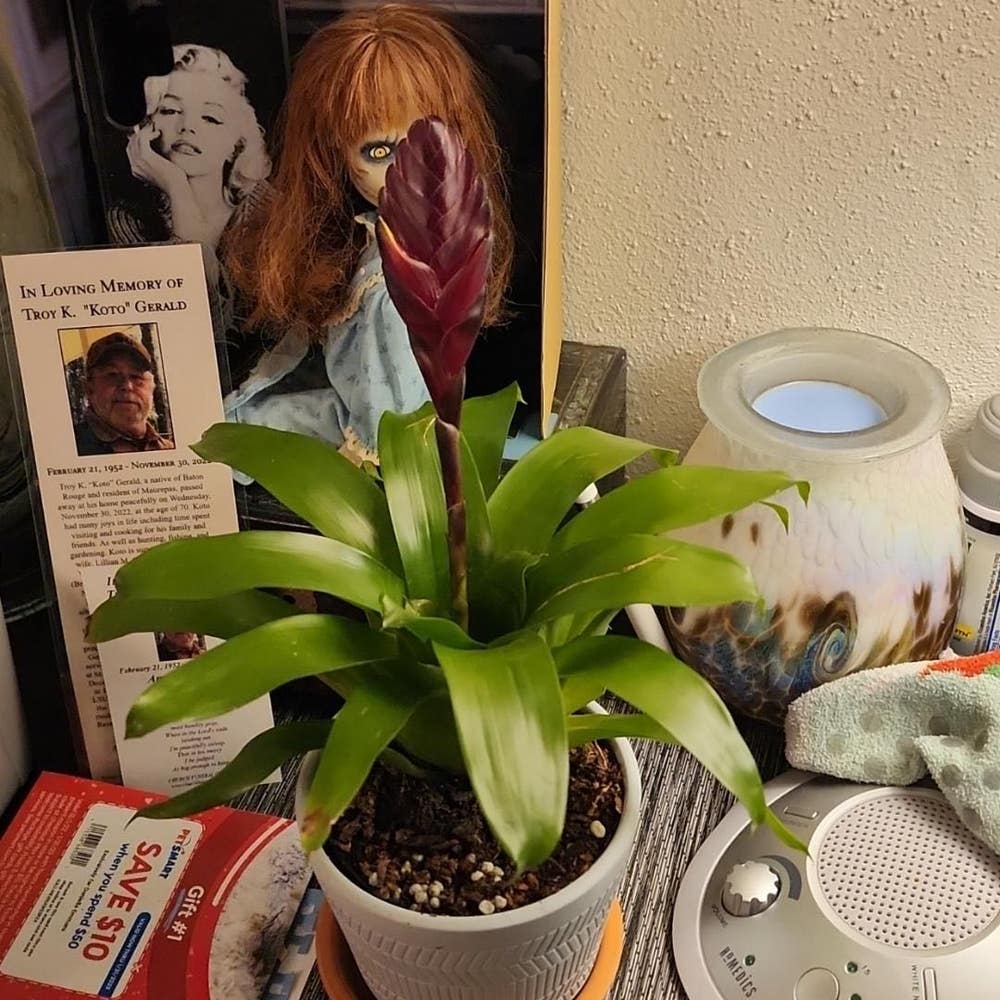
🌸 What to Know About Growing Your Vriesea 'Astrid' Outdoors
Vriesea 'Astrid'
By the Greg Editorial Team
Sep 30, 2024•5 min read
This article was created with the help of AI so we can cover more plants for you. May contain errors. See one? Report it here.
- 🌞 Vriesea 'Astrid' thrives in partial shade; avoid direct sunlight to prevent leaf scorch.
- 💧 Water when the top inch is dry, using leaf axils for optimal hydration.
- ❄️ Protect from frost and adjust care seasonally for vibrant growth year-round.
Outdoor Care Requirements
🌞 Sunlight Needs and Ideal Exposure
Vriesea 'Astrid' thrives in partial shade to bright indirect light. Direct sunlight can scorch its leaves, so it's best to position it under taller plants or structures that filter the light.
💧 Watering Requirements and Techniques
Water your Vriesea when the top inch of soil feels dry, typically every 1-2 weeks. For optimal hydration, pour water directly into the leaf axils, taking advantage of the plant's natural water storage capabilities.
🌱 Soil Preferences and Amendments
This plant prefers a well-draining, organic potting mix or a specialized bromeliad mix. Aim for a slightly acidic to neutral soil pH, ideally between 5.5 and 7.0, and consider adding perlite or orchid bark to enhance drainage.
🥗 Fertilization Schedule and Types of Fertilizers
During the growing season in spring and summer, fertilize monthly. A balanced liquid fertilizer diluted to half strength works well, and slow-release fertilizers can provide sustained nutrition throughout the growing period.
With these care requirements in mind, your Vriesea 'Astrid' will flourish outdoors, setting the stage for a vibrant garden. Next, let’s explore the various planting options available for this stunning bromeliad.
Planting Options
Container vs. In-Ground Planting 🌱
When deciding between container and in-ground planting for your Vriesea 'Astrid', consider the unique benefits each option offers.
Benefits of Container Planting
Container planting provides excellent mobility, allowing you to reposition your plant for optimal light or weather conditions. You also gain control over soil quality, ensuring your Vriesea thrives in the best environment possible. Plus, containers offer aesthetic flexibility, letting you showcase your plant in various settings.
Drawbacks of Container Planting
However, container planting comes with its challenges. Limited root space can restrict growth, and you'll need to water more frequently to keep your plant hydrated.
Benefits of In-Ground Planting
On the other hand, in-ground planting offers a natural growth environment. This often results in less frequent watering, as the soil retains moisture better than containers.
Drawbacks of In-Ground Planting
Yet, in-ground planting has its downsides too. You sacrifice mobility, making it harder to adjust for changing light conditions, and soil quality can vary significantly based on your garden's composition.
Choosing the right planting option ultimately depends on your specific circumstances and preferences. Whether you opt for containers or in-ground planting, both methods can lead to a flourishing Vriesea 'Astrid' with the right care.
As you weigh your options, consider how each method aligns with your gardening goals and lifestyle. This decision will set the stage for your plant's success and enjoyment.
Protection from Environmental Factors
☀️ Weather Protection Strategies
To keep your Vriesea 'Astrid' thriving, shielding it from harsh sunlight is crucial. Use shade cloth or position it near taller plants to provide filtered light, preventing leaf scorch.
Frost can be a real threat, especially in cooler months. Cover your plants with frost cloth or bring containers indoors during cold snaps to protect them from freezing temperatures.
🐛 Outdoor Pests and Management Techniques
Outdoor pests can be a nuisance for your Vriesea 'Astrid'. Keep an eye out for common culprits like aphids, mealybugs, and scale insects.
For effective management, consider using insecticidal soap or neem oil. Regular inspections will help you catch infestations early, ensuring your plant stays healthy and vibrant.
🦠 Diseases and Prevention Methods
Your Vriesea 'Astrid' can fall victim to diseases such as root rot and leaf spot. To minimize these risks, ensure proper drainage and avoid overhead watering.
Additionally, regularly remove dead leaves and debris around the plant. This simple step can significantly reduce the chances of disease taking hold.
By implementing these protective measures, you can create a thriving environment for your Vriesea 'Astrid'. Next, let’s explore how to adjust your care routine with the changing seasons.
Seasonal Care
🌱 Seasonal Changes and Their Impact on Care
Spring is a time of renewal for your Vriesea 'Astrid.' As growth resumes, increase watering and fertilization to support its vibrant development.
In summer, keep a close eye on pests and ensure the plant has adequate moisture. This is crucial as the heat can stress your plant if not managed properly.
As fall approaches, gradually reduce watering as temperatures start to drop. This helps prepare your plant for the cooler months ahead.
During winter, protecting your Vriesea from frost is essential. Reduce fertilization during this time, allowing the plant to rest.
❄️ Winter and Summer Care Tips
In winter, consider moving containers indoors or to a sheltered location. If temperatures dip significantly, using heat mats can provide additional warmth.
Summer care requires a bit more attention. Increase watering frequency to combat heat stress, ensuring your plant remains hydrated.
Additionally, provide extra shade during peak sunlight hours. This will help prevent leaf scorch and keep your Vriesea thriving.
With these seasonal care tips, your Vriesea 'Astrid' will flourish throughout the year. Next, let’s explore climate zone considerations to ensure your plant thrives in its environment.
Climate Zone Considerations
🌍 Best Climate Zones for Growing
Vriesea 'Astrid' thrives in USDA zones 10-11, where warm temperatures create an ideal environment for growth. If you live in cooler zones, consider container planting to easily move your plant indoors during winter.
🌦️ Adaptation Strategies for Different Climates
In humid climates, ensure good air circulation around your Vriesea to prevent fungal diseases. For dry climates, boost humidity by using pebble trays or misting the plant regularly.
Understanding these climate considerations will help you provide the best care for your Vriesea 'Astrid', ensuring it flourishes in your outdoor space. Next, let’s explore effective protection strategies against environmental factors.
⚠️ Safety First
This content is for general information and may contain errors, omissions, or outdated details. It is not medical, veterinary advice, or an endorsement of therapeutic claims.
Always consult a qualified healthcare professional before using any plant as food, medicine, or supplement.
Never eat any plant (or feed one to pets) without confirming its identity with at least two trusted sources.
If you suspect poisoning, call Poison Control (800) 222-1222, the Pet Poison Helpline (800) 213-6680, or your local emergency service immediately.
Spotted an error? Please report it here.
Keep your Vriesea 'Astrid' thriving outdoors 🌿 by using Greg for tailored watering reminders and expert tips that ensure vibrant growth all year long!