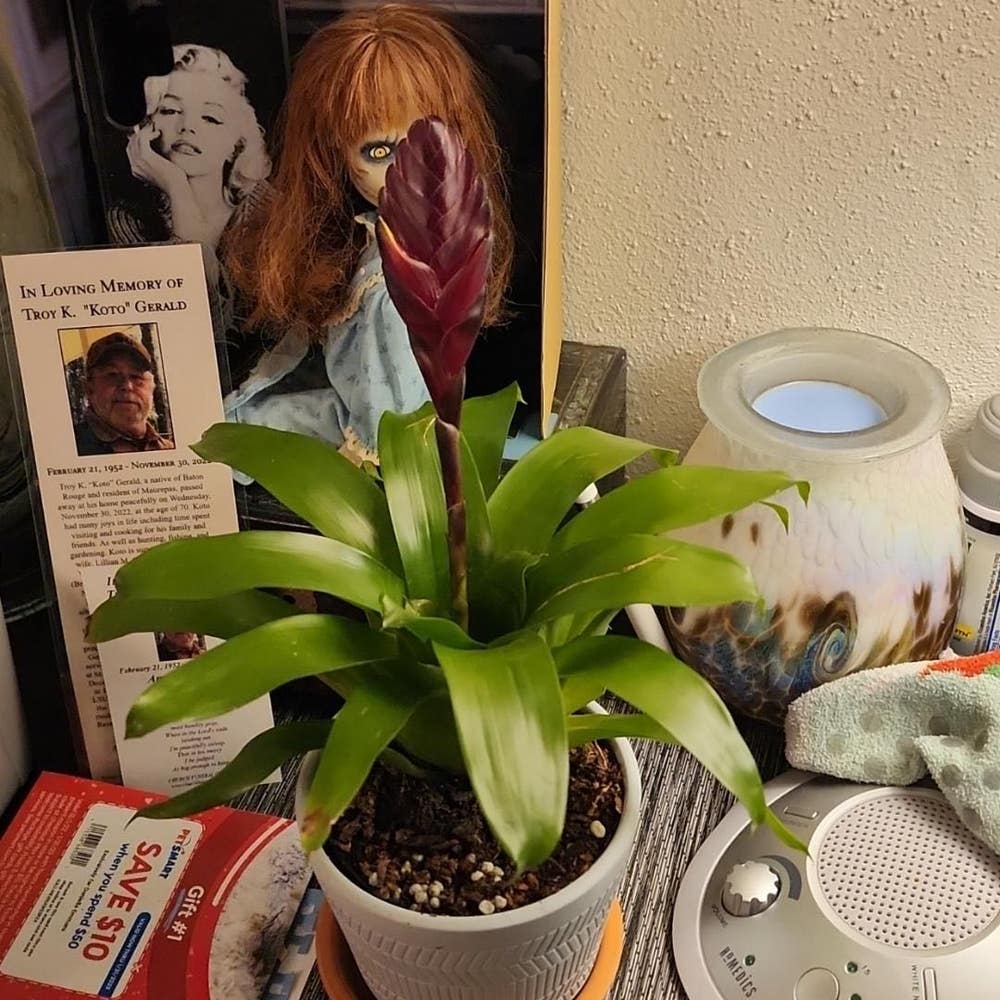
🌸 4 Quick Fixes for Vriesea 'Astrid' Bloom Problems
Vriesea 'Astrid'
By the Greg Editorial Team
Sep 30, 2024•4 min read
This article was created with the help of AI so we can cover more plants for you. May contain errors. See one? Report it here.
- 🌞 Bright, indirect light is essential; avoid direct sunlight to prevent stress.
- 🌱 Nutritional deficiencies hinder blooms; use balanced fertilizer monthly during blooming.
- 🌡️ Stable temperatures and humidity are crucial for preventing flower drop and promoting blooms.
Failure to Bloom
🌞 Potential Causes
Light Requirements
Insufficient light exposure can lead to inadequate energy for blooming. Conversely, excessive direct sunlight can stress the plant, hindering flower development.
Nutritional Deficiencies
A lack of essential nutrients, particularly during the bloom cycle, can stifle growth. Imbalanced fertilization may also affect the overall health of Vriesea 'Astrid'.
Environmental Stress
Temperature fluctuations and humidity levels play a significant role in flowering. Stress from these factors can prevent your plant from blooming as expected.
💡 Solutions
Adjusting Light Exposure
To encourage blooming, provide bright, indirect light for optimal growth. Sheer curtains can help diffuse harsh sunlight, creating a more suitable environment.
Fertilization Tips
Applying a balanced bromeliad fertilizer during the bloom cycle is crucial. Following a monthly fertilization schedule ensures that your plant has the nutrients it needs to thrive.
By addressing these potential causes and implementing these solutions, you can significantly improve your chances of seeing those beautiful blooms. Next, let’s explore what to do if your Vriesea 'Astrid' experiences premature flower drop.
Premature Flower Drop
🌪️ Common Triggers
Premature flower drop in Vriesea 'Astrid' can be frustrating. Two primary culprits are overwatering and temperature fluctuations.
Overwatering leads to excess moisture, which can cause root rot and stress the plant. This stress often results in flowers dropping before they fully develop.
Temperature fluctuations can also shock the plant. Sudden changes in temperature can disrupt the blooming process, leading to premature flower loss.
💧 Solutions
🌊 Proper Watering Techniques
To combat overwatering, adopt proper watering techniques. Water your Vriesea 'Astrid' only when the top inch of soil feels dry to the touch.
Additionally, ensure proper drainage to prevent water accumulation. This simple step can make a significant difference in plant health.
🌡️ Maintaining Stable Temperatures
Maintaining stable temperatures is crucial for your plant's well-being. Aim to keep Vriesea 'Astrid' in a consistent environment, ideally between 20°C to 30°C (68°F to 86°F).
Avoid placing your plant near drafts or heat sources. A stable environment will help your Vriesea thrive and reduce the risk of flower drop.
By addressing these common triggers and implementing effective solutions, you can enjoy a vibrant bloom cycle with your Vriesea 'Astrid'. Next, let’s explore abnormal flower development and how to identify and resolve those issues.
Abnormal Flower Development
Identifying Signs of Abnormality 🌼
Color Changes
If you notice fading or unusual colors on your Vriesea 'Astrid', it could be a sign of stress or nutrient deficiencies. These changes often indicate that the plant isn't receiving the care it needs.
Shape Issues
Deformed or stunted flowers are another red flag. Such abnormalities usually stem from environmental stress or nutritional problems, signaling that your plant requires immediate attention.
Solutions 🛠️
Nutrient Adjustments
Start by monitoring your fertilization routine. Adjust it based on any observed deficiencies, and consider using a specialized bromeliad fertilizer to enhance blooming results.
Pruning Techniques
Pruning is essential for encouraging new growth. Remove any damaged or dead flower spikes, and trim excess foliage to improve air circulation and light penetration, promoting healthier blooms.
By addressing these issues, you can help your Vriesea 'Astrid' thrive and produce beautiful flowers. Next, let’s explore the environmental factors that can affect flowering.
Environmental Factors Affecting Flowering
Light Requirements 🌞
Bright, indirect light is crucial for Vriesea 'Astrid' to thrive and bloom effectively. This plant needs just the right amount of light; too much can scorch its leaves, while too little can halt blooming altogether.
Nutritional Needs 🍽️
Essential nutrients like nitrogen, phosphorus, and potassium play a vital role during the flowering phase. For optimal results, use a balanced fertilizer with a higher phosphorus ratio, applying it every 4-6 weeks throughout the growing season.
Pruning Techniques ✂️
Pruning is best done after flowering to encourage new growth. Regularly remove any dead or yellowing leaves to keep your plant healthy and vibrant.
Impact of Pruning on Flower Development 🌼
Proper pruning enhances air circulation and light exposure, which can significantly improve flower quality. By maintaining your plant’s health through thoughtful pruning, you set the stage for a stunning bloom display.
Understanding these environmental factors is key to nurturing your Vriesea 'Astrid' and ensuring it flourishes. Next, we’ll explore common triggers for premature flower drop and how to address them effectively.
⚠️ Safety First
This content is for general information and may contain errors, omissions, or outdated details. It is not medical, veterinary advice, or an endorsement of therapeutic claims.
Always consult a qualified healthcare professional before using any plant as food, medicine, or supplement.
Never eat any plant (or feed one to pets) without confirming its identity with at least two trusted sources.
If you suspect poisoning, call Poison Control (800) 222-1222, the Pet Poison Helpline (800) 213-6680, or your local emergency service immediately.
Spotted an error? Please report it here.
Achieve vibrant blooms for your Vriesea 'Astrid' 🌺 by using Greg's personalized care tips and reminders to keep your plant thriving in the perfect light and nutrition!