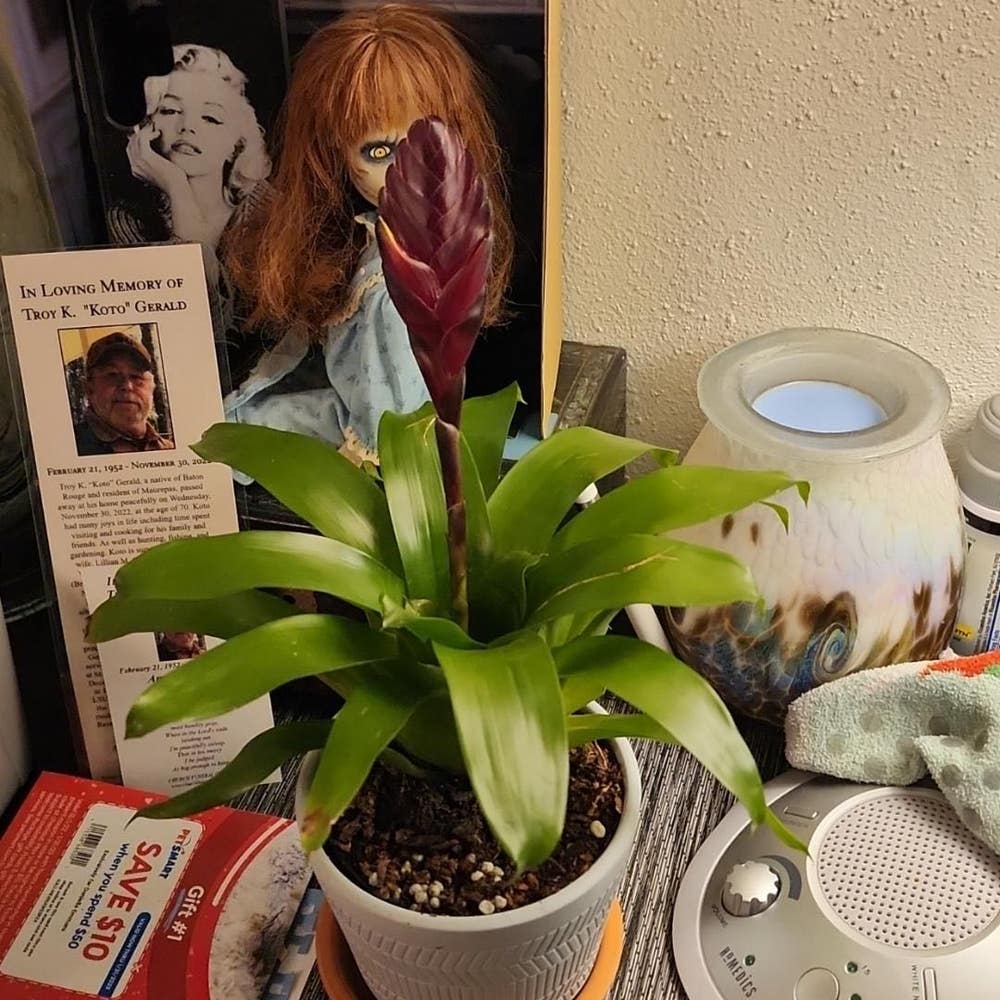
Should I Repot My Vriesea 'Astrid' And If So, How?
Vriesea 'Astrid'
By the Greg Editorial Team
Mar 24, 2024•4 min read
This article was created with the help of AI so we can cover more plants for you. May contain errors. See one? Report it here.
- 🌱 Roots circling or poking out? Time to repot your Vriesea 'Astrid'.
- Choose the right pot: Breathability, drainage, and size matter.
- Post-repot care is crucial: Water sparingly and watch for stress signals.
Spot the Tell-Tale Signs It's Time to Repot
🌱 Root Clues: When Roots Take Over the Joint
Roots circling the pot's interior or poking through drainage holes are not just showing off their flexibility. They're cramped and need a new pad.
💧 Sluggish Water: When Your Plant's Thirst Isn't Quenched Fast Enough
If water runs through the pot faster than a rumor in a small town, it's a sign. Your plant's roots have become space hogs, leaving no room for moisture.
🌿 Pup Party: When Baby Plants Demand Their Own Space
When your Vriesea 'Astrid' starts popping out pups like a prolific rabbit, it's time. Each baby plant deserves its own digs to thrive.
Choosing a New Home for Your Vriesea 'Astrid'
When your Vriesea 'Astrid' outgrows its current pot, it's not just about upsizing; it's about choosing a habitat that promotes health and growth.
💨 Breathability and Drainage: Why It Matters
Breathability is a big deal for roots. Terracotta pots are like a breath of fresh air, allowing moisture and air to pass through their walls. This helps prevent root rot and overwatering, common killers in the plant world. Drainage holes are non-negotiable – they're the escape route for excess water, ensuring your 'Astrid' isn't swimming when it should be sipping.
🏺 Material Matters: Terracotta vs. Plastic vs. Ceramic
Terracotta is the old-school cool, regulating soil moisture like a pro. But it's thirsty, meaning more frequent watering. Plastic is the low-key buddy, lightweight and retaining moisture longer – a boon if you're forgetful with the watering can. Ceramic strikes a balance, less porous than terracotta but still with enough breathability to keep things comfy. Just remember, ceramic can be heavy, so if you're planning on playing musical chairs with your plant, consider your back.
📏 Size It Up: Finding the Perfect Fit
Size is crucial. Go for a pot that's a smidge larger than the current one – think "room to grow" without turning into a cavernous echo chamber. Too big, and you risk waterlogging; too small, and your 'Astrid' might get claustrophobic. It's about finding that sweet spot where your plant can stretch its legs without drowning in soil.
The Repotting Rundown
🌱 Prepping for the Big Move
Before diving into the repotting process, assemble your toolkit. You'll need a new pot, preferably one size up, fresh potting mix, a trowel, scissors or a knife for trimming, and a watering can. Ensure your tools are clean to avoid introducing any pathogens to your Vriesea 'Astrid'.
🏺 Preparing the New Pot and Soil Mix
Choose a well-draining potting mix; your plant's roots despise waterlogged conditions. Place a layer of this mix at the bottom of the new pot to give your plant a cushy landing.
🌿 The Main Event: Repotting Step-by-Step
🌷 Gently Evicting Your Plant
Tilt the current pot and coax the Vriesea 'Astrid' out with care. If it resists, a gentle squeeze or tap on the pot's sides can help. Remember, it's not a tug-of-war.
🌱 Root Health Check
Once freed, inspect the roots. Trim any that are dead or overly long. Healthy roots are your plant's lifeline, so treat them with respect.
🏡 Settling In
Position your plant in the new pot, ensuring it's at the same soil level as before. Fill around with more mix, but don't compress it too much. Your plant's roots need to breathe.
💧 Post-Repot Pampering
🚿 The First Watering
Water your Vriesea 'Astrid' sparingly after repotting. This is not the time for a flood; think of it as a welcome sip to help it settle.
🌱 Acclimation
Give your plant time to adjust to its new home. Watch for signs of new growth—it's your plant's way of saying "thanks."
⚠️ Stress Signals
Keep an eye out for drooping or discolored leaves. These could be SOS signals from your plant, indicating it's not happy with the move. Adjust care as needed.
⚠️ Safety First
This content is for general information and may contain errors, omissions, or outdated details. It is not medical, veterinary advice, or an endorsement of therapeutic claims.
Always consult a qualified healthcare professional before using any plant as food, medicine, or supplement.
Never eat any plant (or feed one to pets) without confirming its identity with at least two trusted sources.
If you suspect poisoning, call Poison Control (800) 222-1222, the Pet Poison Helpline (800) 213-6680, or your local emergency service immediately.
Spotted an error? Please report it here.
Repot your Vriesea 'Astrid' with confidence and watch it thrive 🌿, as Greg sends you tailored reminders for each step, from choosing the pot to post-repot care.