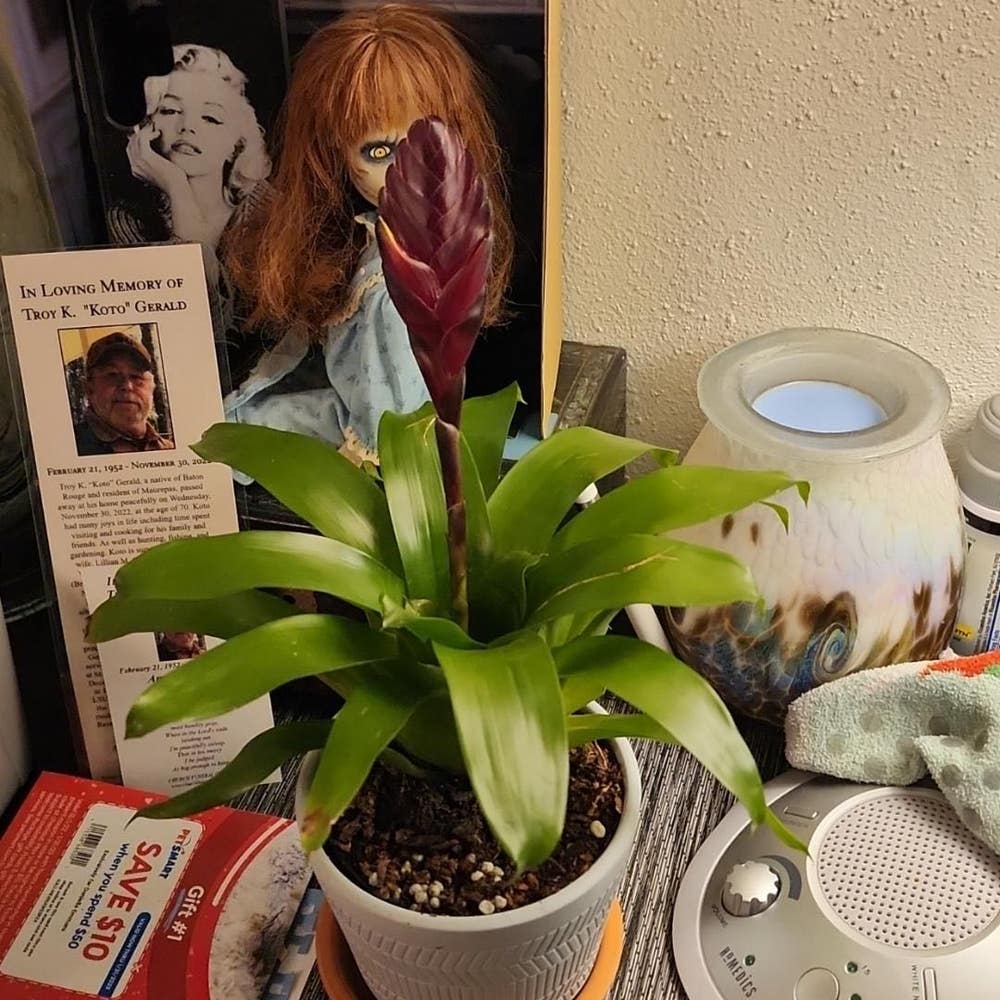
When and Where Should I Trim My Vriesea 'Astrid'?
Vriesea 'Astrid'
By the Greg Editorial Team
Mar 24, 2024•3 min read
This article was created with the help of AI so we can cover more plants for you. May contain errors. See one? Report it here.
- Prune in spring/summer for best growth and plant health.
- Deadhead and remove damaged leaves to focus energy on new growth.
- Separate pups at 1/3 size of mother plant, using sanitized tools.
Best Time to Prune Your Vriesea 'Astrid'
🌱 Seasonal Timing
Spring and summer are your prime-time pruning seasons for Vriesea 'Astrid'. These seasons are when your plant is in its growth prime, ready to recover quickly and robustly from any trimming you do.
🌿 Growth Phase Considerations
During the growth phase, your Vriesea 'Astrid' is all about expanding its glossy, dark green leaves and showing off that vibrant red spike. Post-bloom is the perfect moment to prune; it lets the plant focus on pushing out new growth rather than sustaining old, spent flowers.
Where to Make the Cut: Pruning for Beauty
✂️ Trimming Old Leaves
To maintain your Vriesea 'Astrid's' visual appeal, promptly remove any leaves that are past their prime. Look for foliage that’s discolored or damaged; these are signs that it's time for them to go. Snip them off close to the base, but be careful not to damage the healthy parts of the plant.
🥀 Deadheading Flower Spikes
After the Vriesea 'Astrid' blooms, it’s crucial to deadhead the spent flower spikes. This not only tidies up the plant but also redirects energy towards new growth. Cut the flower spike back to the base, just above where the healthy leaves begin. Remember, sharp and clean tools are your best friends here to avoid any unnecessary harm to the plant.
Encouraging New Life: Offsets and Pup Removal
🌱 When to Separate Offsets
Vriesea 'Astrid', like its bromeliad cousins, produces offsets or pups, which are your ticket to new plants. Timing is critical. The sweet spot for separation is when pups reach about one-third the size of the mother plant. No roots? No panic. They can still take root after separation. But if you spot roots, consider it a green light.
📏 Step-by-Step Guide to Pup Removal
🏥 Preparing for Surgery
First, sanitize your tools. Think of it as prepping for a plant operation—you want a clean cut, not a dirty deed.
🛠️ The Separation
- Expose the base of the pup by gently moving the soil aside.
- Slice with confidence, using a sharp, sterilized knife or scissors. Aim for a clean cut close to the mother plant.
- Wait for the cut to callous over a day or two—this helps prevent rot.
💼 Post-Op Care
- Plant the pup in a well-draining mix, just deep enough to stand upright.
- Water sparingly at first to avoid drowning the little guy.
- Shelter the new plant from direct sunlight until it's settled in.
Remember, it's a delicate balance between TLC and tough love. Too much coddling and your pup won't toughen up. Too little, and it might throw in the towel.
Pruning Like a Pro: Tools and Techniques
🌿 Essential Pruning Tools
Sharpness is non-negotiable. For Vriesea 'Astrid', you'll want:
- Precision pruners or scissors for those clean, surgical cuts.
- Disinfectant, like rubbing alcohol, to prevent the spread of plant diseases.
✂️ Pruning Techniques
Pruning isn't just about hacking away at foliage; it's a delicate dance. Here's how to cha-cha with your Vriesea 'Astrid':
- Sanitize your tools before and after use to keep infections at bay.
- Inspect the plant for leaves that have overstayed their welcome.
- Cut close to the base, but not too close – think of leaving a tiny collar for protection.
- Limit your pruning to no more than 25% of the plant at a time.
- Discard or compost the removed bits responsibly.
Remember, each snip is a decision. Make it count, and your Vriesea 'Astrid' will flourish.
⚠️ Safety First
This content is for general information and may contain errors, omissions, or outdated details. It is not medical, veterinary advice, or an endorsement of therapeutic claims.
Always consult a qualified healthcare professional before using any plant as food, medicine, or supplement.
Never eat any plant (or feed one to pets) without confirming its identity with at least two trusted sources.
If you suspect poisoning, call Poison Control (800) 222-1222, the Pet Poison Helpline (800) 213-6680, or your local emergency service immediately.
Spotted an error? Please report it here.
Prune your Vriesea 'Astrid' to perfection 🌿 with Greg's timely reminders, ensuring a vibrant growth season with just the right snips!