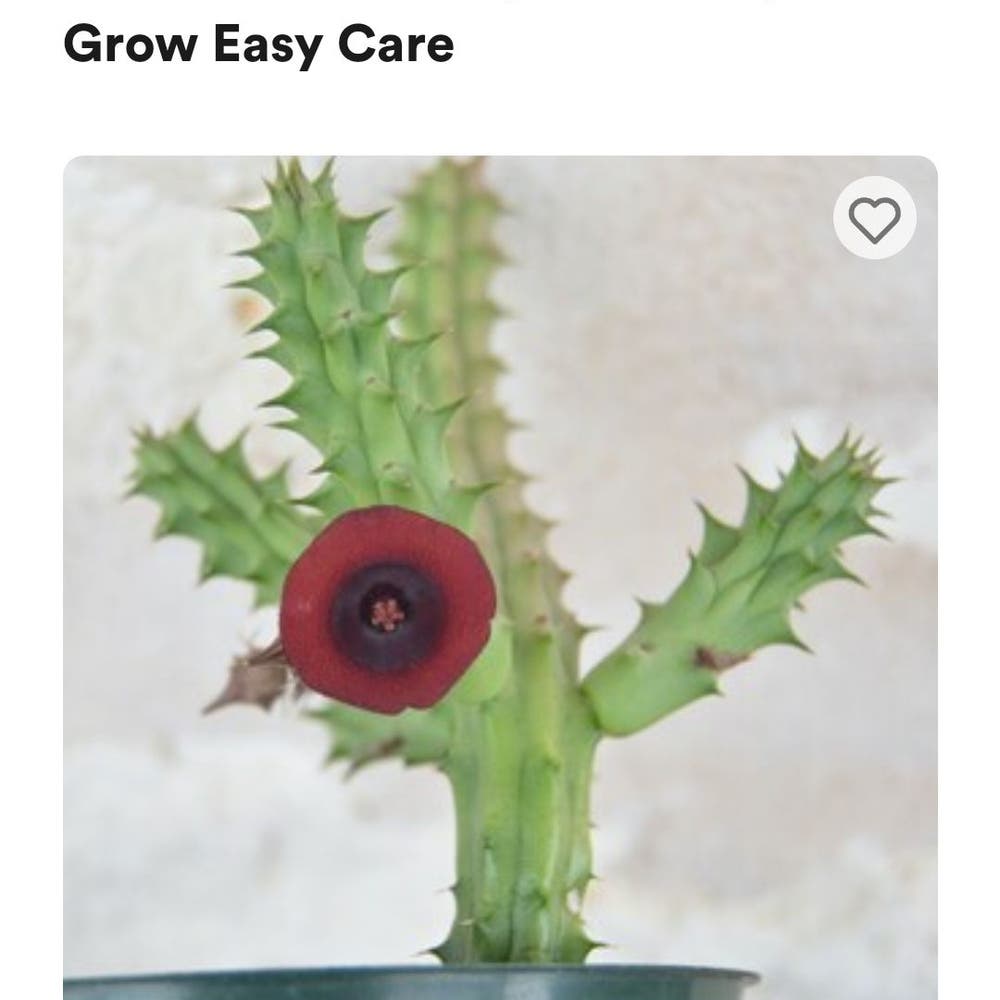
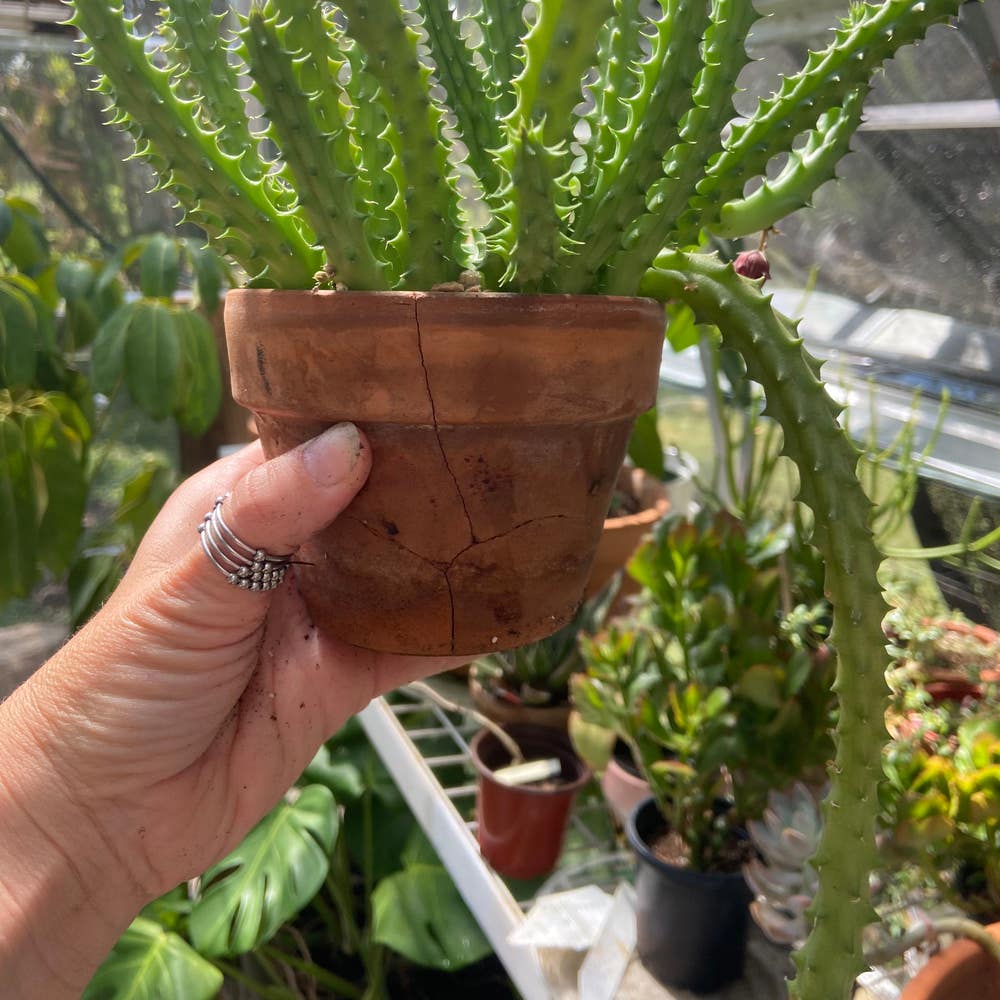
🐉 Why Are My Red Dragon Flower Leaves Droopy?
Huernia schneideriana
By the Greg Editorial Team
Jan 31, 2024•3 min read
This article was created with the help of AI so we can cover more plants for you. May contain errors. See one? Report it here.
Bring your Red Dragon Flower back to life 🌺 by mastering the trifecta of care: water, light, and warmth!
- Over/underwatering causes droopiness, check soil moisture and adjust watering accordingly.
- Light and temperature balance is key; too much or too little harms leaves.
- Prevent issues with proper care: consistent watering, light, and stable temperatures.
Pinpointing the Culprits Behind Droopy Leaves
💧 Overwatering Woes
Yellowing leaves and a general droopiness are telltale signs of overwatering your Red Dragon Flower. If touching the soil feels like squeezing a wet sponge, it's a red flag that you're drowning the plant in love.
Root rot often follows overwatering, as soggy soil leads to sad, droopy leaves. This is a silent killer; by the time you notice, your plant's roots might be as damaged as a soggy cardboard box.
🏜️ Underwatering Unveiled
When the top inch of soil feels as dry as a desert, your Red Dragon Flower is likely thirsty. Underwatering can cause leaves to lose their perk, wilting like a neglected houseguest.
Crispy leaves are a cry for help, signaling that your plant's water intake is as insufficient as a rain dance in a drought. It's a delicate balance, but the goal is moist soil, not a plant swimming in excess.
🌞 Light and Temperature Tangles
Detecting light deprivation and temperature trauma requires a keen eye. If your Red Dragon Flower's leaves droop like they're too tired to stand up, it might be craving more light.
The balancing act for light and temperature is finding the sweet spot where your fiery flora can thrive. Too much heat and light can scorch leaves, while too little leaves them languishing in the shadows.
Reviving Your Red Dragon: Emergency Interventions
💧 Rescuing from the Watering Extremes
Fine-tuning your watering technique is crucial. Check the soil before watering; if the top inch is dry, it's time to hydrate. Use room-temperature water to avoid shocking the roots. If it feels like a damp sponge, hold off on the water.
The dry-out method can save overwatered roots. Let the soil become nearly dry before watering again. Think of the soil as a phone battery—wait until it's almost out of juice.
🌞 Light and Temperature TLC
Relocating for the perfect glow is key. If leaves are fading, your plant may need more light. Move it to a spot with bright, indirect sunlight. Avoid direct rays that could scorch the leaves.
Stabilizing the climate around your Red Dragon is non-negotiable. Keep temperatures consistent, ideally between 60-70°F (15-21°C). Protect the plant from drafts and extreme temperature changes to prevent stress.
The Art of Prevention: Keeping Leaves Lively
💧 Mastering the Watering Rhythm
To prevent droopy leaves, craft a watering schedule that's as reliable as your morning alarm. Only water when the top inch of soil is dry, encouraging deep root growth and resilience.
Moisture meters can be your secret weapon, taking the guesswork out of when to water. Alternatively, trust the tried-and-true finger test to gauge soil dryness.
🌡️ Creating a Stable Growing Environment
Light and temperature consistency is crucial for your Red Dragon Flower. Avoid placing it in drafty areas or spots with drastic temperature changes.
For potting, think drainage. A pot with adequate holes and a well-draining soil mix prevents water from overstaying its welcome. Mix in perlite or coarse sand to keep the soil's feet out of soggy boots.
Seasonal changes demand adjustments in care. Water less in the cool dormancy of winter and shield your plant from the scorching summer sun. It's about adapting to the rhythm of the year, keeping your plant's environment as stable as your favorite coffee shop.
⚠️ Safety First
This content is for general information and may contain errors, omissions, or outdated details. It is not medical, veterinary advice, or an endorsement of therapeutic claims.
Always consult a qualified healthcare professional before using any plant as food, medicine, or supplement.
Never eat any plant (or feed one to pets) without confirming its identity with at least two trusted sources.
If you suspect poisoning, call Poison Control (800) 222-1222, the Pet Poison Helpline (800) 213-6680, or your local emergency service immediately.
Spotted an error? Please report it here.
Bring your Red Dragon Flower back to its perky best by mastering 🌊 the watering balance with Greg's custom reminders and real-time community support.