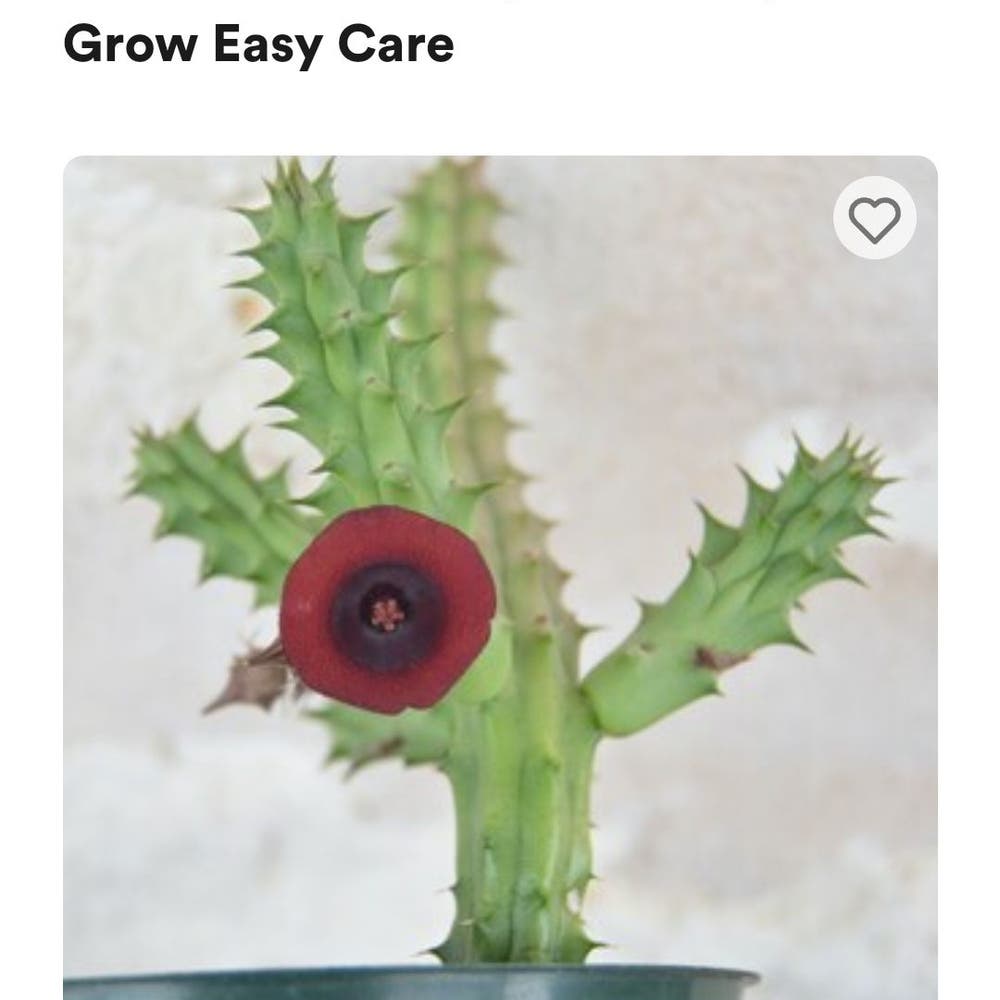
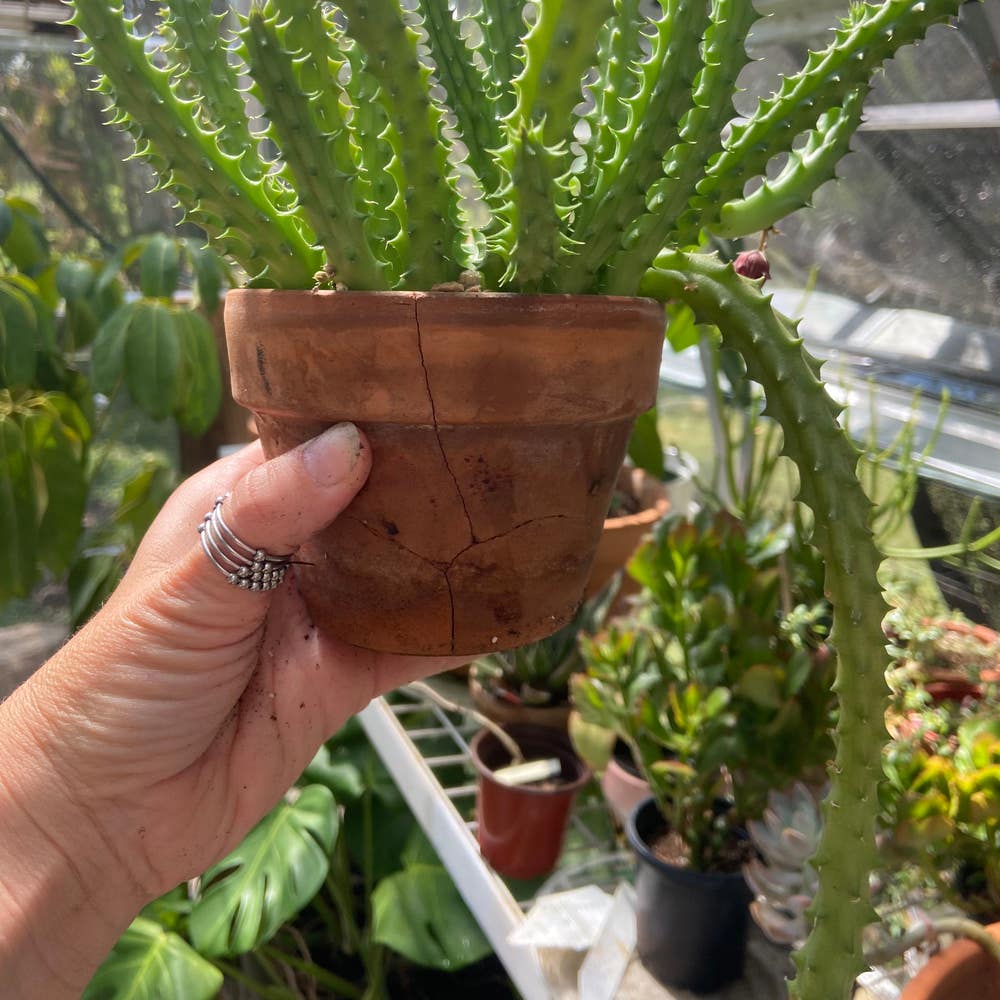
How Frequently Should I Water My Red Dragon Flower?
Huernia schneideriana
By the Greg Editorial Team
Jan 31, 2024•4 min read
This article was created with the help of AI so we can cover more plants for you. May contain errors. See one? Report it here.
Discover the secret to a vibrant Red Dragon Flower 🌺—perfect your watering rhythm and watch it flourish!
- Look for firm leaves to indicate proper hydration in Red Dragon Flowers.
- Adjust watering with seasons and the plant's growth stage.
- Soil type and pot size influence how often to water.
Spot the Signs: Is Your Red Dragon Flower Thirsty or Drowning?
🌱 Recognizing a Happy, Hydrated Plant
A well-watered Red Dragon Flower boasts firm leaves and a vibrant appearance. It stands tall and proud, with no signs of distress.
🚰 Warning Signals of Overwatering
Yellowing leaves and soft spots are the red flags of excess water. If the soil feels more like a swamp than a garden, it's time to cut back on the H2O.
🏜️ Underwatering SOS
Curling leaves are your Red Dragon Flower's cry for help. A parched plant will have leaves that look more wrinkled than a linen shirt in a suitcase. If the soil is as dry as a desert, it's a clear sign your plant is in a drought situation.
Watering Rhythms: Finding the Perfect Tempo for Your Red Dragon Flower
💧 Assessing Soil Moisture
Checking soil moisture is like checking your inbox: do it regularly to avoid surprises. Dip your finger into the soil up to the first knuckle. If it feels dry, it's email time for your watering can.
🌦 Seasonal Variations in Watering Frequency
Adjust your watering schedule as the seasons change. Your Red Dragon Flower drinks more in the summer heat and less when winter chills roll in. It's not just about the temperature; it's about your plant's seasonal vibe.
🌱 Growth Stage Considerations
Tailor your watering to the growth stage of your Red Dragon Flower. Young plants or those in bloom may need more frequent watering, while mature, established plants are more laid-back with their water needs. Think of it as the difference between a teenager's and a grandparent's diet.
Pour It Right: Techniques for Quenching Your Red Dragon Flower's Thirst
💧 The Art of Bottom Watering
Bottom watering is a game-changer for your Red Dragon Flower, ensuring the roots get the hydration they crave without the foliage getting a dreaded shower. This method is all about empowerment, letting the plant sip at its own pace. Place your pot in a tray of water and let the soil absorb moisture from the bottom up. It's a spa treatment for the roots, encouraging them to grow deep and strong. Plus, it keeps the leaves dry, reducing the risk of fungal diseases.
💦 Top Watering Without the Mess
Top watering can be a balancing act, but it doesn't have to be a wet mess. The key is even moisture distribution. Water around the base of the plant until you see it escape from the drainage holes—this is your cue that the soil is thoroughly soaked. Remember, your Red Dragon Flower isn't into soggy feet, so let it drain completely before returning it to its decorative pot. This method is like a trust fund for moisture; it builds a reservoir that the plant can tap into, promoting deep root growth without overdoing it.
Fine-Tuning Watering Frequency: The Role of Environment and Potting Mix
💧 Adapting to Your Home's Climate
Indoor temperatures and humidity levels are the puppeteers of your Red Dragon Flower's watering needs. In a toasty room, your plant might be guzzling water faster than a marathon runner on a hot day. Conversely, a humid hideout could mean your plant's soil stays damp longer, begging you to hold off on the watering can.
🌱 The Impact of Potting Mix and Pot Size
Potting mix is like the diet for your plant's roots, and getting it right is crucial. A chunky, fast-draining mix will have you reaching for the watering can more often, while a denser soil means less frequent drinks. Pot size matters too; small pots dry out faster, but don't be fooled—oversized pots can lead to soggy soil and a sad plant. Terracotta pots breathe easy, letting soil dry quicker, while plastic pots are mini saunas, locking in moisture. Choose wisely, or you'll be on a first-name basis with root rot.
⚠️ Safety First
This content is for general information and may contain errors, omissions, or outdated details. It is not medical, veterinary advice, or an endorsement of therapeutic claims.
Always consult a qualified healthcare professional before using any plant as food, medicine, or supplement.
Never eat any plant (or feed one to pets) without confirming its identity with at least two trusted sources.
If you suspect poisoning, call Poison Control (800) 222-1222, the Pet Poison Helpline (800) 213-6680, or your local emergency service immediately.
Spotted an error? Please report it here.
Ensure your Red Dragon Flower stays vibrantly healthy 🌺 with Greg's personalized watering reminders, perfectly adjusted to your plant's growth stage and living environment.