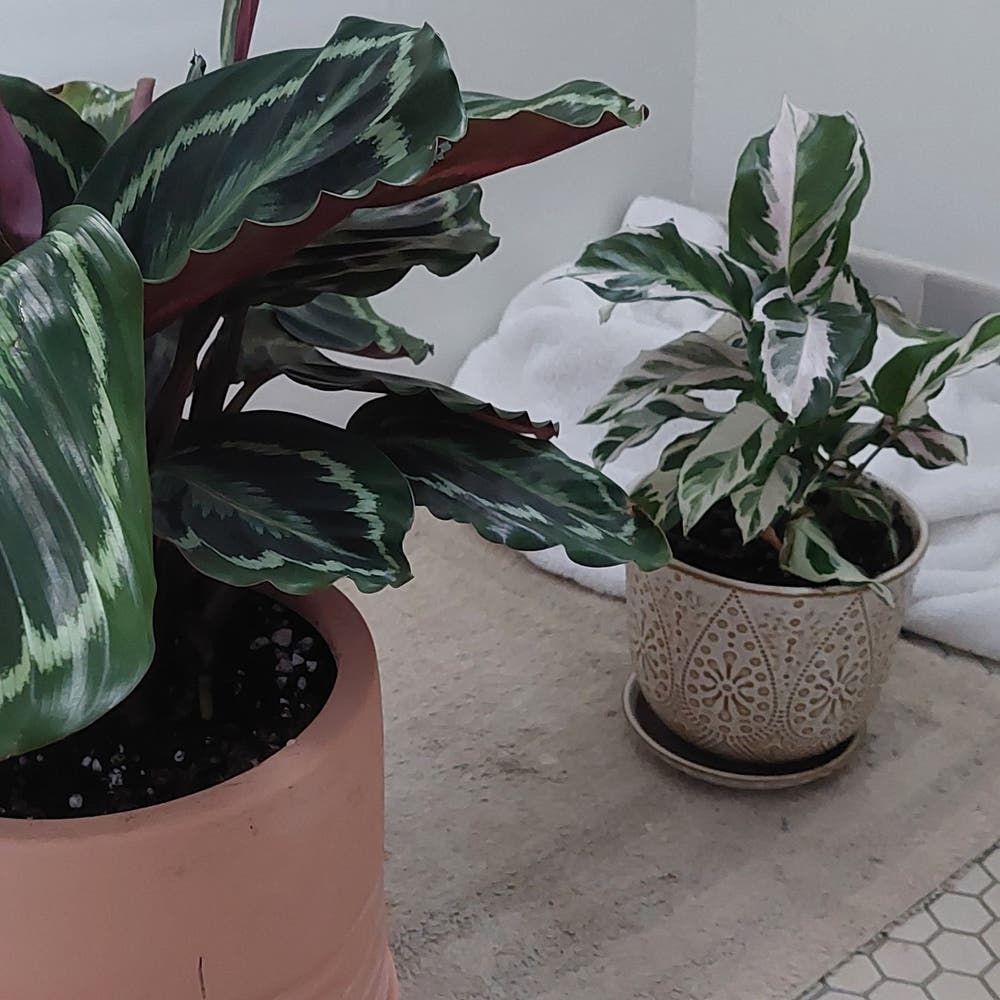
Propagating Calathea 'Medallion': Step-by-Step Guide
Goeppertia roseopicta 'Medallion'
By the Greg Editorial Team
Jun 18, 2024•5 min read
This article was created with the help of AI so we can cover more plants for you. May contain errors. See one? Report it here.
Multiply your lush Calathea 'Medallion' 🌿 effortlessly with our expert propagation secrets!
- Divide when overcrowded or with multiple rosettes, ideally in early spring.
- Use clean tools and water before division for easier root separation.
- Provide warm, humid conditions and monitor soil moisture for propagation success.
Propagating by Division
🌱 When to Divide Your Calathea 'Medallion'
Your Calathea 'Medallion' is ready for division when it's bursting at the seams of its pot or when you spot multiple rosettes of leaves at the base. Early spring is the prime time for this botanical surgery, aligning with the plant's growth spurt.
🛠️ How to Divide Your Plant
Arm yourself with sharp, clean tools—a knife or pruning scissors will do. Here's the drill:
- Water your plant to ease the upcoming root separation.
- Gently remove the plant from its pot, being mindful of delicate roots and leaves.
- Shake off excess soil to reveal the natural divisions.
- Use your hands or tools to separate the plant into sections, ensuring each has a good chunk of roots.
🏥 Post-Division Care
Immediately after the operation, place your new Calathea divisions in fresh soil and pots. Keep them in a bright, humid spot away from direct sunlight, with temperatures between 60°F to 70°F. Water regularly, but don't drown them—think of it as a steady drip of TLC to help them bounce back.

Propagating from Stem Cuttings
🌱 Taking the Perfect Cutting
Selecting a robust stem is like picking the best athlete for your team; you want strength and vitality. Look for stems that scream health—no blemishes, pests, or signs of weakness. Use a sterilized, sharp instrument to make a clean cut just below a node. This is where the roots will emerge, so precision matters. Strip the lower leaves to prevent rot and let the cutting callous over for a few days—think of it as a plant scab that protects against infection.
🌿 Preparing Your Cuttings for Propagation
Once your cutting has developed a callous, it's time to give it a little extra love. Dipping the end in rooting hormone can be the difference between a cutting that thrives and one that just survives. Plant the stem in well-draining soil, ensuring at least one node is buried. This is where your patience is tested, but trust the process.
🌱 Rooting Your Stem Cuttings
Creating the Ideal Rooting Environment
Your cuttings need a mini greenhouse vibe—think warm, humid, and bright, but not direct sunlight. A plastic bag or a dome can create this environment, trapping moisture and warmth. Just ensure there's some airflow to prevent mold from crashing the party.
Monitoring and Caring for Your Cuttings Until Roots Develop
Keep the soil moist, but not soggy, like a perfectly wrung-out sponge. Check on your cuttings regularly, but resist the urge to poke and prod; they're shy and need time to develop roots. If you notice any signs of rot or disease, act fast—remove the affected parts to save the rest. Patience is key; roots can take weeks to form, so don't rush them. They're on plant time, not human time.

Propagating through Rhizome Division
🌱 Understanding Rhizome Division
Rhizomes are the underground stems from which Calathea 'Medallion' plants sprout. In propagation, these are your golden tickets. Each rhizome segment can become a new plant, making division a propagation shortcut that skips the long wait times of other methods.
🛠️ Separating and Planting Rhizomes
Tools and Preparation
Sterilize your tools; think surgeon, not lumberjack. A sharp knife or scissors will do the trick for slicing through the rhizome. Each piece should have a growth point and roots—like a plant's starter pack.
The Division Process
Gently remove your Calathea from its pot and brush away the soil to reveal the rhizome network. Look for natural divisions, and with a steady hand, separate the rhizomes, ensuring each new section has roots and at least one leaf.
🌱 Planting the Divisions
Pot each rhizome section in fresh soil, opting for a snug fit in the new container. Water it to settle the soil and place it in bright, indirect light. Keep the soil moist, not soggy, and maintain the Calathea's preferred humidity. Patience is key—wait for the signs of new growth, which could take a few weeks.
Remember, rhizome division isn't a race. It's about giving each new plant the best shot at life. Keep an eye out for rot and act fast if you spot trouble. With the right care, you'll soon have a Calathea 'Medallion' family that's growing like a gossip.

Ensuring Propagation Success
🌡️ Ideal Conditions for Propagation
To hit the sweet spot for your Calathea 'Medallion' propagation, maintain a steady temperature between 70 to 75 degrees Fahrenheit. Think of it as a cozy blanket for your plant babies. High humidity is a must—aim for that tropical vibe without turning your space into a rainforest. Bright, indirect light will keep your cuttings cheerful without the risk of a sunburn.
🛠 Troubleshooting Common Propagation Problems
Rot, wilting, or the dreaded slow growth can turn your propagation dream into a nightmare. If your cuttings look more wilted than a salad in the sun, they're likely too cold. Move them to a warmer spot. For rot, your watering technique might be the culprit. Water the soil, not the leaves, and only when the media feels like a damp sponge—not a wet one.
Air circulation is the unsung hero here. It's like the difference between a stuffy room and a breath of fresh air. Keep it flowing to prevent mold and disease. If growth is more sluggish than a sloth, reassess your light levels. More brightness might be what your cuttings are silently screaming for. Remember, this isn't a race; it's a marathon with your patience as the ultimate test.
⚠️ Safety First
This content is for general information and may contain errors, omissions, or outdated details. It is not medical, veterinary advice, or an endorsement of therapeutic claims.
Always consult a qualified healthcare professional before using any plant as food, medicine, or supplement.
Never eat any plant (or feed one to pets) without confirming its identity with at least two trusted sources.
If you suspect poisoning, call Poison Control (800) 222-1222, the Pet Poison Helpline (800) 213-6680, or your local emergency service immediately.
Spotted an error? Please report it here.
Turn each Calathea 'Medallion' division into a thriving success 🌱 with Greg's custom care reminders, ensuring your propagation efforts flourish.