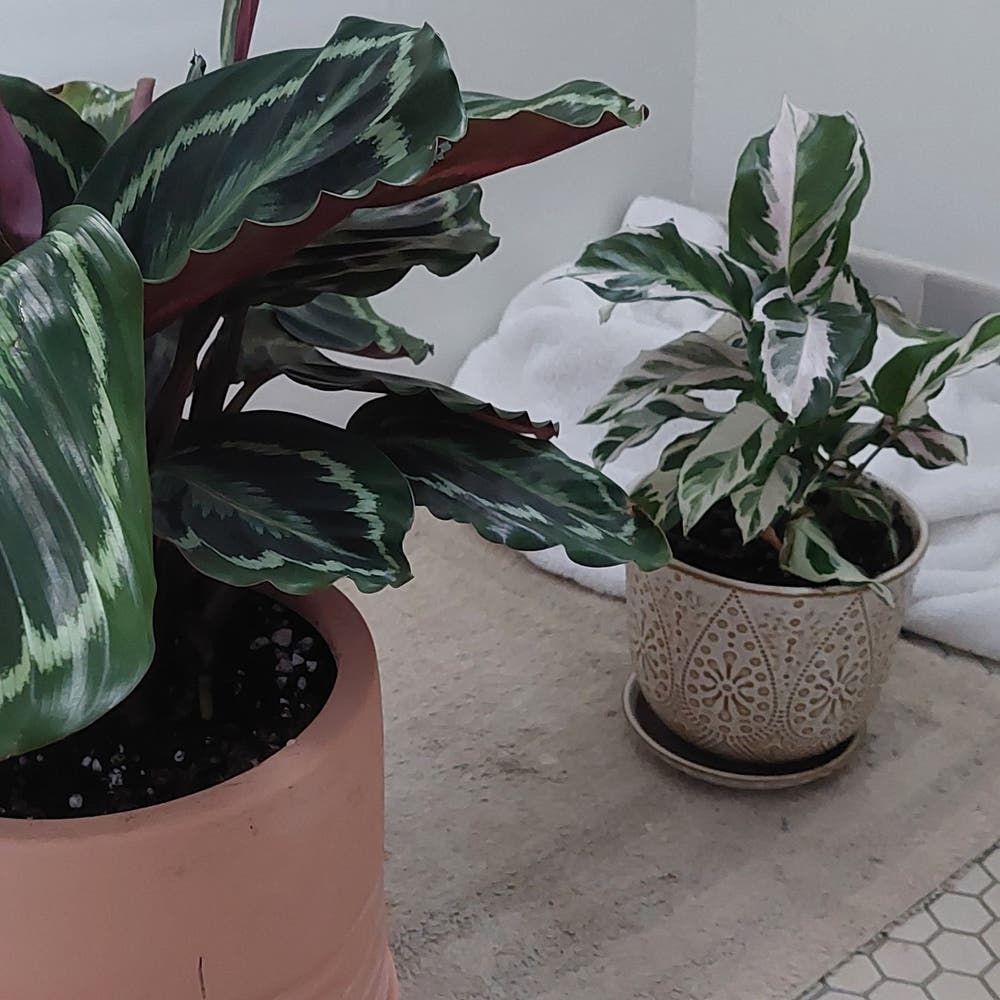
💧 Why Are My Calathea 'Medallion' Leaves Curling?
Goeppertia roseopicta 'Medallion'
By the Greg Editorial Team
Jun 18, 2024•4 min read
This article was created with the help of AI so we can cover more plants for you. May contain errors. See one? Report it here.
Unravel the mystery behind your Calathea's curling leaves and restore its lush splendor 🌿 with expert tips.
- Persistent curling indicates stress, not natural movement.
- Humidity and light balance are crucial for leaf health.
- Proper watering and location can unfurl curled leaves.
Spotting the Signs: When Your Calathea 'Medallion' is Unhappy
🍃 Identifying Leaf Curling and Related Symptoms
Your Calathea 'Medallion' might be sending distress signals through its leaves. Curling leaves are a classic sign of discomfort, often accompanied by yellowing or browning edges. This could be a plea for more humidity or a hint to adjust your watering habits.
Fading pink stripes? Your plant could be suffering from too much light. Keep an eye out for the overall vibrancy of your Calathea's signature stripes as they are a good indicator of its well-being.
🌿 Differentiating Between Natural Movement and Stress Signals
Calathea 'Medallion' leaves move naturally with the light, but when they stay curled, it's time to pay attention. Persistent curling is a red flag, not to be confused with the plant's typical dancing movements.
Touch can be revealing. If leaves feel crisp or droop on a gentle poke, they're likely bracing against environmental stress. Watch for signs of pest infestations too, like webbing or unusual spots, which can also cause leaves to curl and crinkle.

The Usual Suspects: Common Causes of Leaf Curling
⛅️ How Low Humidity Takes a Toll on Your Tropical Beauty
Calathea 'Medallion' is a humidity hugger. In its native tropics, moisture hangs in the air like an invisible cloak, so when your home's air is drier than a stand-up comedian's wit, expect some leaf curling. Brown leaf edges? That's your Calathea crying out for a moisture boost.
🌞 The Balancing Act: Light Exposure and Your Calathea's Comfort
Direct sunlight is to Calathea leaves what kryptonite is to Superman—utterly weakening. These plants need bright, indirect light to avoid the horror of crisped, curled leaves. Too much shade, though, and you'll have a lethargic, stretching Calathea on your hands.
🏜️ Temperature Swings and Drafts: Invisible Stressors
Your Calathea isn't a fan of change, especially when it comes to temperature. Think of it as a creature of comfort, preferring a steady 60-70F. Drafts and sudden temperature changes can cause your plant's leaves to curl up tighter than a rolled yoga mat. Keep it cozy, and those leaves will stay as flat as a pancake.

Water Woes: Finding the Sweet Spot for Moisture
💧 The Perils of Overwatering and Underwatering
Navigating the watering balance for your Calathea 'Medallion' is like tuning a guitar; it needs to be just right. Overwatering can drown your plant's roots and invite fungal guests, while underwatering leaves it gasping for a drink.
🌱 Soil and Potting: Setting the Stage for Optimal Hydration
Choosing the right pot and soil is crucial—think of it as setting the stage for your plant's performance. A pot with proper drainage holes avoids soggy soil syndrome, and a well-draining mix ensures your Calathea isn't sitting in a puddle.
To avoid turning your tropical treasure into a wilted wallflower, water only when the top inch of soil is dry. If you're the type to forget, consider a moisture meter to take the guesswork out of the equation. Remember, your plant's thirst isn't a one-size-fits-all; adjust your watering to the rhythm of the seasons and your home's humidity.

Turning Over a New Leaf: Solutions to Unfurl the Curl
💦 Adjusting Humidity: From Misting to Pebble Trays
Curling Calathea leaves are a humidity SOS. To raise the stakes in the moisture game, start with daily misting. But if you're aiming for the long haul, pebble trays are your new best friend. Just fill a tray with water, line it with stones, and let your plant perch on top. The water evaporates, the humidity rises, and your Calathea breathes a sigh of relief.
🌿 Relocating Your Plant: Finding the Perfect Spot
Sometimes, it's not you; it's the location. If your Calathea's leaves curl tighter than a rollie pollie, consider a change of scenery. These tropical charmers adore indirect light and shy away from drafts. Try a bathroom or kitchen, where the humidity naturally runs higher. Just steer clear of the scorching afternoon sun—think bright but not blinding.
🚱 Water Quality and Techniques: Ensuring a Happy Hydration
Tap water can be a silent killer with its sneaky salts and chemicals. If your Calathea's leaves are throwing a fit, switch to distilled or rainwater. When watering, think Goldilocks—not too much, not too little. The soak and dry method is your ticket to even moisture without the drama. Water thoroughly, let it drain, and only water again when the topsoil feels like a dry handshake.
⚠️ Safety First
This content is for general information and may contain errors, omissions, or outdated details. It is not medical, veterinary advice, or an endorsement of therapeutic claims.
Always consult a qualified healthcare professional before using any plant as food, medicine, or supplement.
Never eat any plant (or feed one to pets) without confirming its identity with at least two trusted sources.
If you suspect poisoning, call Poison Control (800) 222-1222, the Pet Poison Helpline (800) 213-6680, or your local emergency service immediately.
Spotted an error? Please report it here.
Banish those curling leaves and get your Calathea 'Medallion' to flaunt its happy stripes again 🌿 with Greg's tailored environment adjustments and watering schedule.