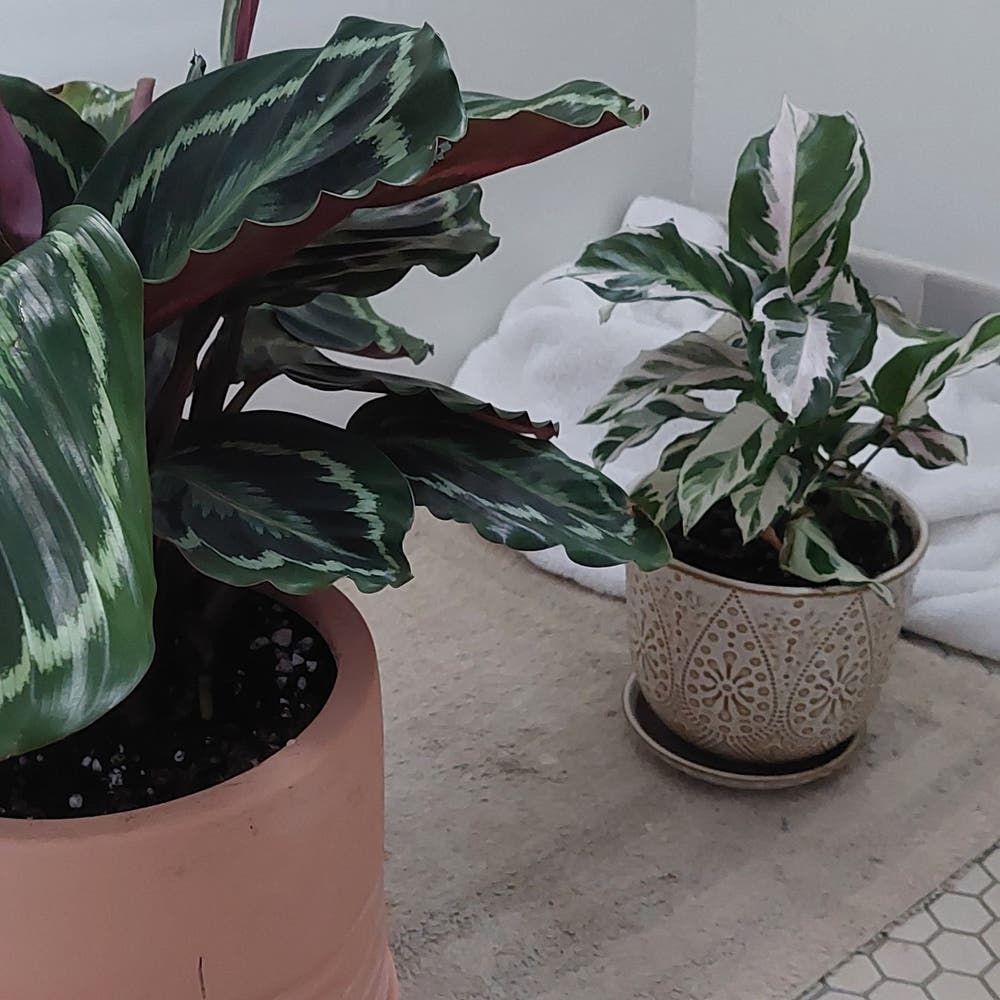
Am I Starving My Calathea 'Medallion'? Fertilizing 101
Goeppertia roseopicta 'Medallion'
By the Greg Editorial Team
Jun 18, 2024•4 min read
This article was created with the help of AI so we can cover more plants for you. May contain errors. See one? Report it here.
Ensure your Calathea 'Medallion' thrives, not just survives, with our tailored fertilizing guide. 🌿💪
- Fertilize every 2-4 weeks in growing season, less in winter.
- NPK and micronutrients are essential for Calathea health.
- Dilute and apply carefully to avoid over-fertilization damage.
Timing is Everything: When to Feed Your Calathea
🌱 Growing Season Feeding Schedule
Your Calathea 'Medallion' is like a marathon runner during spring and summer, needing regular nutrient boosts to sustain its growth. Fertilize every two to four weeks with a balanced, water-soluble fertilizer. Opt for a 10-10-10 or 20-20-20 mix to keep your plant in peak condition.
❄️ Winter Woes: Reducing Fertilizer in Dormancy
When the chill sets in, your Calathea slows down. It's not the time for a nutrient party. Cut back to fertilizing once every three months. This is when your plant conserves energy, so overfeeding is more of a burden than a benefit. Keep it light and simple to avoid overwhelming your resting Calathea.

Choosing Your Plant's Meal: Selecting the Right Fertilizer
💡 The NPK Ratio: What Does Your Calathea Crave?
Selecting the right fertilizer for your Calathea 'Medallion' is like decoding its dietary needs. NPK ratio is critical; this trio of nutrients supports different aspects of your plant's growth. Nitrogen (N) is essential for lush leaves, phosphorus (P) for root development, and potassium (K) for overall health. A balanced formula, such as 10:10:10 or 3:1:2, will cater to your Calathea's needs without going overboard.
💫 Micronutrient Magic
Beyond the big three, your Calathea yearns for a sprinkle of micronutrients. These are the vitamins to your plant's balanced meal, with each playing a unique role in maintaining plant health. Iron, manganese, and zinc, for example, are like the secret spices that round out the flavor profile. They're needed in smaller amounts but are just as essential for a thriving Calathea. Remember, it's not just about feeding your plant; it's about nourishing it.

Serving Up Nutrients: How to Apply Fertilizer
💧 Dilution Solutions: Getting the Mix Right
Properly diluting your fertilizer is like adjusting the seasoning in a gourmet dish – it needs to be just right. For your Calathea 'Medallion', a half-strength solution is typically the sweet spot. Begin with a conservative approach, using a quarter to an eighth of the manufacturer's recommended dose. This helps prevent the dreaded fertilizer burn, ensuring your plant isn't overwhelmed by an intense nutrient hit.
🌱 Application Techniques: Feeding Without Harming
Watering first is your best move. It preps the soil, allowing nutrients to disperse evenly and reducing the risk of root burn. Pour the diluted fertilizer onto moist soil, avoiding any dramatic splashes on the leaves. If you're feeling adventurous, try foliar feeding with a light mist on the leaves during cooler hours. It's a quick nutrient fix, but remember, timing is everything – no one wants a sun-scorched Calathea.

Oops, Too Much!: Recognizing and Resolving Over-Fertilization
🚨 Spotting the Signs of a Fertilizer Feast
If your Calathea 'Medallion' is sporting a white crust on the soil, it's not a new fashion trend—it's a cry for help. This crusty telltale is a sign of mineral buildup, a classic case of over-fertilization. But wait, there's more. Keep an eye out for yellowing leaves, tips that look like they've had a close encounter with a lighter, or roots that appear to have gone through a goth phase—dark and potentially damaged. These are all red flags that your plant is getting more than its fair share of nutrients.
🥦 The Recovery Diet: Fixing Fertilizer Faux Pas
Caught in the act of overfeeding? Time to switch to damage control. Remove any visible fertilizer from the soil surface to stop the nutrient assault. Next, give your plant a thorough watering—think of it as a detox flush. Make sure your pot has drainage holes to let the excess escape. If the situation looks dire, consider repotting with fresh soil to give your Calathea a clean slate. Hold off on the nutrient nukes for a while; give your plant some breathing room to recover. Remember, patience is key—wait until your green buddy looks ready to face the world again before you even think about another round of fertilizers.
⚠️ Safety First
This content is for general information and may contain errors, omissions, or outdated details. It is not medical, veterinary advice, or an endorsement of therapeutic claims.
Always consult a qualified healthcare professional before using any plant as food, medicine, or supplement.
Never eat any plant (or feed one to pets) without confirming its identity with at least two trusted sources.
If you suspect poisoning, call Poison Control (800) 222-1222, the Pet Poison Helpline (800) 213-6680, or your local emergency service immediately.
Spotted an error? Please report it here.
Keep your Calathea 'Medallion' perfectly nourished 🍃 with Greg's tailored reminders, ensuring you fertilize just right—no more, no less.