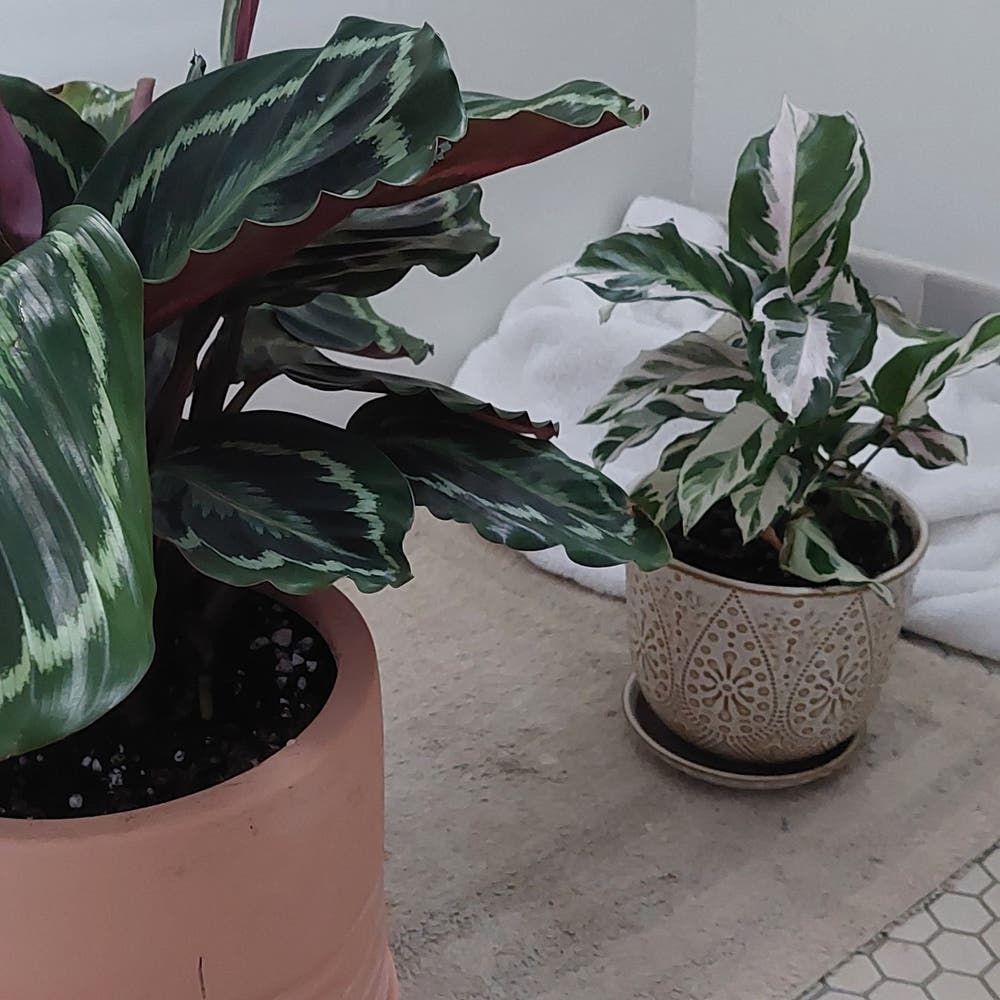
Black Spots on My Calathea 'Medallion' Leaves
Goeppertia roseopicta 'Medallion'
By the Greg Editorial Team
Jun 18, 2024•3 min read
This article was created with the help of AI so we can cover more plants for you. May contain errors. See one? Report it here.
Banish black spots 🕵️♂️ from your Calathea 'Medallion' with our expert care and cure guide!
- Fungal and bacterial foes cause black spots; look for brown lesions or water-soaked spots.
- Prune and sterilize to stop the spread; use fungicides and bactericides carefully.
- Balance water, humidity, and airflow to keep your Calathea 'Medallion' spot-free.
Spotting the Culprits: Causes of Black Spots
🍄 Fungal Foes
Fungal invaders, like leaf spot and anthracnose, are notorious for causing black spots on Calathea 'Medallion' leaves. These fungi flourish in moist conditions, turning your plant's leaves into their personal canvas for destruction. Look for brown lesions with yellow halos or large, sunken spots as visual cues of a fungal takeover.
🦠 Bacterial Bullies
Bacteria, the stealthy invaders, exploit even the smallest injuries on leaves to create black spots. Bacterial leaf spot is a common perpetrator, distinguishable by its water-soaked lesions surrounded by a flashy yellow halo. If the black spots on your plant have a slimy texture, you're likely dealing with a bacterial issue.
🌿 Environmental Stressors
Environmental conditions such as overwatering, low humidity, and poor air circulation are the enablers of black spots. These stressors weaken your Calathea 'Medallion', making it more susceptible to fungal and bacterial infections. It's a botanical cry for help, signaling that your plant is unhappy with its living conditions and in need of a change.

First Aid for Foliage: Treating Black Spots
🌿 Pruning with Precision
When black spots invade your Calathea 'Medallion', it's time for a trim. Sterilize your shears with alcohol or bleach to prevent spreading the funk, then snip off the spotted leaves. Think surgical precision—remove only the damaged parts to keep your plant thriving.
🦠 Fungicides and Bactericides: Your Plant's Allies
If the organic route of baking soda sprays doesn't cut it, it's time for the big guns. Fungicides and bactericides are your chemical cavalry, but use them like a sniper—precisely and according to the label. Copper-based fungicides can be particularly effective, but remember, they're not candy—use sparingly and smartly.

Keeping the Spots at Bay: Prevention Tactics
💧 Water Wisdom
Balance is key when it comes to watering your Calathea 'Medallion'. Overwatering is like giving an open invitation to black spots. Water only when the soil feels dry to the touch, and never let your plant sit in a soggy pot. Early morning watering is best, allowing leaves to dry out during the day.
💦 Humidity Harmony
Calatheas are humidity lovers, but there's a fine line before you turn your living room into a tropical rainforest. Humidity should hover around that sweet spot of 50-60%. Achieve this with a pebble tray or humidifier, but keep an eye on it; you're not trying to create a sauna for your furniture.
💨 Airflow and Cleanliness
Good airflow is like a breath of fresh air—literally. It prevents the still, moist conditions that black spots thrive in. Use fans or keep a window ajar to promote circulation. Cleanliness is next to godliness; regularly wipe down leaves and prune as needed to keep your Calathea 'Medallion' spotless and sprightly.

⚠️ Safety First
This content is for general information and may contain errors, omissions, or outdated details. It is not medical, veterinary advice, or an endorsement of therapeutic claims.
Always consult a qualified healthcare professional before using any plant as food, medicine, or supplement.
Never eat any plant (or feed one to pets) without confirming its identity with at least two trusted sources.
If you suspect poisoning, call Poison Control (800) 222-1222, the Pet Poison Helpline (800) 213-6680, or your local emergency service immediately.
Spotted an error? Please report it here.
Keep your Calathea 'Medallion' spotless ✨ with Greg's personalized care reminders that ensure perfect watering and humidity levels, safeguarding against those pesky black spots.