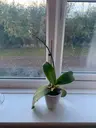
Streptocarpus 'Looking Glass'
Taxonomy

Streptocarpus 'Looking Glass'
Streptocarpus
Gesneriaceae
Lamiales

How to care for Streptocarpus 'Looking Glass'
How often to water your Streptocarpus 'Looking Glass'

every 9
Streptocarpus 'Looking Glass' needs 0.5 cups of water every 9 when it doesn’t get direct sunlight and is potted in a 5" pot.
Use our water calculator to personalize watering recommendations to your environment or download Greg for more advanced recommendations for all of your plants.
Water 0.5 cups every
9
Finding light for Streptocarpus 'Looking Glass' in your home

a window
Streptocarpus 'Looking Glass' may have difficulty thriving, and will drop leaves 🍃, without ample sunlight.
Place it less than 3 feet from a south-facing window to maximize the potential for growth.
Select your region to see how the current weather in your area affects the placement of Streptocarpus 'Looking Glass' in your home 🏡.
How to fertilize Streptocarpus 'Looking Glass'

Most potting soils come with ample nutrients which plants use to produce new growth.
By the time your plant has depleted the nutrients in its soil it’s likely grown enough to need a larger pot anyway.
To replenish this plant's nutrients, repot your Streptocarpus 'Looking Glass' after it doubles in size or once a year—whichever comes first.
-
African Violet!! The flowers have been falling a bit, but I water her enough! Why is this? How can I get my flowers strong and healthy and happy again? #AfricanViolet #StrongPlants
-
Cajun popcorn Kenyan Violet #africanviolet Just wondering if this should be in a larger pot. The new leaves are so compact in the center. I have never had this type of variegated African Violet before so I am not sure if this is how they grow or not. It is in a 4" ceramic pot, unglazed. It is very healthy, and growing.
-
My violet just grows leaves i love him but will he ever bloom again ;--;.. He bloomed once when i got him a while ago but now has just been chilling and spitting littke leaves out lol. Is he happy? #africanviolet
-
I don’t know what I did but please help me revive this thing
-
🫶🏻🌸🤩🤩
-
Can violets live with suckers? I believe this violet has a pretty big sucker on it. I didn’t realize before now. It had been struggling with root rot I think, but now it seems to be doing better and growing. However, it seems like there’s two spots with tiny leaves and bigger ones (but also, I’m not certain about that, can you tell based on the photos?). Does this matter? Like can I leave her as she is or will she struggle having a possible sucker attached? #KenyanViolet #HappyPlants #PlantsMakePeopleHappy #PlantAddict #Question
-
Dropping leaves This is my first violet and the leaves are starting to brown from the edge and drop and I'm not sure why. Typically water from the bottom and it's right in a windowsill. It's in the same soil and pot as when I purchased it. Thanks! #KenyanViolet
-
Hi my friends! Happy friYAY!☺️✨👋 im out of town right now and I forgot to take pictures of my plants! Orlando bloom has new blossoms and I got a few more plants! Diana is a Kenyan violet and she has some blooms too!🌸🌺🌼 hopefully everyone has a great day! 🤗
-
So many leaves in different directions #KenyanViolet I have two African violets and I have to prune the leaves all the time. (this is after pruning a bunch) The leaves go in all different directions and always looks so messy. Any tips would be appreciated.
-
Leaves are dropping #KenyanViolet


Care Summary for Streptocarpus 'Looking Glass'
Streptocarpus 'Looking Glass'
 Greg recommends:
 Water
Water
0.5 cups every 9 days
 Placement
< 3ft from a window
 Nutrients
Repot after 2x growth
Based on the 4” pot your plant is in, and that it doesn’t get direct sunlight.
 Trending in your area







 Similar to Streptocarpus 'Looking Glass'

✨ Discover rare plants

Echeveria Arrow
Anthurium papillilami…

Sarcochilus fitzgeral…

Scindapsus pictus 'Si…

Ruby Ball

Hoya sipitangensis

Euphorbia

Electric Fern

Begonia hydrocotylifo…

Hoya pottsii 'Khao Ya…

Graptoveria 'Douglas …
Stanhopea tigrina

Rainbow Echeveria

Philodendron 'Glorius'

Orange Lipstick Plant

Aglaonema Spitfire

Cereus peruvianus 'Pa…