
Pteris remotifolia
Taxonomy

Pteris remotifolia
Pteris
Pteridaceae
Polypodiales

How to care for Pteris remotifolia
How often to water your Pteris remotifolia

every 9
Pteris remotifolia needs 0.5 cups of water every 9 when it doesn’t get direct sunlight and is potted in a 5" pot.
Use our water calculator to personalize watering recommendations to your environment or download Greg for more advanced recommendations for all of your plants.
Water 0.5 cups every
9
Finding light for Pteris remotifolia in your home

a window
Pteris remotifolia may have difficulty thriving, and will drop leaves 🍃, without ample sunlight.
Place it less than 3 feet from a south-facing window to maximize the potential for growth.
Select your region to see how the current weather in your area affects the placement of Pteris remotifolia in your home 🏡.
How to fertilize Pteris remotifolia

Most potting soils come with ample nutrients which plants use to produce new growth.
By the time your plant has depleted the nutrients in its soil it’s likely grown enough to need a larger pot anyway.
To replenish this plant's nutrients, repot your Pteris remotifolia after it doubles in size or once a year—whichever comes first.
-
Ferns come here to die…… So, I’m not new to Greg but apparently when I switched to my new phone recently it logged me out & logs me in as a new person so I just decided to start my account over. So, I know there are lots of knowledgeable plant people here. I am not an inexperienced plant mom, I’ve got some that are almost 16 years old….that being said every type of fern I get dies a horrible, crispy death. I do not know what I’m doing wrong. I got this one in a V-day planter from my husband & it’s already looking pretty crispy. I’ve got it in a terracotta pot with drainage, I use my water meter, I’ve read up on them but it’s still looking sadder than when I repotted it. Any advice is appreciated. #FernFriends #help #crispy
-
Does anyone have advice on getting these leaves back from crusty to happy! She’s so dry no matter how we water her these days..
-
A whisper of earth in a glass world — Life condensed to a bowl. Where water teaches stillness, stone teaches time, and leaves — they teach hope. 🍃 #ArtsAndPlants #poetry #PlantsAndPoetry #ArtistsOfGreg #ecosystem #HappyPlants #PlantsMakePeopleHappy #PlantAddict #PropagationStation #FernFriends
-
What’s wrong with him? My mum gave me this guy in hopes that I would be able to bring him back to life but he looks worse than before and I don’t know what’s wrong with him He’s always crispy, even after watering, and he’s just getting more brown I don’t want to kill this one 😭 #HappyPlants #PlantsMakePeopleHappy #PlantAddict #NewPlantMom
-
Fern deposits My little survivor has shot up with two really long stalks. Over the last few days, it’s bent over a bit and dropped a bunch of tiny brown dots. At first I freaked thinking it was a mite of some kind or thrips but doesn’t appear to be a peat? Is this normal behaviour for a fern. And if so, can anyone tell me what it is?
-
Her leaves are curling and turning brown?! Am I under watering her?! Is she sick? I’ve switched to distilled water to see if that helps #CretanBrake
-
Need help with my fern. She’s looking limp the past few days and the new growth is either wilting or crisping before it can get fully grown. It seems all new growth is now dying or already dead so I don’t know what is wrong with her #BrakeFern #help
-
My plant seems to be curling up and browning at the edges…anyone know why? i recently had an issue with aphids so i took him out of the pot anf washed everything+treated the soil+checked for root rot etc. but now he’s browning and curling up his leaves at the edges. anyone got an idea why? i tried cutting it back but it doesn’t seem to be working. #HappyPlants #PlantsMakePeopleHappy #PlantAddict #sickplants
-
Rot? My #BrakeFern is turning brown on the leaf tips. Doesn’t strike me as a watering issue and they look like they could be pest or fungal related. Don’t think it’s root rot, repotted a few days ago and the roots looked healthy. The browning starts at the tips. Any help appreciated. Thanks!
-
New Plant Complete with Hitchhiker Meet Fernie Sanders. Greg says it’s a brake fern (or a strawberry, or marijuana) But the tag from the garden center said “mayi”. Is that the same thing as brake fern? Brought it in the house and found this big fat caterpillar 🐛 living on it. Unfortunately, he had to go outside. I couldn’t share my home with a caterpillar. 😆 #FernFriends #mayi #HappyPlants #PlantsMakePeopleHappy #PlantAddict #PestControl #ADHDPLANTLOVERS #AddictedToGreg #neurodivergentplantaddicts #NeurodivergentandPlanty


Care Summary for Pteris remotifolia
Pteris remotifolia
 Greg recommends:
 Water
Water
0.5 cups every 9 days
 Placement
< 3ft from a window
 Nutrients
Repot after 2x growth
Based on the 4” pot your plant is in, and that it doesn’t get direct sunlight.
 Trending in your area








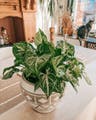

 Similar to Pteris remotifolia
✨ Discover rare plants

Anthurium Fingers
Linnaei Kunth
Stanhopea tigrina

Large Leaf Elephant B…

Munstead Lavender

Stomatium acutifolium

Fernleaf Lavendar
White Apple Moth Orch…
Rosularia platyphylla

Electric Fern

Euphorbia baioensis

Hoya sipitangensis

Red Mistletoe Cactus

Kudu Lily
Philodendron 'Silver …

Starfish Snake Plant

Fagraea ceilanica
