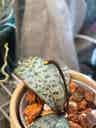
Narcissus 'Little Dryad'
Taxonomy

Narcissus 'Little Dryad'
Narcissus
Amaryllidaceae
Asparagales

How to care for Narcissus 'Little Dryad'
How often to water your Narcissus 'Little Dryad'

every 9
Narcissus 'Little Dryad' needs 0.5 cups of water every 9 when it doesn’t get direct sunlight and is potted in a 5" pot.
Use our water calculator to personalize watering recommendations to your environment or download Greg for more advanced recommendations for all of your plants.
Water 0.5 cups every
9
Finding light for Narcissus 'Little Dryad' in your home

a window
Narcissus 'Little Dryad' love being close to bright, sunny windows 😎.
Place it less than 1ft from a south-facing window to maximize the potential for growth.
Narcissus 'Little Dryad' does not tolerate low-light 🚫.
Select your region to see how the current weather in your area affects the placement of Narcissus 'Little Dryad' in your home 🏡.
How to fertilize Narcissus 'Little Dryad'

Most potting soils come with ample nutrients which plants use to produce new growth.
By the time your plant has depleted the nutrients in its soil it’s likely grown enough to need a larger pot anyway.
To replenish this plant's nutrients, repot your Narcissus 'Little Dryad' after it doubles in size or once a year—whichever comes first.
-
Look at her blooms!! Seeing her growth from a bulb to this at such a rapid pace has been so exciting! #Paperwhite #NewGrowth
-
I’m obsessed with my paperwhite. She was just a bulb on January 1st, but look at how much she’s grown in just about two weeks!! #Paperwhite #HappyPlants
-
Spring has sprung 😁🌷 #HappyPlants
-
Should the flowers droop or is that a lack of hydration? #Daffodil
-
It’s falling over - how can I keep it upright? #Paperwhite
-
Hey everyone. Is this really a Daffodil? This app suggested that it is. Do you know the name? How can I cure it? #Daffodil
-
Hi! Can I trim the leaves/stems of my paper white? It’s done blooming and it’s way too long/floppy. #Paperwhite
-
Happy Friday! My new Paper White is starting to bloom. Went away for a few days and came back to this 🤗 #HappyPlants #PlantsMakePeopleHappy #PlantAddict #NewGrowth #HappyFriday
-
Am I dying? Should I throw figure away? #Daffodil
-
There’s very little green leaves left on my paper white. Knowing that they are from a bulb, will they make a comeback soon or do they only flower once a year? #Paperwhite


Care Summary for Narcissus 'Little Dryad'
Narcissus 'Little Dryad'
 Greg recommends:
 Water
Water
0.5 cups every 9 days
 Placement
< 1ft from a window
 Nutrients
Repot after 2x growth
Based on the 4” pot your plant is in, and that it doesn’t get direct sunlight.
 Trending in your area







 Similar to Narcissus 'Little Dryad'


✨ Discover rare plants

Chinese Evergreen 'Go…

Anthurium 'Fantasy Lo…

Starfish Snake Plant

Lithops

Blue Moon Wisteria

Crassula 'Purple Drag…
White Apple Moth Orch…

Orange Lipstick Plant

Hoya sipitangensis

Fernleaf Lavendar

Anthurium Fingers
Graptopetalum 'Marqui…

Euphorbia

Philodendron 'Glorius'

Picasso's Paintbrush

Anastasia Weeping Fig