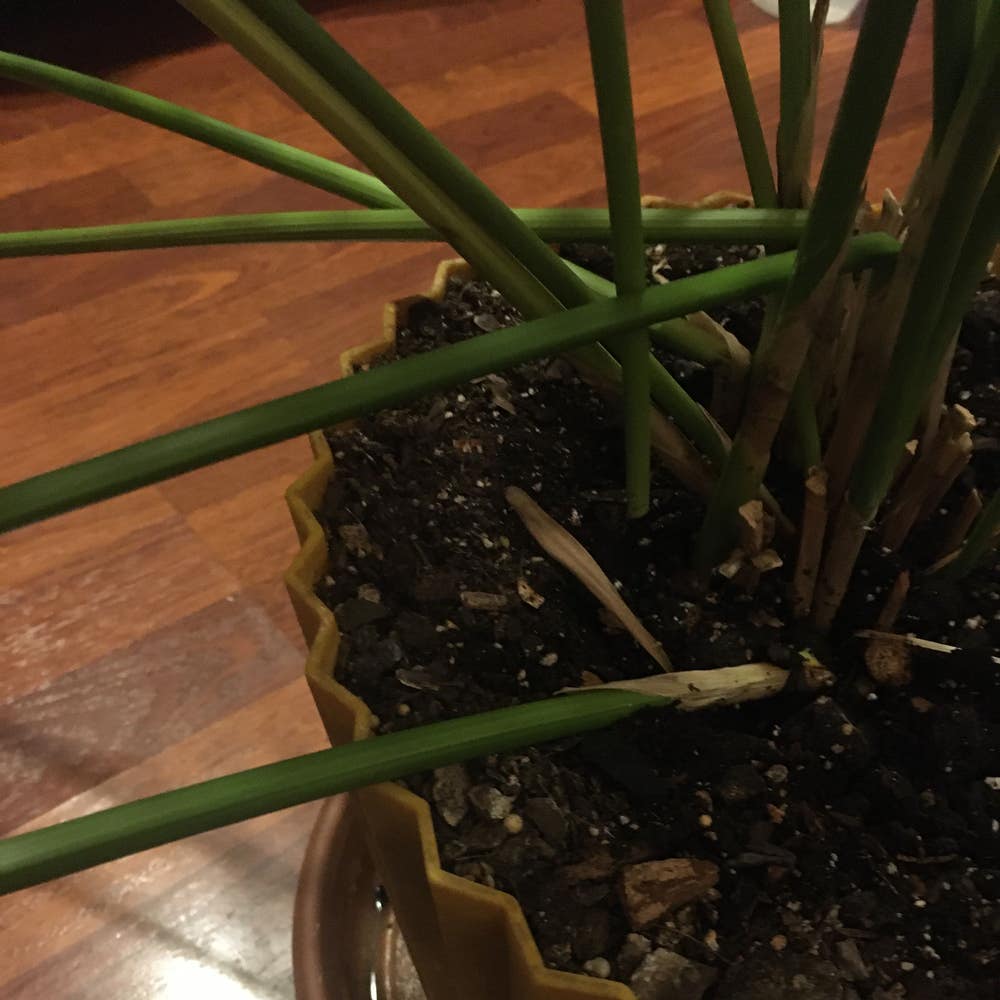
🏺 What to Do About Droopy Leaves on Your Papyrus 'King Tut'
Cyperus papyrus 'King Tut'
By the Greg Editorial Team
Oct 17, 2024•5 min read
This article was created with the help of AI so we can cover more plants for you. May contain errors. See one? Report it here.
- 💧 Overwatering and underwatering cause droopy leaves; check soil moisture regularly.
- 🌡️ Ideal temperatures for Papyrus 'King Tut' are 20°C to 30°C (68°F to 86°F).
- 🌿 High humidity (50%+) is crucial; use humidifiers or mist leaves to maintain it.
Causes of Droopy Leaves
💧 Overwatering and Root Rot
Overwatering is a common culprit behind droopy leaves on your Papyrus 'King Tut'. Look for symptoms like yellowing leaves, mushy stems, and a foul smell from the soil.
To prevent this, ensure proper drainage and avoid standing water. A well-draining potting mix can make all the difference.
🌵 Underwatering and Drought Stress
On the flip side, underwatering can also lead to droopy leaves. Symptoms include crispy leaf edges, wilting, and an overall drooping appearance.
Regularly check soil moisture and maintain consistent watering to keep your plant hydrated. A simple finger test can help you gauge when it’s time to water.
🥦 Nutrient Deficiencies
Nitrogen Deficiency
A lack of nitrogen can manifest as yellowing of older leaves and stunted growth. This nutrient is essential for healthy foliage.
Potassium Deficiency
Potassium deficiency shows up as browning leaf tips and edges, along with weak stems. Both deficiencies can hinder your plant's overall health.
🌡️ Environmental Stress
Temperature
Papyrus 'King Tut' thrives in temperatures between 20°C to 30°C (68°F to 86°F). Extreme heat or cold can cause leaf droop.
Monitor your plant's environment to ensure it stays within this ideal range. A thermometer can be a handy tool for this.
Humidity
This plant prefers high humidity levels of 50% or higher. Low humidity can lead to leaf curling and drooping.
Consider using a humidifier or placing a pebble tray filled with water nearby to boost humidity levels.
🐜 Pest Infestations
Aphids
Aphids can wreak havoc on your Papyrus, leaving sticky residue on leaves and causing distorted growth.
Treat infestations with insecticidal soap or neem oil for effective control.
Spider Mites
Look out for fine webbing and stippled leaves, which are signs of spider mites.
Increasing humidity can help deter these pests, and applying miticides may be necessary if the problem persists.
Understanding these causes can help you take proactive steps to keep your Papyrus 'King Tut' healthy and vibrant. Next, we’ll dive into diagnosing droopy leaves to pinpoint the exact issue affecting your plant.
Diagnosing Droopy Leaves
🌊 Visual Signs of Overwatering vs. Underwatering
Identifying the cause of droopy leaves starts with visual cues. If your Papyrus 'King Tut' has yellowing leaves and a mushy texture, it’s likely overwatered. Conversely, crispy edges and a wilting appearance indicate underwatering.
🌡️ Checking Soil Moisture Levels
To accurately assess moisture, use a moisture meter or perform a finger test by inserting your finger 1-2 inches into the soil. The ideal condition is consistently moist soil that isn’t soggy, ensuring your plant thrives.
🥦 Identifying Nutrient Deficiency Symptoms
Nutrient deficiencies can also lead to droopy leaves. A nitrogen deficiency typically manifests as yellowing older leaves, while potassium deficiency shows up as browning leaf tips.
🌞 Assessing Environmental Conditions
Environmental factors play a crucial role in your plant's health.
Light
Papyrus 'King Tut' thrives in full sun to partial shade. If you notice leggy growth and drooping leaves, it may be a sign of inadequate light.
Temperature
Extreme temperature fluctuations can stress your plant. Use a thermometer to monitor conditions, keeping them within the ideal range for optimal growth.
Understanding these diagnostic signs will empower you to take action and restore your plant's vitality. Next, we’ll explore effective treatments for droopy leaves.
Treatment for Droopy Leaves
Adjusting Watering Practices 🌊
- Start by determining your current watering frequency.
- Adjust it to keep the soil consistently moist without creating waterlogged conditions.
- Set reminders to help you stay on track with your watering schedule.
Fertilization Techniques for Recovery 🌱
Using a balanced NPK fertilizer can significantly aid recovery. Aim to apply it every 4-6 weeks during the growing season for optimal results.
Increasing Humidity Levels 💧
Maintaining high humidity is crucial for your Papyrus 'King Tut'. You can achieve this by using a humidifier, placing pebble trays filled with water nearby, or misting the leaves regularly.
Pest Control Methods 🐛
Organic Options
For pest control, consider using neem oil, which is safe for both your plants and beneficial insects. Insecticidal soap is another effective option against soft-bodied pests.
Chemical Options
If pests persist, chemical treatments can be used as a last resort. Always follow label instructions carefully to ensure safety and effectiveness.
By addressing these treatment areas, you can help your Papyrus 'King Tut' regain its vigor and prevent future droopiness. Next, let’s explore how to prevent future leaf droop through best practices and seasonal care tips.
Preventing Future Leaf Droop
🌊 Best Practices for Watering
To keep your Papyrus 'King Tut' thriving, establish a consistent watering schedule. Check the soil moisture weekly to ensure it remains consistently moist, but avoid letting it dry out completely.
🌱 Ideal Soil Conditions and Amendments
The right soil is crucial for your plant's health. Use well-draining soil rich in organic matter, and consider incorporating peat moss or compost to enhance moisture retention.
🍂 Seasonal Care Tips
Adjust your care routine with the seasons for optimal growth. In spring, fertilize and inspect for pests; during summer, keep an eye on water levels and humidity; and in fall/winter, reduce watering frequency as the plant's growth slows.
🌡️ Monitoring Environmental Factors
Stay proactive by monitoring environmental conditions. Keep a log of temperature and humidity levels, and adjust your care practices based on seasonal changes to ensure your plant remains healthy and vibrant.
By following these preventive measures, you can help your Papyrus 'King Tut' avoid droopy leaves and flourish beautifully. Next, let’s explore how to treat droopy leaves effectively when they do occur.
⚠️ Safety First
This content is for general information and may contain errors, omissions, or outdated details. It is not medical, veterinary advice, or an endorsement of therapeutic claims.
Always consult a qualified healthcare professional before using any plant as food, medicine, or supplement.
Never eat any plant (or feed one to pets) without confirming its identity with at least two trusted sources.
If you suspect poisoning, call Poison Control (800) 222-1222, the Pet Poison Helpline (800) 213-6680, or your local emergency service immediately.
Spotted an error? Please report it here.
Keep your Papyrus 'King Tut' vibrant and droop-free 🌱 by using Greg's tailored watering reminders and moisture tracking to ensure optimal care every step of the way!