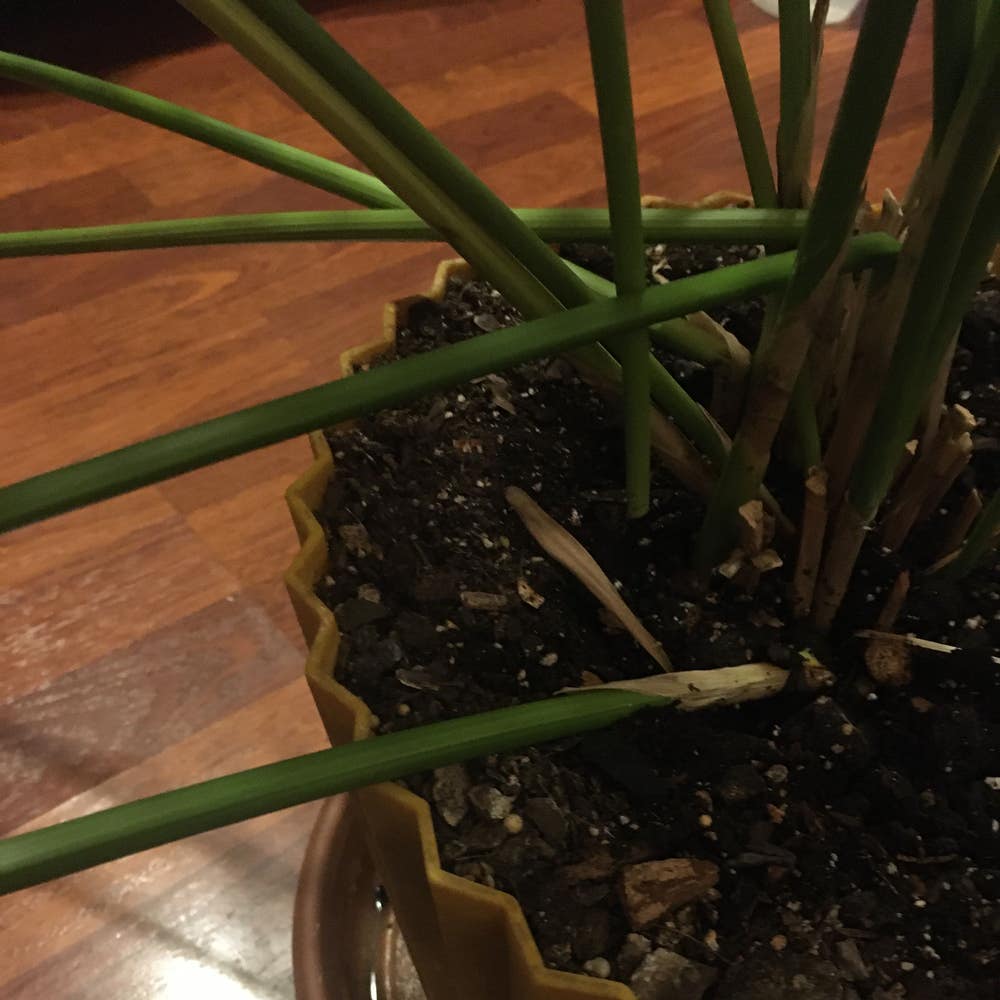
Why Does My Cyperus alterniflorus Have Yellow Leaves?
Cyperus alterniflorus
By the Greg Editorial Team
Jun 18, 2024•5 min read
This article was created with the help of AI so we can cover more plants for you. May contain errors. See one? Report it here.
- Yellow leaves signal distress, with shade and pattern hinting at the cause.
- Overwatering and underwatering both lead to yellowing—adjust watering practices.
- Nutrient deficiencies, pests, and temperature affect leaf color; monitor and adjust.
Spotting Trouble: Yellow Leaves on Your Umbrella Papyrus
🚩 Recognizing Symptoms Beyond Yellow
Yellow leaves on your Cyperus alterniflorus may be waving a flag of distress. It's not just about the color; it's the pattern that tells the story. Are the leaves uniformly yellow, or are they sporting unsightly brown spots? These details matter.
Timing is also critical. Did the yellowing creep up slowly, or did it ambush your plant overnight? The speed of the change can point to different issues, from slow-building nutrient deficiencies to sudden, acute water stress.
🔍 Decoding the Shades of Yellow
The spectrum of yellow holds clues. Light yellow leaves might be crying out about a lack of nutrients or too much sun, while dark yellow could signal overwatering. It's like your plant is sending you coded messages.
And then there's the pattern of discoloration. Is the yellowing uniform, suggesting a systemic issue like aging leaves or overall stress? Or is it patchy, hinting at localized problems such as pests or disease? Each scenario requires a different game plan to restore your plant's vibrant green hue.

Water Woes: The Balancing Act
💧 Too Much Love: The Perils of Overwatering
Yellow leaves and wilting can be deceptive; they scream overwatering when the soil feels like a swamp. Root rot is the stealthy villain here, with roots turning to mush—a sad, squishy end.
To rescue your waterlogged plant, halt all watering immediately. Let the soil dry—think desert, not damp. If the roots are blacker than your morning coffee, it's time to snip the sadness away. Consider repotting with soil that drains faster than your patience on hold with customer service.
Going forward, only water when the top inch of soil feels like a dry martini—crisp and slightly parched.
🏜️ Thirsty Roots: Underwatering Uncovered
Wilting isn't always a cry for water, but when the soil is drier than a stand-up comedian's wit, it's a clear sign. Leaves with tips browner than a well-done steak indicate a serious thirst.
To quench your plant's drought, introduce water slowly, like a shy date to your friends. Ensure the water reaches deep, encouraging roots to grow down, not out. If your pot's more clogged than city traffic, clear those drainage holes to let the water flow like a river after a storm.
Remember, consistency is your new best friend. Watering should be as regular as your morning coffee, adapting to the seasons like your wardrobe. Keep an eye on the soil moisture like it owes you money, and you'll keep your plant from turning into a crispy critter.

Feeding Frenzy: Nutrients and Your Plant's Health
💡 The Usual Suspects: Nitrogen, Iron, and Magnesium
Yellow leaves can be the silent scream for nutrients. Nitrogen, iron, and magnesium are the usual suspects when your Cyperus alterniflorus starts to look more like autumn than spring.
Nitrogen is the green-maker, so when leaves yellow, especially at the base, it's likely pleading for a nitrogen boost. Iron is critical too; without it, expect to see a case of chlorosis—yellow leaves with green veins. And magnesium? It's the core of the chlorophyll molecule. A deficiency here means your plant's photosynthesis party is a dud.
To fix these imbalances, reach for fertilizers and supplements. But remember, it's not a buffet; precision is key. Tailor your approach with a soil test to avoid the triple cheeseburger effect—too much of a good thing.
🌱 The pH Factor: Getting the Balance Just Right
Soil pH isn't just a number; it's a gatekeeper. If it's off, essential nutrients get locked out like party crashers. Too acidic or too alkaline, and your plant's nutrient uptake goes haywire.
Adjusting pH is like tuning an instrument; it makes everything work in harmony. If your soil test reads like a pH horror story, it's time to act. Add lime to raise the pH or sulfur to lower it. Your plant will thank you with a lush green glow.

Under Attack: Pests and Diseases
🐜 Unwanted Guests: Identifying Common Culprits
Aphids, mealybugs, and their pest pals can turn your plant's leaves yellow as if they were competing in a discoloration derby. These sap-suckers are like tiny vampires for your Cyperus alterniflorus, draining the life out of each leaf.
To spot these freeloaders, look for sticky residue or a white, cottony substance. Spider mites are more secretive, leaving behind fine webs as evidence of their feast. Regular plant check-ups are your best defense; catch them before they turn your green oasis into a yellow wasteland.
🤒 Sickly Symptoms: Fungal and Bacterial Foes
Fungal and bacterial infections are the ninjas of plant diseases—silent but deadly. Yellow leaves might be their first warning sign, often followed by unsightly spots or a powdery mildew.
Treatment starts with removing affected leaves to prevent the spread. Improve air circulation around your plant and consider a fungicide if things look grim. Remember, it's about precision strikes—target the problem without going overboard.
Light and Temperature: Finding the Sweet Spot
🌞 Sunlight: How Much is Too Much?
Cyprus alterniflorus, like any diva, craves the spotlight but wilts under harsh paparazzi flashes. Direct sunlight can lead to a sunburn effect, leaving leaves bleached and your plant's ego bruised. To prevent this, position your plant in bright, indirect light; it's the VIP lounge where it can thrive without the risk of crispy, yellow leaves.
Chill Out: Temperature Stress and Leaf Yellowing
When it comes to temperature, think of your plant as having the comfort zone of a Goldilocks—not too hot, not too cold. Temperature swings can send your Cyprus alterniflorus into a frenzy, resulting in yellow leaves. Keep the thermostat steady, aiming for a consistent temperature between 15-23ºC. Avoid placing your plant near drafty windows or next to heating and cooling vents. Remember, stability is the name of the game.
⚠️ Safety First
This content is for general information and may contain errors, omissions, or outdated details. It is not medical, veterinary advice, or an endorsement of therapeutic claims.
Always consult a qualified healthcare professional before using any plant as food, medicine, or supplement.
Never eat any plant (or feed one to pets) without confirming its identity with at least two trusted sources.
If you suspect poisoning, call Poison Control (800) 222-1222, the Pet Poison Helpline (800) 213-6680, or your local emergency service immediately.
Spotted an error? Please report it here.
Banish the yellow-leaf blues and nurture 🌿 your Cyperus alterniflorus back to health with Greg's pinpointed care reminders and expert community advice.