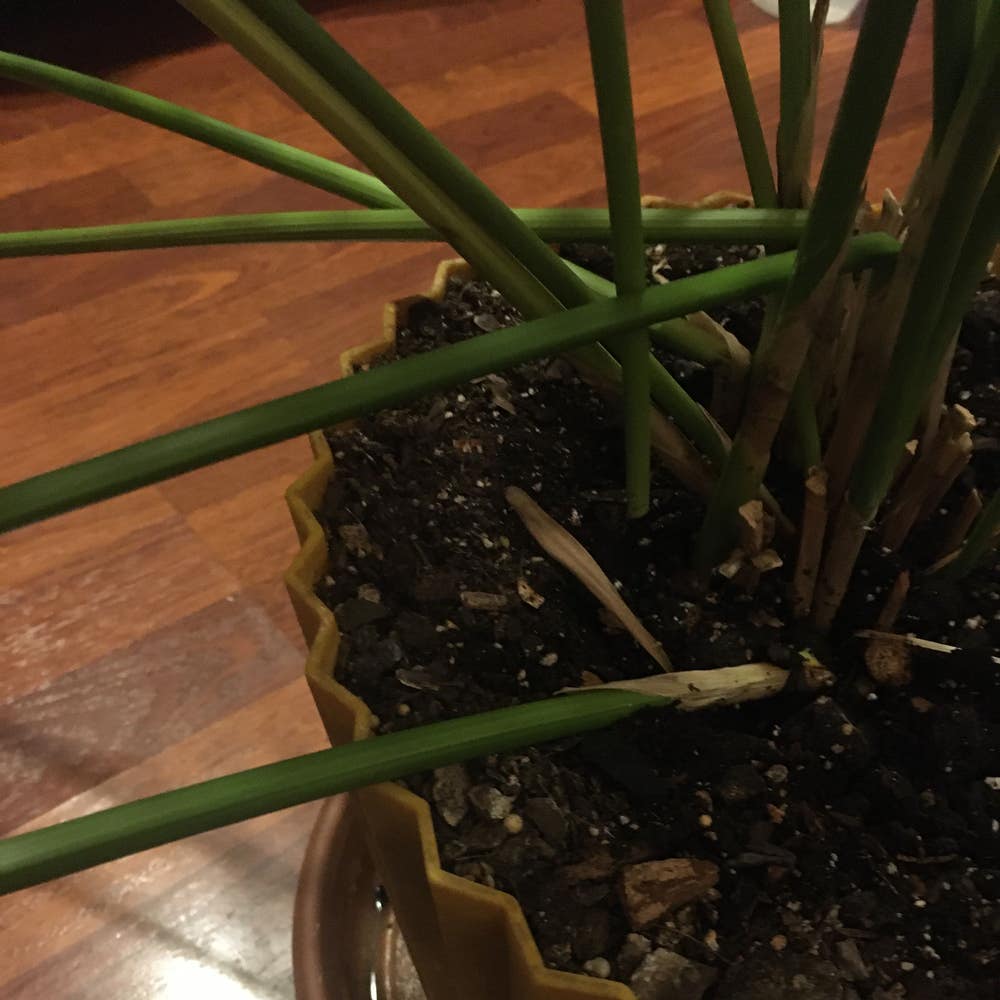
Why Are My Cyperus alterniflorus Leaves Falling Over?
Cyperus alterniflorus
By the Greg Editorial Team
Jun 18, 2024•4 min read
This article was created with the help of AI so we can cover more plants for you. May contain errors. See one? Report it here.
- Overwatering causes yellowing, underwatering leads to crispy leaves.
- Consistent care routine prevents drooping and maintains health.
- Balanced light, water, nutrients are key to upright leaves.
Spotting the Signs: When Your Plant's Leaves Start to Droop
💧 Recognizing Overwatering or Underwatering
Yellowing leaves at the bottom? That's classic overwatering. But if your plant's leaves are more crispy than a fall leaf pile, you're underwatering. Check the soil: if it's pulling away from the pot like a bad breakup, it's time to water. A soil that's soggy like a wet sponge? Take it easy, tiger.
☀️ Identifying Signs of Inadequate Light or Extreme Temperatures
Leaves browning at the tips could be crying out for less sunburn and more shade. If your Cyperus alterniflorus is reaching out like it's trying to catch a tan, it might be begging for more light. Keep temperatures consistent; your plant's not a fan of surprise weather changes.
🌿 Detecting Nutrient Deficiencies by Leaf Appearance
Stunted growth and brown spots? Your plant might be starving for nutrients. Scorched leaves could mean you've been a little too generous with the fertilizer. Aim for a balanced diet; your plant's not into extreme eating habits.

Getting to the Root: Causes of Leaf Droopiness
💧 The Impact of Watering Habits on Leaf Stability
Overzealous watering can lead to soggy soil, a perfect storm for root rot. Conversely, a parched plant is just as problematic. Dryness an inch below the surface signals it's time to water.
🌿 How Light and Temperature Influence Leaf Strength
Too much sun can scorch leaves, while too little leaves them languishing. Aim for that Goldilocks zone of bright, indirect light. Temperature swings are like mood swings for plants; they're not fans. Keep it stable.
🌱 The Role of Nutrients in Maintaining Leaf Rigidity
Nutrient deficiencies can make leaves droop like a disappointed parent. A balanced fertilizer is the pep talk your plant needs. Watch for subtle signs of distress, and adjust your feeding schedule like a fine-tuned instrument.

Turning Over a New Leaf: Direct Remedies for Droopy Leaves
💧 Fine-Tuning Your Watering Technique
Watering isn't rocket science, but it's close. Think of it as a rhythm, not a random act. Check the soil moisture before each watering—top inch dry? Time to drink. Use room-temp water to avoid shocking those tender roots. And remember, more water isn't always better. Overwatering is like throwing a pool party without a pool.
🌞 Adjusting Light and Temperature to Your Plant's Liking
Your plant craves light, but not like a sunbather on a quest for the perfect tan. Aim for bright, indirect light—the sweet spot that keeps leaves perky without the crispy edges. Temperature-wise, keep it steady. Think of your plant as a Goldilocks—not too hot, not too cold. Sudden changes are a no-no; consistency is key.
🌱 Balancing Fertilization for Optimal Nutrient Uptake
Fertilizer is your plant's diet plan, and balance is the name of the game. Use a balanced fertilizer, but don't go overboard. It's like feeding your plant a steady diet of fast food—quick results, but at what cost? Observe your plant's response, tweak as needed, and avoid the nutrient burn of overzealous feeding.

Keeping It Upright: Long-Term Strategies to Prevent Drooping
🌿 Establishing a Tailored Care Routine for Cyperus alterniflorus
Consistency is key when it comes to preventing the elegant fronds of your Cyperus alterniflorus from drooping. Establish a care routine that caters to the unique needs of this plant. Rotate it regularly to ensure even growth and prevent it from leaning towards the light like a nosy neighbor.
Pruning isn't just about aesthetics; it's like a wellness check that keeps your plant healthy. Snip off any yellowing or dead leaves to redirect energy to the thriving parts.
🕵️ The Importance of Regular Monitoring for Early Detection
Stay on top of things with regular inspections. Catching a droop early can mean the difference between a quick perk-up and a full-blown plant flop. Be the detective in your own garden; look out for signs of overwatering, underfeeding, or pest invasions.
Pest vigilance is non-negotiable. If you spot an aphid or spider mite, show them the exit with insecticidal soap or neem oil. It's like being the bouncer at your plant's exclusive party.
Remember, a tailored routine and watchful eyes are your best defense against the droops. Keep your Cyperus alterniflorus standing tall, and it'll keep your spirits up too.
⚠️ Safety First
This content is for general information and may contain errors, omissions, or outdated details. It is not medical, veterinary advice, or an endorsement of therapeutic claims.
Always consult a qualified healthcare professional before using any plant as food, medicine, or supplement.
Never eat any plant (or feed one to pets) without confirming its identity with at least two trusted sources.
If you suspect poisoning, call Poison Control (800) 222-1222, the Pet Poison Helpline (800) 213-6680, or your local emergency service immediately.
Spotted an error? Please report it here.
Prevent your Cyperus alterniflorus leaves from falling over by letting Greg orchestrate 🎼 a perfect symphony of watering, lighting, and feeding reminders tailored to your plant's needs.