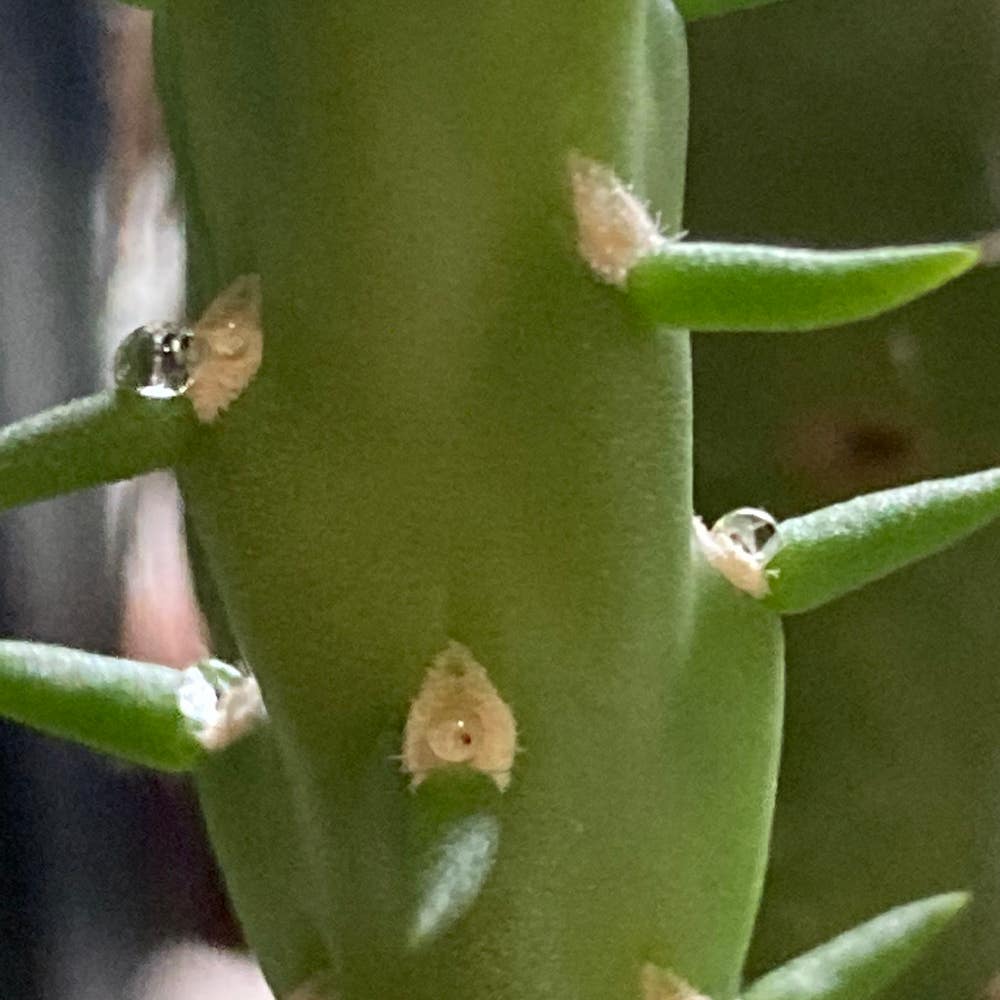
🥊 What Are The Bugs on My Boxing Glove Cactus?
Cylindropuntia fulgida var. mamillata
By the Greg Editorial Team
Apr 17, 2024•4 min read
This article was created with the help of AI so we can cover more plants for you. May contain errors. See one? Report it here.
- 🕸️ Spider mites and mealybugs show distinct signs; treat with neem oil or alcohol.
- 🐜 Prevent pests with dry soil, sticky traps, and natural predators like ladybugs.
- 🆘 Seek professional help if DIY methods fail or plant stress is visible.
Spot the Invaders: Identifying Common Pests
🕷️ Spider Mites: The Sneaky Sap-Suckers
Tiny webs on your Boxing Glove Cactus? Spider mites may be staging a silent takeover. These minuscule pests create silken threads and leave behind a pattern of speckled leaves, a clear sign they've been feasting.
To oust these invaders, a home remedy like a water spray can disrupt their webs. For a more targeted attack, neem oil or insecticidal soap applied with precision can send spider mites packing.
🦟 Scale: The Sticky Freeloaders
Notice unusual bumps on your cactus? You've got scale insects. These masters of disguise blend in with your plant, leaving a sticky residue as they suck the sap.
Combat these freeloaders by scraping them off with a toothpick or swabbing with alcohol. If they're stubborn, it might be time for insecticidal soap or a systemic insecticide.
🦠 Fungus Gnats and Fruit Flies: The Fuzzy Flyers
A cloud of tiny black flies is a dead giveaway for fungus gnats or fruit flies. These pests thrive in moist soil, a sign you might be overwatering.
To stop the swarm, let the soil dry out more between waterings. Yellow sticky traps can catch the adults, while a layer of sand on the soil can block the larvae.
🐛 Mealybugs: The White Walkers of the Cactus World
If you spot fluffy white masses, you're dealing with mealybugs. These pests leave cotton-like clusters and a sticky honeydew that can lead to sooty mold.
Rubbing alcohol or insecticidal soap are effective weapons against mealybugs. Apply with care to preserve your cactus's health while eradicating the pests.
🐜 Other Unwelcome Guests
Aphids and thrips might make an appearance, though they're less common. They'll show up as clusters of tiny insects or cause leaves to curl or stunt.
For these rarer invaders, a strong spray of water or the introduction of beneficial insects like ladybugs can be effective. Stay vigilant with regular checks to catch these pests early.
The Best Defense: Preventative Care for Boxing Glove Cactus
🕵️ Regular Recon: Keeping an Eye Out for Early Signs
Routine checks are the lifeline of your Boxing Glove Cactus. Like a security sweep, they can thwart a bug invasion before it becomes a siege. Turn over leaves, peer into crevices, and be on the lookout for the slightest hint of trouble—discoloration, stickiness, or webbing. It's detective work that pays off.
🌿 The Right Environment: Deterring Pests with Proper Care
Creating a bug-resistant cactus habitat is all about balance. Too much water? You're throwing a pool party for pests. Skimp on light, and you're basically inviting them to a buffet. Get it right—bright, indirect sunlight and a well-draining soil mix—and you'll have a cactus that's less of a bug magnet and more of a fortress.
⚔️ Allies in the Fight: Using Natural Predators
Don't fight the bug battle solo. Recruit an army of beneficial insects like ladybugs and lacewings. They're like the special ops of the garden, taking out pests with precision. Just make sure your garden is welcoming to these allies, and they'll help keep the peace.
When to Call in the Cavalry: Seeking Professional Help
🚨 Recognizing the Red Flags
Sometimes, DIY pest control is about as useful as a screen door on a submarine. If your Boxing Glove Cactus still looks like a bug buffet after you've tried every trick in the book, it's time to seek professional help. Look for these warning signs:
- Rapid pest population growth that you can't curb.
- Visible plant stress or decline despite treatment.
- Recurring issues after multiple treatment attempts.
🕵️ Finding the Right Help
Hit up your local County Extension Service; they're the bug whisperers with all the intel. Alternatively, look for a certified pest management professional with a track record of evicting freeloaders. Make sure they're certified and know their aphids from their elbow. You want someone who won't douse your plant in something that'll make it go from green to gone.
⏱ Act Swiftly, But Wisely
Don't wait until your plant is a goner. The earlier you seek help, the better the chances of recovery. But remember, always vet your chosen expert. Ensure they have a plan that won't turn your home into a no-fly zone for all things winged.
🌿 The Benefits of Expert Intervention
Consulting with a plant health specialist brings a wealth of expertise to your doorstep. They have access to tools and treatments beyond the scope of your local garden center. Plus, there's the undeniable peace of mind that comes with knowing a pro is on the case.
⚠️ Safety First
This content is for general information and may contain errors, omissions, or outdated details. It is not medical, veterinary advice, or an endorsement of therapeutic claims.
Always consult a qualified healthcare professional before using any plant as food, medicine, or supplement.
Never eat any plant (or feed one to pets) without confirming its identity with at least two trusted sources.
If you suspect poisoning, call Poison Control (800) 222-1222, the Pet Poison Helpline (800) 213-6680, or your local emergency service immediately.
Spotted an error? Please report it here.
Eradicate pests on your Boxing Glove Cactus with early detection and Greg's 🌵 custom care plans that keep your plants robust and less inviting to unwanted critters.