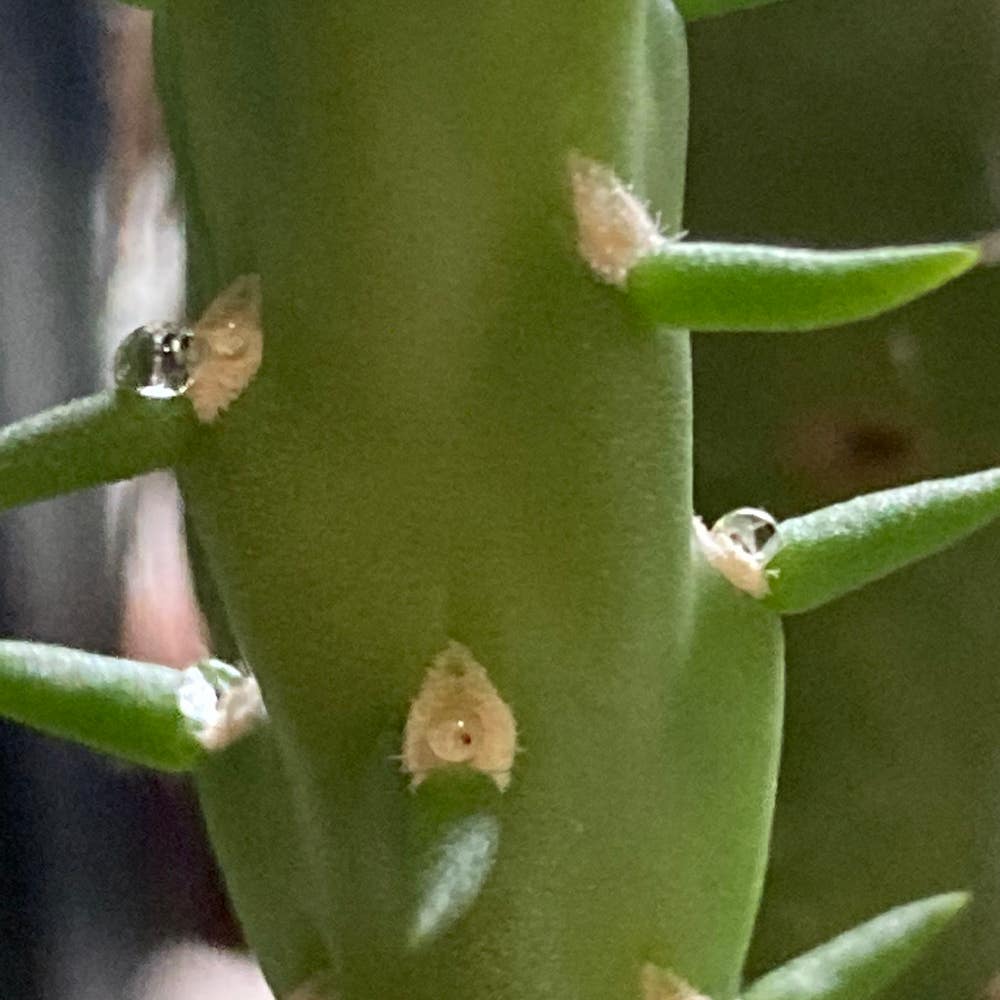
🥊 Why Are My Boxing Glove Cactus Leaves Droopy?
Cylindropuntia fulgida var. mamillata
By the Greg Editorial Team
Apr 17, 2024•3 min read
This article was created with the help of AI so we can cover more plants for you. May contain errors. See one? Report it here.
- Under/overwatering and root rot lead to droopy cactus leaves.
- Balance sunlight and temperature to prevent droopiness.
- Consistent care and monitoring keep your cactus perky.
Spotting the Signs of Droopy Leaves
🌵 Visual Clues
Sagging or bending at odd angles is a red flag for your Boxing Glove Cactus. If the vibrant green starts to fade, it's time to spring into action.
Beyond the Droop
But droopiness isn't the only cry for help. Yellowing, spots, or curling leaves are the cactus's way of sounding the alarm. Check for pests; these freeloaders can wreak havoc, leaving your cactus in a slump.
Unearthing the Causes of Droopiness
💧 The Thirst Quench: Underwatering Woes
Underwatering transforms your Boxing Glove Cactus into a droopy shadow of its former self. The leaves, once plump and vibrant, now hang limp and lifeless. Soil dryness is a dead giveaway; if it's as dry as a bone, your cactus is begging for hydration.
💦 The Drench Dilemma: Overwatering and Root Rot
Overwatering is just as deceptive, leading to root rot and a cactus that's more slump than spunk. Leaves feel soft, like overripe fruit, and the soil's wetness is a telltale sign of excess. Immediate action is needed to prevent a soggy demise.
🌡️ The Climate Culprit: Light and Temperature Stress
Too much sun or too little warmth can send your cactus into a state of light and temperature stress. Leaves may wilt or burn, signaling a plea for a more comfortable environment. Assessing your cactus's location for optimal conditions is crucial to prevent droopiness.
Reviving Your Cactus
💧 Fine-Tuning Watering Techniques
Watering your Boxing Glove Cactus is more art than science. Forget the calendar; your cactus's thirst can't be scheduled. The top inch of soil should feel dry before you even think about watering again. In winter, your cactus is practically meditating – it needs very little.
🌱 Soil and Drainage: Your Cactus's Best Friends
The right soil mix and a pot with drainage holes are non-negotiable. Your cactus craves a bed that's well-aerated and fast-draining. Think of it as the perfect mattress for a good night's sleep – it needs to support without suffocating.
🌞 Balancing the Elements: Light and Temperature Fixes
Sunlight is your cactus's best friend, but too much can turn it into a frenemy. Aim for bright, indirect light – like a warm hug rather than a tight squeeze. And when it comes to temperature, steady does it. Sudden changes are the enemy, so introduce any new conditions with the subtlety of a cat burglar.
🛠 Making Adjustments Without Shocking Your Cactus
If your cactus is in need of a climate change, transition gradually. No sudden moves – this isn't a dance-off. Monitor the environment like a hawk and tweak it with the finesse of a DJ mixing a track. Your cactus will thank you by standing tall and looking sharp.
Keeping Your Cactus Perky
💧 Consistency is Key: Routine Care
Regular check-ups are the backbone of cactus care. Like paying bills on time, a steady routine prevents the droop. Water only when the top inch of soil feels dry to the touch. Remember, a stable environment equals a perky cactus.
🌵 Proactive Plant Parenting: Monitoring and Adaptation
Stay ahead of droopiness with vigilant care. Observe your cactus's condition during regular check-ins; it's like reading its mood. Use a care journal to track changes and adjust care as needed. This isn't helicopter parenting—it's smart cactus care.
⚠️ Safety First
This content is for general information and may contain errors, omissions, or outdated details. It is not medical, veterinary advice, or an endorsement of therapeutic claims.
Always consult a qualified healthcare professional before using any plant as food, medicine, or supplement.
Never eat any plant (or feed one to pets) without confirming its identity with at least two trusted sources.
If you suspect poisoning, call Poison Control (800) 222-1222, the Pet Poison Helpline (800) 213-6680, or your local emergency service immediately.
Spotted an error? Please report it here.
Keep your Boxing Glove Cactus from drooping with Greg's custom care plan 🌵, ensuring it gets just the right amount of water and care based on your home's unique conditions.