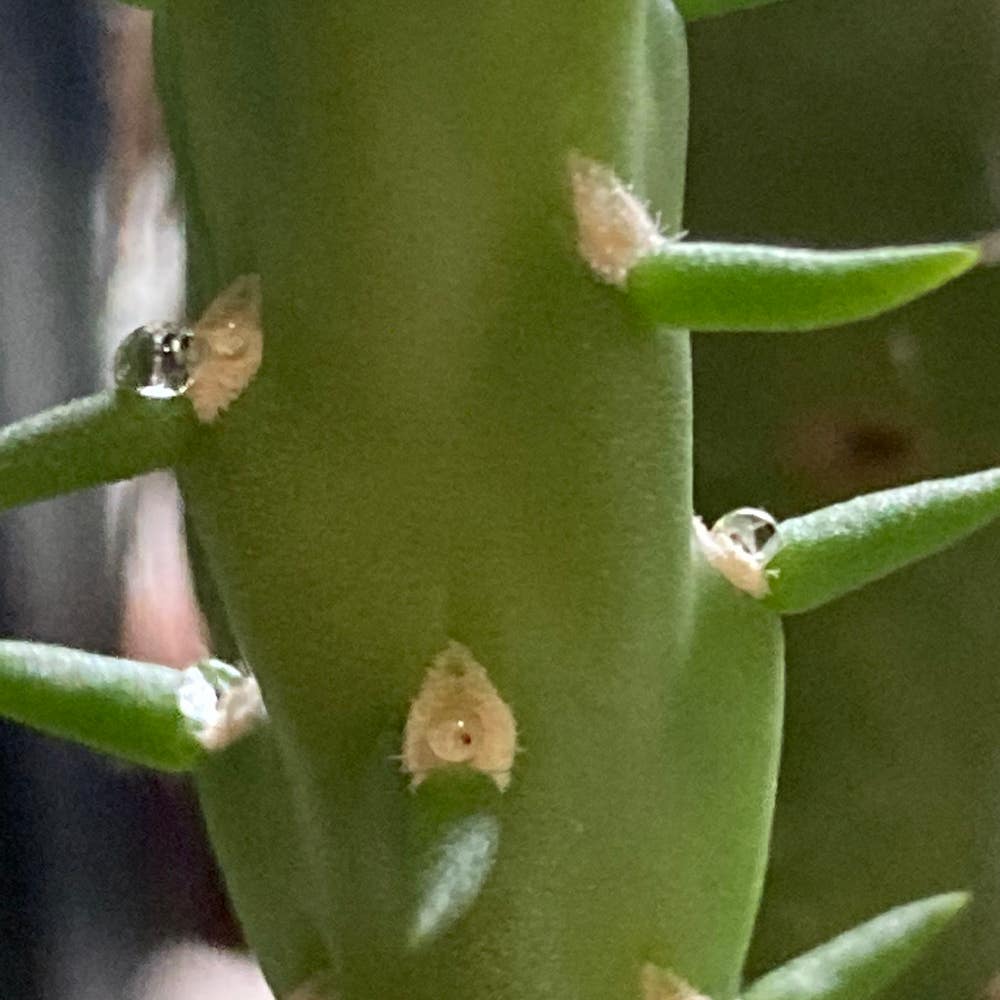
🥊 Why Are My Boxing Glove Cactus Leaves Dropping?
Cylindropuntia fulgida var. mamillata
By the Greg Editorial Team
Apr 17, 2024•5 min read
This article was created with the help of AI so we can cover more plants for you. May contain errors. See one? Report it here.
- 💧 Water wisely: Only when top inch of soil is dry.
- 🌡️ Keep it cozy: Ideal temperature is 70-100°F.
- 🌞 Bright, indirect light: Best to prevent leaf drop.
Pinpointing the Culprits of Leaf Drop
💧 Water Woes: Too Much or Too Little
Overwatering turns leaves yellow and stems mushy, like they've lost the will to stand firm. When the soil feels like a saturated sponge, it's a red flag. Conversely, underwatering leaves your cactus parched, with leaves dropping off as if saying, "I give up." The soil should whisper hints of moisture, not scream saturation or echo dryness.
To strike the perfect balance, water when the top inch of soil is dry, and adjust to the cactus's seasonal needs. Summer calls for more frequent waterings, while winter is a time for restraint. A moisture meter isn't just a gadget; it's your secret weapon in the quest for equilibrium.
🔥 Feeling the Heat: Temperature Troubles
Temperature stress shows up as a cactus throwing a tantrum, with leaves dropping in protest. Too hot, and your cactus might as well be sunbathing on the equator. Too cold, and it's shivering in an invisible winter coat.
The ideal temperature range is a cozy spot between 70-100°F (21-37°C). Anything more, and you're baking your cactus; anything less, and you're icing it. Keep it away from drafts and radiators, and think of your cactus as a guest at a party—it wants to be comfortable, not freezing in the corner or sweating on the dance floor.
☀️ Let There Be Light: Sunlight Sensitivity
Light requirements for the Boxing Glove Cactus are like a tightrope walk—too much direct sunlight, and it's a case of sunburn. Too little, and it's stretching out, desperate for a tan.
To prevent leaf drop, aim for bright, indirect light. It's the sweet spot where your cactus can bask without the risk of turning into a crispy critter. If your cactus is reaching for the sky or starting to fade, it's time to play musical chairs with your plant pots until you find that light nirvana.
Turning Over a New Leaf: Solutions and Prevention
💧 Fine-Tuning Your Watering Technique
Watering your Boxing Glove Cactus is like hitting the sweet spot in a game of darts—it's all about precision. Check the topsoil; if it's dry an inch down, it's time to water. During winter, when your cactus is in chill mode, reduce the watering frequency.
🏡 Creating a Stable Environment
Your cactus craves consistency like a cat demands attention. Maintain temperatures within a cactus-comfort zone, avoiding drafts and sudden changes. Think of your home as a cactus sanctuary, where the thermostat doesn't swing wildly.
🌟 Lighting the Way to Health
Light is life, but your Boxing Glove Cactus isn't trying to get a sunburn. Aim for bright, indirect sunlight—the kind that's bright enough to read a book without straining your eyes. If your cactus is stretching out like it's trying to escape, it's begging for more light. Rotate the pot occasionally for an even distribution of that golden glow.
The Foundation of Health: Soil and Potting Mix
🌱 The Role of Soil in Leaf Retention
Soil isn't just dirt; it's the life support system for your Boxing Glove Cactus. Leaf stability hinges on the right mix. A poor soil choice can lead to a weakened root system, leaving your cactus vulnerable to ailments like root rot.
🌵 Mixing the Perfect Potting Soil for Your Cactus
The ideal soil for your cactus mimics its natural, arid conditions. Drainage is key—aim for a mix that lets water run through freely but still holds onto enough moisture for the roots to drink up. A blend of perlite, coarse sand, and potting soil usually does the trick.
Ingredients for Success
- Coco coir or peat moss: These retain just the right amount of moisture without turning your pot into a swamp.
- Compost: Think of it as a nutrient party for your cactus, but keep it low-key; too much and you'll spoil the roots.
- Perlite or coarse sand: These are the VIPs of aeration, keeping the soil loose and breathable.
Pot Considerations
Choose a pot that's a perfect match for your cactus's size—not too big, not too small. Terracotta pots are excellent for their moisture-wicking abilities. Always ensure there are enough drainage holes; soggy soil is a no-go.
Soil Maintenance
Refresh your soil mix every couple of years to keep it nutrient-rich and well-structured. It's like a spa day for your cactus's roots, rejuvenating them and keeping diseases at bay.
When to Seek Professional Help
🚑 Recognizing Persistent Problems
Despite your best efforts, sometimes your Boxing Glove Cactus might still exhibit troubling symptoms. Persistent leaf drop, discoloration, or signs of rot that worsen over time are clear indicators that it's time to seek professional help.
- Persistent Problems: If you've adjusted watering, light, and temperature conditions and your cactus's health hasn't improved, a specialist's input is necessary.
- Severe Symptoms: Advanced root rot, stubborn pest infestations, or unexplained leaf malformations are serious issues that require expert attention.
🌿 Consulting Plant Specialists
When your cactus is more pin than cushion, it's time to consult a plant specialist. Local nurseries, plant clinics, and agricultural extension services are your go-to resources for expert advice.
- Local Nurseries: Often staffed with knowledgeable plant enthusiasts who can provide immediate assistance.
- Plant Clinics: Like the ER for plants, they offer diagnoses and solutions for acute issues.
- Agricultural Extension Services: For complex problems, these specialists can conduct thorough examinations and identify underlying causes.
🚨 Signs That Your Cactus May Have Deeper Issues
Your cactus might be in trouble if you notice persistent pests after treatment, widespread damage, or a rapid decline in health. These are signs that your DIY methods are no longer sufficient.
- Complex Infestations: If you're facing an infestation that involves multiple pest species, it's time to call in the pros.
- Rapid Decline: When your cactus's health deteriorates quickly, despite all efforts to stabilize it, professional intervention is critical.
Remember, while online forums and plant care apps can offer quick tips, they're no substitute for the trained eye of a professional. If your Boxing Glove Cactus is sending out SOS signals, don't hesitate to seek out the cavalry.
⚠️ Safety First
This content is for general information and may contain errors, omissions, or outdated details. It is not medical, veterinary advice, or an endorsement of therapeutic claims.
Always consult a qualified healthcare professional before using any plant as food, medicine, or supplement.
Never eat any plant (or feed one to pets) without confirming its identity with at least two trusted sources.
If you suspect poisoning, call Poison Control (800) 222-1222, the Pet Poison Helpline (800) 213-6680, or your local emergency service immediately.
Spotted an error? Please report it here.
Prevent your Boxing Glove Cactus from shedding leaves by letting Greg's tailored reminders 🌵 keep your watering and environment on point, based on real-time soil and temperature data.