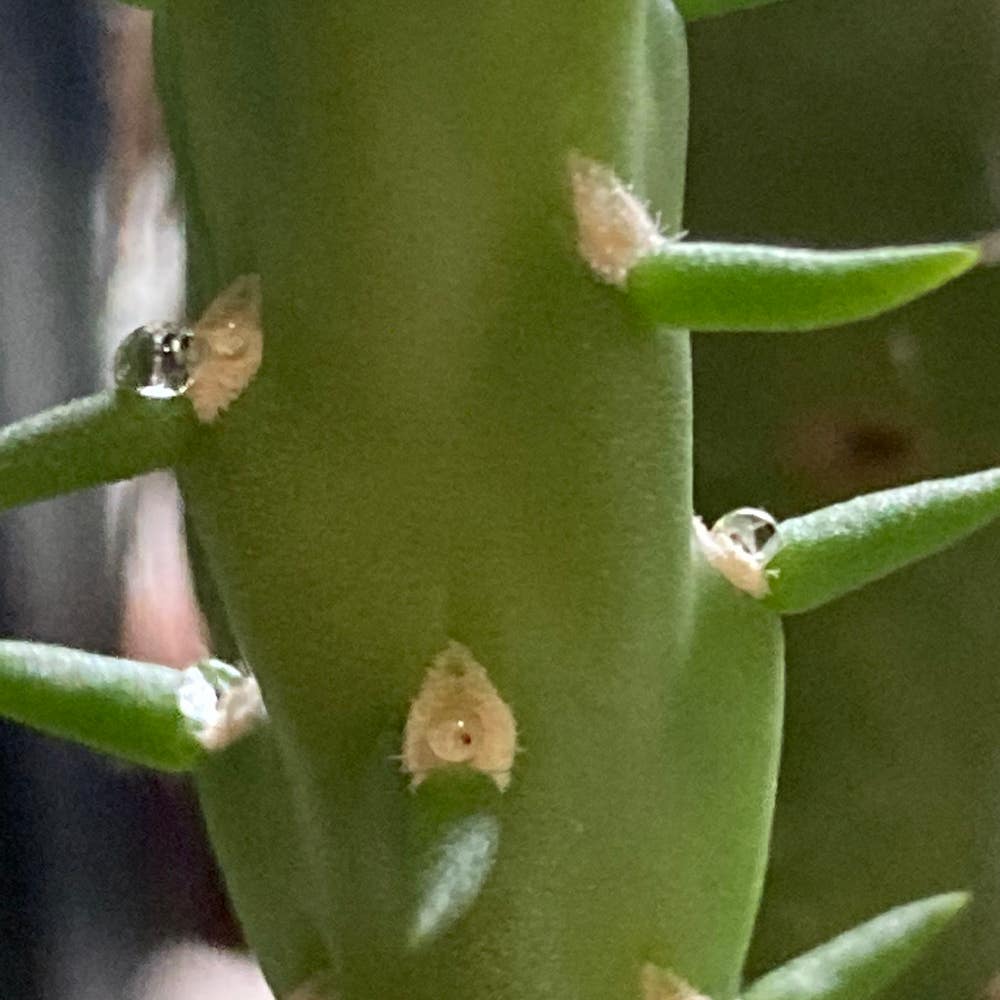
🥊 Why Are My Boxing Glove Cactus Leaves Mushy?
Cylindropuntia fulgida var. mamillata
By the Greg Editorial Team
Apr 17, 2024•4 min read
This article was created with the help of AI so we can cover more plants for you. May contain errors. See one? Report it here.
- 🌵 Overwatering? Yellow leaves and stinky soil are tell-tale signs.
- Repot with care: Use well-draining soil and a pot with drainage holes.
- Prune to save: Remove mushy parts to help your cactus heal.
Spotting the Trouble: Signs Your Cactus is Too Wet
🌵 Overwatering Symptoms
Cacti are desert dwellers; they don't do well with a heavy pour. Yellowing leaves are the first hint you're overdoing the hydration. If your cactus feels more like a ripe tomato than a prickly friend, you've entered the danger zone. Overwatering symptoms are a plant's plea for you to ease up on the enthusiasm.
🩸 Root Rot Red Flags
Root rot is the silent assassin of the cactus world. A stinky soil odor? That's the smell of defeat. If the roots look like they've been through a horror movie—dark, squishy, and falling apart—it's an urgent call to action. Don't let your cactus down; these signs scream for immediate intervention.
🚰 Drainage Woes
Your cactus's pot should be a cozy home, not a swamp. If the soil is more soggy than a wet sponge, you've got a drainage drama on your hands. A cactus that's leaning like it's had one too many is a cry for help. It's time to reassess your setup before your cactus becomes a casualty of poor drainage.
First Aid for Your Waterlogged Cactus
💧 Cutting Back on H2O
Finding the sweet spot for watering frequency is crucial. If your cactus is waterlogged, pause watering immediately. Allow the soil to dry out completely before considering another watering session. This isn't neglect—it's essential recovery time.
🌵 The Repotting Rescue
Step 1: Inspect the Roots
Before repotting, remove your cactus from its current pot and inspect the roots. Snip away any that are brown and mushy—these are beyond saving.
Step 2: Choose the Right Pot
Select a new pot with adequate drainage holes. Size matters; opt for a pot that's snug, not spacious, to avoid excess soil moisture.
Step 3: Prepare the Soil
Mix a well-draining soil using a combination of cactus mix, perlite, or coarse sand. This creates an ideal environment for healthy roots.
Step 4: Repot with Care
Gently place your cactus in the new pot and fill in around it with your soil mix. Firm the soil gently to keep the cactus upright.
Step 5: Post-Repot Watering
Water sparingly after repotting. Let the plant acclimate to its new home without the stress of too much moisture.
🌵 Surgical Strikes: Pruning the Damage
Using sterilized scissors, trim away any wilted or mushy sections of your cactus. This is like hitting the reset button, allowing your plant to focus on regenerating healthy tissue. After pruning, resist the urge to water; let the cactus callous over and heal in dry soil.
Building a Better Environment for Your Cactus
🌵 Soil and Pot Perfection
Crafting the ideal soil for your Boxing Glove Cactus is less about green thumbs and more about understanding the value of a good drainage system. Cactus mix is your starting line, but to really get the roots cheering, throw in some perlite or pumice. It's like creating a mini obstacle course that water has to navigate, ensuring it doesn't linger and overstay its welcome.
When selecting a pot, think of it as choosing a house for your prickly friend. It needs to be cozy but not cramped, with drainage holes that are non-negotiable. These holes are the secret escape tunnels for excess water, making them as essential as the soil itself.
💧 Mastering the Art of Watering
Watering your cactus is not just about quantity; it's about timing and technique. Imagine you're the bartender of the desert, and your cactus is the patron with a very specific drink order. During the scorching summer months, keep the soil moist like a wrung-out towel, letting the top two-thirds dry out before the next round. Winter is more of a dry season for your cactus, so let the soil go bone dry between waterings.
Remember, your cactus is more of a camel than a fish; it can handle a drought better than a flood. So when you do water, do it deeply but infrequently, and always check the soil's moisture level first. It's not just about giving a drink; it's about giving the right drink at the right time.
Keeping Your Cactus Happy and Healthy
🌵 Routine Checks and Balances
Regular monitoring is the cornerstone of cactus care. Inspect the soil and plant weekly, feeling for moisture and checking for discoloration or pests. Pruning is not just about aesthetics; it's a health check. Remove dead or mushy parts with sterilized tools to prevent disease spread.
💧 The No-Overwatering Mantra
Watering should be responsive, not robotic. Forget the calendar; use the finger test or a moisture meter to gauge soil dryness. In winter, reduce watering frequency to match your cactus's slowed metabolism. Remember, your cactus craves a drought-and-downpour cycle, not a constant drizzle.
⚠️ Safety First
This content is for general information and may contain errors, omissions, or outdated details. It is not medical, veterinary advice, or an endorsement of therapeutic claims.
Always consult a qualified healthcare professional before using any plant as food, medicine, or supplement.
Never eat any plant (or feed one to pets) without confirming its identity with at least two trusted sources.
If you suspect poisoning, call Poison Control (800) 222-1222, the Pet Poison Helpline (800) 213-6680, or your local emergency service immediately.
Spotted an error? Please report it here.
Avoid the mushy-leaf mishap in your Boxing Glove Cactus by letting Greg craft a season-smart watering schedule 🌵 that adapts to your plant's unique needs.