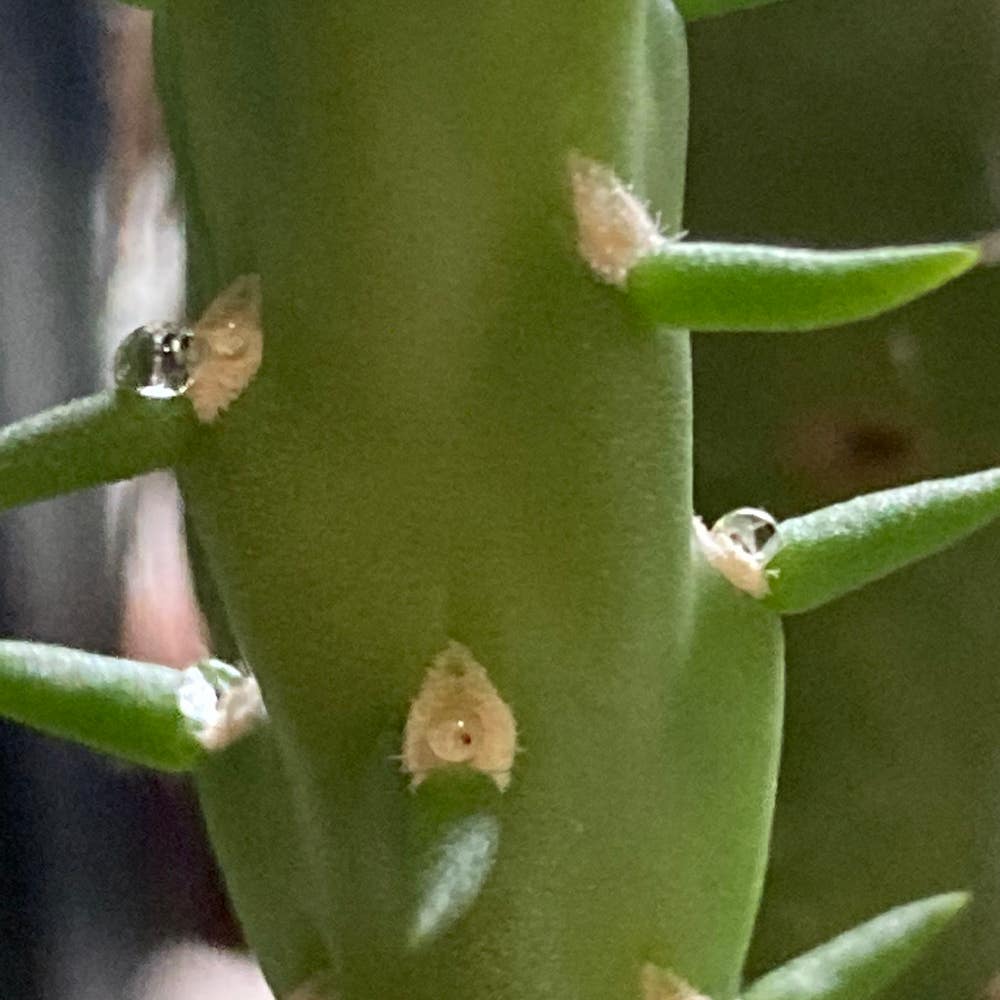
🥊 Why Are My Boxing Glove Cactus Leaves Falling Over?
Cylindropuntia fulgida var. mamillata
By the Greg Editorial Team
Apr 17, 2024•6 min read
This article was created with the help of AI so we can cover more plants for you. May contain errors. See one? Report it here.
- Discoloration and soft base signal intervention needs for cactus health.
- 🌵 Perfect watering and light are crucial to prevent cactus leaves from falling over.
- Seasonal adjustments and protection from extreme temperatures aid cactus recovery.
Spotting Trouble: Signs Your Cactus Leaves Might Topple
🚩 Wilted or Discolored Leaves
When your cactus's leaves look deflated, it's not just throwing a pity party. Discoloration and wilting are its way of waving a red flag. Touch them. They should snap back, not squish. If they're giving in like a soggy sponge, it's time for a plant intervention.
🗼 Leaning or Stretched Stems
Is your cactus doing a Leaning Tower of Pisa impression? Stretched stems are a telltale sign it's yearning for more light. If it's leaning like it's trying to escape its pot, it's a cry for help. Your cactus is losing its mojo and needs a sunnier spot to call home.
🍮 Soft or Mushy Base
A mushy base is the cactus equivalent of a weak handshake; it's not a good sign. If the base feels like a squished marshmallow, you've got root rot on your hands. And if the soil smells like last week's forgotten gym socks, it's a clear distress signal. Act fast, or your cactus could topple faster than a house of cards.
The Balancing Act: Watering Your Cactus Just Right
⚠️ The Perils of Overwatering
Overwatering is the equivalent of wrapping your cactus in a damp blanket—it's suffocating. Your cactus's roots need to breathe, and too much water drowns them, leading to a weakened plant structure. Yellow leaves and a squishy base are distress flares signaling it's time to cut back on the H2O.
🌵 The Risks of Underwatering
Conversely, underwatering turns your cactus into a parched nomad in its own pot. Look out for wilting leaves and soil pulling away from the pot's edge—these are your cactus's way of crying out for a drink. A thirsty cactus is a droopy one, so don't let the soil go bone-dry for too long.
💧 Nailing the Perfect Watering Routine
To strike the right balance, let the soil's top inch dry out before watering again. Use the touch test—if it's dry an inch down, it's time to quench that thirst. Ensure your pot has drainage holes to prevent waterlogging. Remember, a happy cactus is one that experiences a little neglect, so don't hover with the watering can.
Let There Be Light (But Not Too Much)
🌞 Finding the Sweet Spot for Sunlight
Bright, indirect sunlight is the Goldilocks zone for your Boxing Glove Cactus. Too much sun, and you're on a fast track to yellow-town; too little, and you've got a droopy, sad cactus on your hands. It's all about balance.
🌍 Adjusting for Seasons and Shifting Sun
As the earth struts its stuff around the sun, your cactus's light needs shift with the seasons. Spring might call for a sunbath, but come summer, you'll want to play it cool and provide some shade during those peak hours. Stay on your toes and be ready to shuffle your cactus around to avoid a solar smackdown.
Rotate your spiky friend periodically to ensure an even tan—no one likes a lopsided cactus. If you're into gadgets, a light meter can be your best pal in nailing that perfect lighting. And if your pad's more cave than conservatory, grow lights are a solid plan B. Just keep 'em at a cactus-friendly distance to prevent a leafy burn.
Remember, your cactus isn't trying to win a suntanning competition; it's just trying to live its best life. Keep an eye out for signs of distress, and adjust your light strategy accordingly. It's not rocket science, but it does take a bit of vigilance and a willingness to adapt.
Keeping the Temperature Just Right
🛡️ Shielding from the Cold
Cacti aren't fans of the cold shoulder. To prevent your Boxing Glove Cactus from slumping, keep it away from windows that transform into ice rinks come winter. Drafts? Shut them down. They're as welcome as a sneeze in a silent room. If the cold is relentless, think about a plant heater, but keep it at arm's length to avoid toasting your cactus. Watering should be on the down-low; wait until the soil is as dry as a comedian's wit before going in for another round.
🌞 Avoiding the Scorch of the Sun
Summer turns up the heat, but your cactus isn't trying to get a tan. Shade is its summer fling. Use sheer curtains or shade cloth to cut the glare, keeping your cactus cool without leaving it in the dark. Water when the soil feels like a dry martini, about an inch down. And keep an eye on the temperature; your cactus hates surprises more than a cat hates baths. Too much heat and it'll wilt; too little, and it's growth stalls. Aim for that Goldilocks zone where your cactus can thrive without breaking a sweat.
Aftercare: Helping Your Cactus Recover
🌱 Assessing the Recovery
After treating your Boxing Glove Cactus for issues that caused it to fall over, vigilance is your new best friend. Look for new growth or spines as clear indicators that your cactus is on the mend. The plant's skin should be firm and its color vibrant. If it starts resembling something from a botanical horror flick, it's time to reassess your care strategy.
🛠️ Ongoing Support and Care
Long-term care is about consistency and observation. Stabilize your cactus with a support system if it's still a bit wobbly. Think of it as a crutch while it regains strength. Use soft ties to avoid damage; it's like giving your cactus a gentle hug.
Monitor the environment like a hawk. Ensure the temperature is as steady as a seasoned yogi's pose and that your cactus is basking in the right amount of light. If it's leaning like it's trying to whisper a secret, it might be time to rotate it for even sun exposure.
Keep the watering can at bay; overwatering is the fast track to root rot. Instead, let the soil dry out completely between waterings. If you've had to repot, resist watering for a bit to let the cactus acclimate.
Remember, recovery is a marathon, not a sprint. Keep a care log to track progress and make adjustments as needed. With patience and the right care, your cactus will stand tall and proud once again.
⚠️ Safety First
This content is for general information and may contain errors, omissions, or outdated details. It is not medical, veterinary advice, or an endorsement of therapeutic claims.
Always consult a qualified healthcare professional before using any plant as food, medicine, or supplement.
Never eat any plant (or feed one to pets) without confirming its identity with at least two trusted sources.
If you suspect poisoning, call Poison Control (800) 222-1222, the Pet Poison Helpline (800) 213-6680, or your local emergency service immediately.
Spotted an error? Please report it here.
Prevent your cactus 🌵 from falling over with Greg's personalized care plan, ensuring the ideal balance of water and sunlight for your spiky friend's needs.