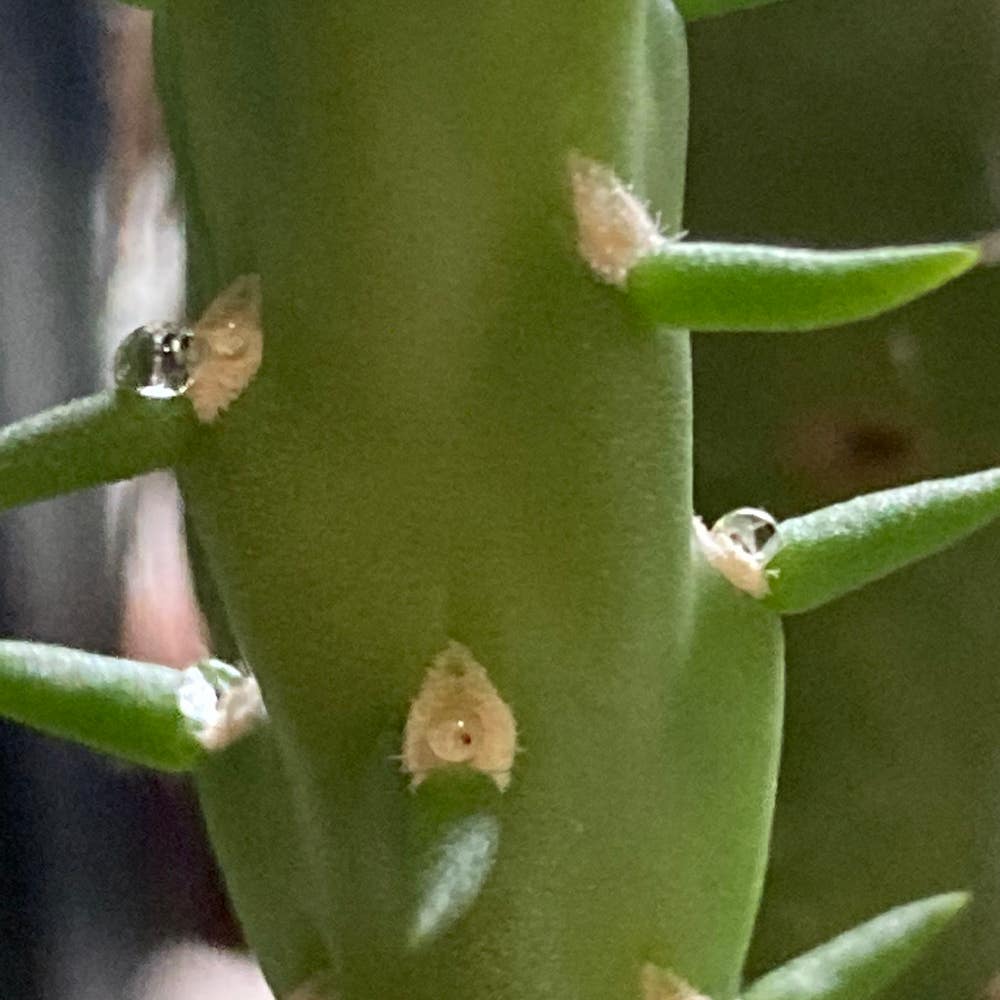
Diagnosing Boxing Glove Cactus Root Rot
Cylindropuntia fulgida var. mamillata
By the Greg Editorial Team
Apr 17, 2024•3 min read
This article was created with the help of AI so we can cover more plants for you. May contain errors. See one? Report it here.
- 🌵 Yellow leaves and wilting signal early root rot in Boxing Glove Cactus.
- Trim and sterilize to treat rot; use well-draining soil for recovery.
- Water wisely and monitor moisture to prevent future root rot.
Spotting the Red Flags: Early Symptoms of Root Rot
🚩 Visual Distress Signals
Yellowing leaves and a wilting posture are early warnings of root rot in your Boxing Glove Cactus. These symptoms are the plant's way of waving a white flag, signaling that something's not right under the soil.
🕳 Below the Surface
When you dig a little deeper, you might find roots that are mushy and discolored, accompanied by a foul odor. This is the botanical equivalent of a red alert, indicating advanced root rot. If the roots crumble at a touch, it's time for immediate action.
Unearthing the Problem: How to Inspect Your Cactus
🌵 Gentle Extraction
Before you can assess the health of your Boxing Glove Cactus's roots, you need to get it out of its pot. Don't rush this step; you're not pulling a rabbit out of a hat. Water the cactus lightly the day before to ease the process. Tilt the pot and coax the cactus out by the base, avoiding a wrestling match. If it plays hard to get, a tap on the pot's bottom or running a knife around the inside edge should loosen things up. Once free, shake off the old soil gently to get a good look at the roots.
🌱 Healthy vs. Unhealthy Roots
Now, let's play compare and contrast. Healthy roots are the cactus's lifeline, looking firm and white like a fresh stick of mozzarella. Unhealthy roots? They're the bad apples of the root world—mushy and discolored. If they crumble at your touch, it's time to sound the alarm. A healthy root system should be a mirror image of the plant's above-soil glory. If it's not, your cactus is sending an SOS.
Cutting Out the Rot: Immediate Treatment Actions
🏥 Surgical Precision
Before you play plant surgeon, sterilize your tools. This is a hill to die on. Use alcohol, bleach, or heat to ensure your instruments are pathogen-free. Now, channel your inner Edward Scissorhands and
Rebuilding Strong Foundations: Soil and Pot Adjustments
🌵 The Right Mix
For a boxing glove cactus on the mend, the soil mix is a lifeline. Well-draining is the mantra here. Think of the ideal mix as a custom suit—tailored to fit, with room to breathe. To whip up this magic blend, start with a base of organic potting soil. Then, tweak the texture with perlite or sand, ensuring quick drainage. If it's too parched, throw in some compost to retain that essential moisture. And for a nutrient kick, sprinkle in a mycorrhizal inoculant. It's like giving your cactus a multivitamin.
🏡 Home Sweet Home
Choosing a new pot is more than a decor decision; it's about health and happiness. Size matters—too big, and you risk soggy soil; too small, and the roots might stage a protest. Aim for a snug fit with room to grow. Drainage holes are non-negotiable. They're the escape route for excess water, like fire exits in a building. And if you're feeling extra, add a layer of pebbles at the bottom for that extra drainage oomph. It's like having a security system for root rot.
Water Wisely: Preventative Measures to Keep Roots Healthy
💧 The Soak and Dry Method
Water deeply, then let the soil nearly dry before the next round. This cycle encourages strong roots, mimicking natural rainfall. It's not just smart; it's essential.
📏 Monitoring Moisture
Moisture meters are your secret weapon. They take the guesswork out of watering, signaling when it's time to hydrate. And remember, a pot with drainage holes isn't just nice to have—it's a must.
⚠️ Safety First
This content is for general information and may contain errors, omissions, or outdated details. It is not medical, veterinary advice, or an endorsement of therapeutic claims.
Always consult a qualified healthcare professional before using any plant as food, medicine, or supplement.
Never eat any plant (or feed one to pets) without confirming its identity with at least two trusted sources.
If you suspect poisoning, call Poison Control (800) 222-1222, the Pet Poison Helpline (800) 213-6680, or your local emergency service immediately.
Spotted an error? Please report it here.
Banish root rot 🚫 and keep your boxing glove cactus thriving with Greg's precise soil moisture alerts, ensuring you water just right every time.