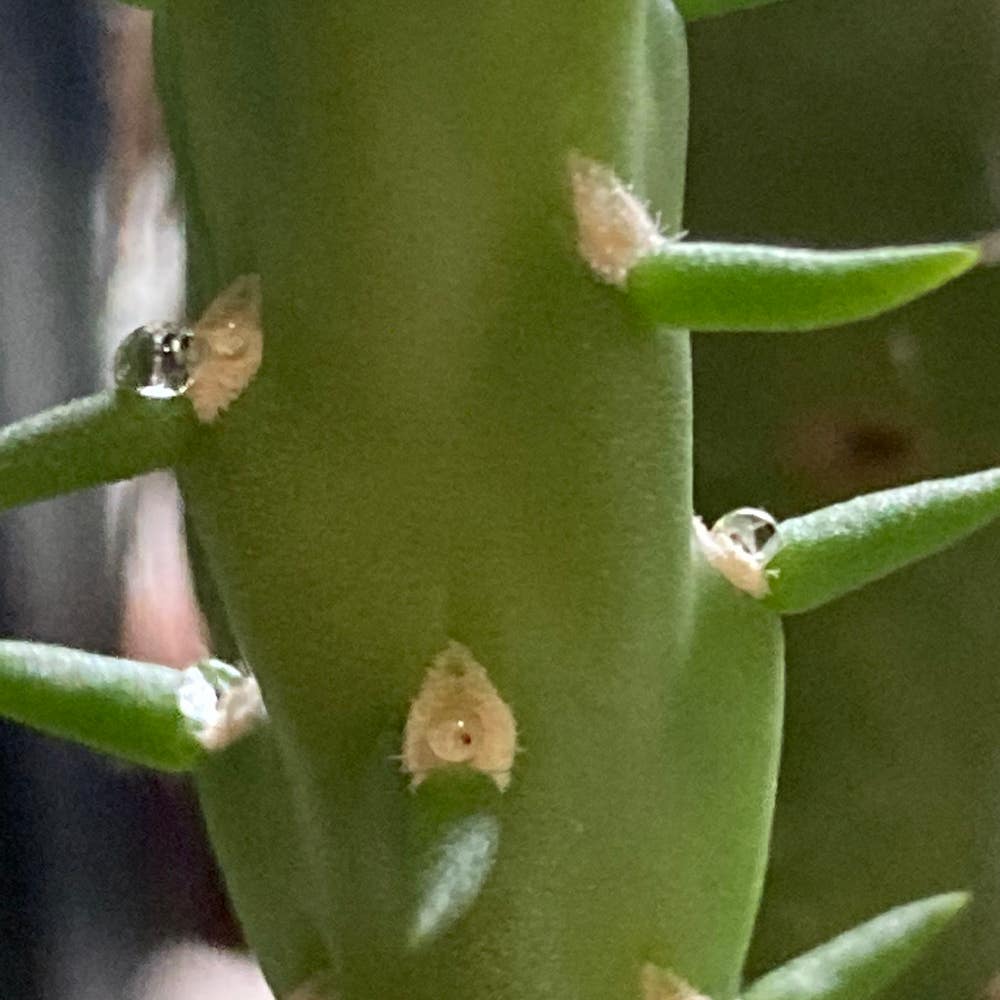
🥊 Why Are There Black Spots on My Boxing Glove Cactus Leaves?
Cylindropuntia fulgida var. mamillata
By the Greg Editorial Team
Apr 17, 2024•4 min read
This article was created with the help of AI so we can cover more plants for you. May contain errors. See one? Report it here.
- Black spots grow from specks to patches, signaling cactus distress.
- 🌵 Overwatering and sunburn are common culprits; adjust care accordingly.
- Eco-friendly pest control keeps bugs at bay and your cactus spotless.
Spotting the Trouble: Recognizing Black Spots
🔍 Visual Signs of Black Spots
Tiny, dark specks on your Boxing Glove Cactus leaves are the first red flags. Less than ⅛ inch in diameter, these spots are the plant world's equivalent of a distress signal. They're not part of your cactus's natural beauty; they're more like unwanted graffiti, marring the otherwise healthy green canvas.
📈 Progression Patterns: From Tiny Dots to Larger Patches
If you're not vigilant, these specks can balloon into larger patches that scream 'trouble'. They may start out as isolated incidents, but without intervention, they'll throw a party and invite all their friends. Spots tend to spread, and if you see them moving from newer leaves to older ones, it's time to sound the alarm. Keep an eye on their growth—quick expansion is your cue to get down to business.
Digging into the Causes
🚿 Too Much Love: The Perils of Overwatering
Overwatering is akin to overfeeding; it's harmful despite good intentions. Your Boxing Glove Cactus can literally drown if you're too generous with water. Root rot sets in, and the plant sends an SOS with black spots. Ensure the soil is dry before watering again – think of it as tough love for your cactus.
🌞 Sunburn: When Your Cactus Gets Too Much Sun
Cacti love the sun, but there's a limit. Sunburn manifests as black spots when your cactus gets more rays than it can handle. It's like forgetting the sunscreen on a beach day. Provide some shade or filter the light to protect your plant, and watch those black spots fade away.
🐜 Unwanted Guests: Pest Infestations That Cause Black Spots
Pests can be sneaky, turning your cactus into a free buffet. Mealybugs, spider mites, and scale insects are the usual suspects. They leave behind black spots, sticky residue, and webbing. Catch them early, and show them the door with eco-friendly pest control tactics. Your cactus will thank you.
Turning the Tide: Effective Remedies
💧 Fine-Tuning Your Watering Routine
Watering your Boxing Glove Cactus should be a ritual, precise and not excessive. Wait until the top inch of soil is dry before introducing room-temperature water to avoid shocking the plant's roots. In winter, the cactus's thirst wanes, so reduce watering accordingly.
🌞 Creating a Sun-Safe Environment
Your cactus craves sunlight but in moderation. Shade cloths can protect against intense sunlight, preventing sunburn. Positioning is key; find a spot that offers bright, indirect light to keep your cactus happy without the crispy side effects.
🐜 Eco-Friendly Pest Control Tactics
When pests invade, it's time for eco-friendly warfare. A strong water jet can dislodge critters like spider mites. For a more persistent problem, insecticidal soap or neem oil can be your allies—apply with precision to target pests without harming beneficial insects. Introducing natural predators, such as ladybugs, can also help maintain a pest-free zone. Remember, a clean plant is less inviting to bugs, so regular maintenance is crucial.
Keeping Black Spots at Bay: Prevention Tips
💧 Mastering the Art of Watering
Watering your Boxing Glove Cactus isn't a splash-and-dash affair. It's a precision task. Check the soil's moisture with a finger—bone-dry? Time to hydrate. Use a long-spouted watering can to target the soil directly, avoiding the leaves. This isn't a rain dance; it's a surgical strike against thirst.
🌤 Finding the Sweet Spot for Sunlight Exposure
Your cactus craves sunlight, but not like a sunbather slathered in oil. Bright but indirect light is the golden rule. Rotate your plant regularly to ensure even exposure, preventing the botanical equivalent of a farmer's tan.
👀 Vigilance and Routine: The Key to Early Detection
Inspect your cactus like it's got the secrets to the universe on its leaves. Spot a black dot? Act fast. Adjust your care regimen with the seasons—more shade in the scorching summer, less water when winter hits. Keep the air moving around your cactus; stagnant air is a fungal fiesta waiting to happen.
⚠️ Safety First
This content is for general information and may contain errors, omissions, or outdated details. It is not medical, veterinary advice, or an endorsement of therapeutic claims.
Always consult a qualified healthcare professional before using any plant as food, medicine, or supplement.
Never eat any plant (or feed one to pets) without confirming its identity with at least two trusted sources.
If you suspect poisoning, call Poison Control (800) 222-1222, the Pet Poison Helpline (800) 213-6680, or your local emergency service immediately.
Spotted an error? Please report it here.
Keep your Boxing Glove Cactus spot-free 🌵 with Greg's tailored watering reminders and sun exposure tips, ensuring your plant stays healthy and thriving.