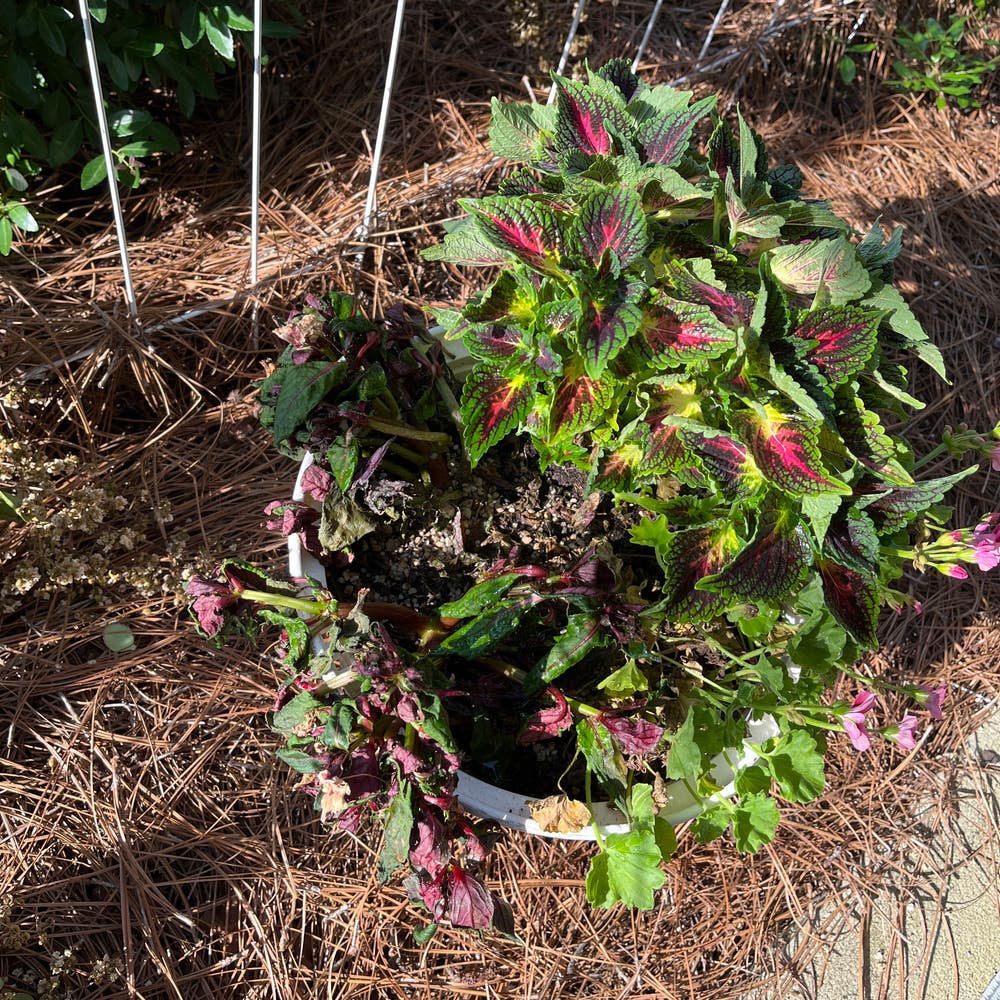
Black Spots on My Balfour's Touch-Me-Not Leaves
Impatiens balfourii
By the Greg Editorial Team
Apr 28, 2024•4 min read
This article was created with the help of AI so we can cover more plants for you. May contain errors. See one? Report it here.
Banish black spots 🕵️♂️ and protect your Balfour's Touch-Me-Not's health with proven care strategies.
- Black spots may signal fungi like Alternaria and Cercospora; inspect leaves often.
- Cultural changes and fungicides help treat and prevent black spots.
- Proper watering, airflow, and nutrition fortify plants against future outbreaks.
Spotting the Culprit: Identifying Black Spots
👀 Visual Inspection
Look sharp: Black spots on Balfour's Touch-Me-Not leaves start as tiny specks, often less than ⅛ inch in diameter. Without your intervention, these specks can grow into larger blotches, compromising the plant's health.
🕵️ Mistaken Identities
Don't be fooled by a leaf's natural flair for the dramatic. Uniform patterns are typically harmless, but random, spreading black spots? That's your cue to switch into plant detective mode.
🍃 Underleaf Hideouts
Flip those leaves! Black spots love the undersides of leaves, making them a prime spot for your regular leaf inspections. A yellow halo around the spot is a red flag for fungal activity.
📋 Diagnostic Tips
Keep an eye on the texture and spread of the spots. If they're changing the leaf's texture or moving on to conquer new leaves, it's time to act. Remember, catching them early is like catching a typo before it's tweeted to the world.
🌿 Consulting the Pros
If you're stumped, don't hesitate to consult a plant pathologist or your local nursery guru. They're the equivalent of a cheat code in your quest to banish those black spots.
Unearthing the Causes: Why Black Spots Happen
🍄 Fungal Foes
Alternaria and Cercospora are the ringleaders of the fungal underworld attacking Balfour's Touch-Me-Not leaves. These fungi love a good steam room scenario—warmth and moisture are their jam. They infiltrate through the smallest of wounds, throwing a spotty party on your plant's leaves.
When conditions mimic a tropical rainforest, it's showtime for these fungi. Overwatering and poor drainage roll out the red carpet, setting the stage for a full-blown fungal gala.
🦠 Bacterial Bullies
Bacterial leaf spot sneaks in like a thief in the night, often confused with its fungal cousin. Water-soaked lesions are its calling card, turning a perfectly good leaf into a blotchy mess. Overwatering and stagnant air are the bacteria's besties, creating a petri dish perfect for their proliferation.
Unclean tools are the double agents in this saga, shuttling bacteria from one plant to another with the finesse of a seasoned spy.
🐜 Pests and Other Troublemakers
Mites and other pests are the uninvited plus-ones, often leaving behind a trail of destruction. These critters can be the carriers of doom, spreading pathogens as they mosey from leaf to leaf.
Pathogens are more than just a cosmetic issue; they're a health hazard for your plant. Vigilance is key—catching these troublemakers early can save your plant from the spotty brink of disaster.
Turning the Tide: Treating Black Spots
🍄 Fungus Among Us: Getting Rid of Fungal Infections
Fungicides are your plant's personal bodyguards against fungal infections. Choose wisely—not all fungicides play nice with every plant. For a preemptive strike, reach for protectant fungicides, and for an existing invasion, systemic fungicides work from the inside out. Rotate your fungicides to keep those fungi off-balance, just like you'd update your passwords to keep hackers guessing.
🌱 Cultural changes: Tweaking your plant care routine
Watering at the base keeps leaves dry and less appealing to fungi. Remove infected leaves pronto to stop the spread. Air circulation is your plant's best friend; it's like giving your plants their personal space to breathe and stay healthy.
💥 Bacterial Battles: Conquering Bacterial Infections
Copper-based bactericides are the antibiotics for your plant's bacterial infections. Use them as a sniper would—targeted and precise. Apply early to prevent a full-scale assault on your plant's health.
Cleanliness is key: Keeping bacteria at bay
Sanitize your tools like a surgeon to avoid spreading pathogens. Timing is crucial—apply treatments when the air is calm, either early morning or late evening, to maximize effectiveness. Water management is also critical; ensure good drainage and avoid leaf wetness to keep bacterial parties from starting.
Fortifying Your Plant: Prevention Strategies
💨 Environment Engineering
Humidity and airflow are crucial for your Balfour's Touch-Me-Not. Strive for a stable environment to fend off fungal foes and bacterial bullies. Use a hygrometer to monitor humidity levels; aim for that sweet spot that mimics the plant's natural habitat.
💧 Water wisdom is your ally. Watering in the early morning lets leaves dry out under the benevolent gaze of the sun, reducing the risk of water-related diseases. Ensure the soil is moist but not waterlogged to keep root rot from crashing the party.
🛡️ Proactive Plant Parenting
Nutrition is non-negotiable. Feed your plant with a balanced fertilizer to bolster its defenses against the dark arts of black spots. Repot every 2 to 3 years to refresh its environment and prevent it from going stir-crazy in stale soil.
Regular check-ups are like a plant's personal bodyguard. Be vigilant for pests and show them the exit with insecticidal soap or neem oil before they invite their fungal friends. Keep your gardening tools as clean as your plant's leaves; it's not just about cleanliness, it's about survival.
⚠️ Safety First
This content is for general information and may contain errors, omissions, or outdated details. It is not medical, veterinary advice, or an endorsement of therapeutic claims.
Always consult a qualified healthcare professional before using any plant as food, medicine, or supplement.
Never eat any plant (or feed one to pets) without confirming its identity with at least two trusted sources.
If you suspect poisoning, call Poison Control (800) 222-1222, the Pet Poison Helpline (800) 213-6680, or your local emergency service immediately.
Spotted an error? Please report it here.
Eradicate black spots 🕵️♂️ on your Balfour's Touch-Me-Not with Greg's environmental tracking and care reminders, ensuring your green friends stay spotless and healthy!